Debunking Logos and Nomos
Violent Origins
Nomos Basileus: Law as Violence
The conventional narrative casts law as the antidote to violence, the rational force (logos) that tames the chaotic state of nature (physis). But the archaic Greek understanding, preserved in a fragment from the poet Pindar, reveals a more unsettling truth. In fragment 169a, he declares: 'Nomos Basileus'—Law is King. This is not a celebration of peaceful order. Pindar’s kingly Law is a tyrant that 'makes just the most violent deed with a supreme hand.'
Law, king of all, mortals and immortals, leads them, making the most violent deed just with a supreme hand. I judge this from the deeds of Heracles.
Pindar’s exemplar is , the archetypal hero whose civilizing feats are indistinguishable from brutal acts of theft and murder. When he drives Geryon's cattle to Eurystheus's court, he does so without purchase or permission. It is a raw act of power. Yet, Pindar’s fragment frames this not as a crime, but as the very operation of Law. This is law-making, not law-preserving, violence. The act itself, a violation of any pre-existing norm, establishes a new right through its sheer force. Heracles doesn’t follow the law; his power becomes the law.
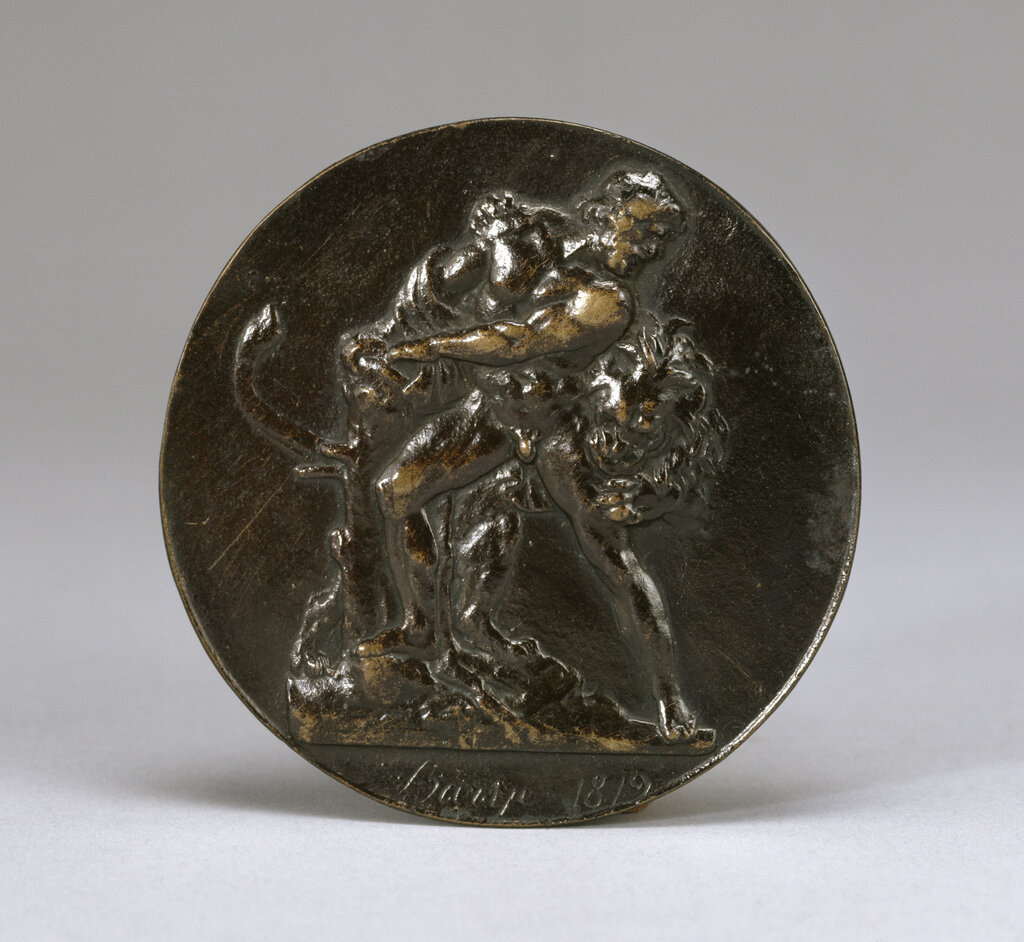
The Sovereign Exception
This Pindaric vision resonates with the 20th-century political theorist 's concept of sovereign decisionism. For Schmitt, the sovereign is not defined by their rule within the law, but by their power to decide on the 'exception'—the moment when the legal order is suspended. The true foundation of law is not a norm but a decision, an act of pure will that imposes order where there was none.
The founding of a Greek polis is a perfect illustration of this principle. It was not a social contract among equals but an act of violent appropriation, what Schmitt called —a taking of land. This event is 'anormative'; it cannot be judged by a pre-existing legal standard because it is the very act that establishes the territory and the conditions for future law. The line drawn on the earth to demarcate the city is an act of exclusion, creating an inside and an outside.
The Life That Law Excludes
Building on Schmitt, the philosopher deepens this critique by focusing on the type of life created by this foundational violence. The sovereign act separates political life (bios) from simple, biological existence (zoē), or 'bare life.' The law creates order by excluding bare life, rendering it killable but not sacrificiable. This is the paradox of 'inclusive exclusion': zoē is included within the legal order only to be excluded from its protection.
The Greek polis was not a peaceful gathering but a machine that produced citizens by simultaneously producing this excluded 'other.' The 'barbarian,' the slave, and even figures from myth like Geryon represent this bare life. They are the necessary victims of the law’s founding violence. The rational order of the city, the celebrated logos of Greek philosophy, is therefore built upon a hidden foundation: the sovereign decision to violently appropriate land and exclude a form of life from the sphere of political rights. Law does not simply end violence; it originates from it and continually reproduces it at its margins.
According to the poet Pindar, what is the nature of 'Nomos Basileus' (Law is King)?
How does the story of Heracles stealing Geryon's cattle exemplify Pindar's idea of law?