Debunking Anaximander's Proto-Science
Ionian Historiographic Bias
Inventing the First Scientist
The popular image of Anaximander of Miletus as a proto-scientist, a lone rationalist heroically breaking from myth, is largely a modern invention. This narrative is a product of —a framework that reads history as a linear progression toward a predetermined end, in this case, contemporary scientific rationalism. Scholars of the 19th and 20th centuries, eager to find the roots of their own empirical traditions in ancient Greece, projected their values onto the fragmentary evidence of Milesian thought. Anaximander became a convenient starting point, the supposed 'first' to offer naturalistic explanations for cosmic phenomena.
This projection created a caricature: Anaximander the empiricist, shorn of the social and mythological context of 6th-century BCE Ionia. The result is a distorted view that says more about the historians than about the historical figure.
The Battle for Ionia
The interpretation of Milesian thought became a battleground for competing historical visions. At the turn of the 20th century, John Burnet championed the view of the Ionians as having achieved a complete break from mythological thinking. He saw them as secular thinkers, pioneers of a scientific worldview free from the shackles of religion. For Burnet, the Milesian 'revolution' was a sudden, radical departure—a clean slate upon which rational inquiry could be built.
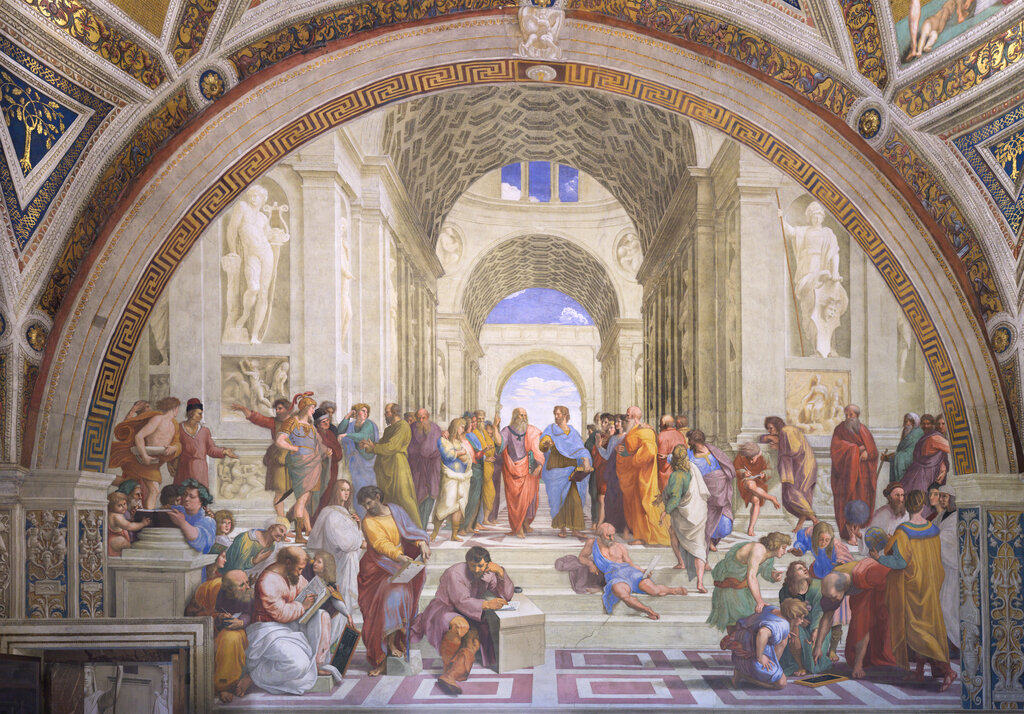
Francis Cornford mounted a powerful counter-argument. In 'From Religion to Philosophy' (1912), he contended that the structures of Milesian cosmology were not new inventions but were rationalized transpositions of earlier mythological and religious frameworks. The cosmic order governed by Anaximander's apeiron was, for Cornford, a depersonalized version of the Moirae (Fates) who enforced order in the world of the gods. The break was not clean; philosophy emerged from, and remained deeply entangled with, myth.
Anachronism and the Apeiron
The core of the issue lies in anachronism. Projecting modern categories like 'science,' 'philosophy,' and 'religion' onto 6th-century BCE Ionia is a fundamental error. These distinctions were not meaningful in Anaximander's world. His inquiry was not a specialized 'scientific' pursuit but a holistic attempt to understand the cosmos, its origins, and humanity's place within it, a project we might now call wisdom-seeking. This is where the framework of the Diels-Kranz collection, '', becomes problematic. By anthologizing these thinkers under the banner of 'Presocratic philosophy,' it implicitly frames them within a specific philosophical trajectory, isolating their thought from its broader cultural milieu.
The 'Anaximander-as-scientist' trope deconstructs when we refuse this anachronistic lens. His work wasn't a failed attempt at modern physics; it was a successful expression of 6th-century Ionian thought. Recognizing this doesn't diminish his importance. It recontextualizes it, allowing us to see his achievement not as a flawed first step toward our world, but as a complex and complete expression of his own.
The common portrayal of Anaximander as a 'proto-scientist' is criticized in the text primarily because it:
Which scholar argued that early Greek philosophy was a rationalized transposition of earlier myths, rather than a complete break from them?