Debt Advisory and Leveraged Finance Interview Prep
Accounting Fundamentals
The Language of Business
Before you can advise a company on debt, you need to understand its financial story. That story is told through three key documents: the income statement, the balance sheet, and the cash flow statement. Think of them as a company's report card, a snapshot of its net worth, and a detailed look at its bank account activity.
There are three primary financial statements required by Generally Accepted Accounting Principles (GAAP):Balance Sheet – Displays what a company owns (assets), owes (liabilities), and the difference (equity).Income Statement – Summarizes a company’s revenues, expenses, and profits over a specified period.Cash Flow Statement – Tracks the flow of cash in and out of the business.
Let's break down each one.
Profitability Over Time
The income statement shows how profitable a company was over a specific period, like a quarter or a year. It starts with revenue, subtracts all the costs and expenses, and ends with the famous "bottom line": net income.
Revenue - Expenses = Net Income
This statement answers the question, "Did the company make money?" For debt advisors, it’s the first place to look to see if a company generates enough profit to handle more debt.
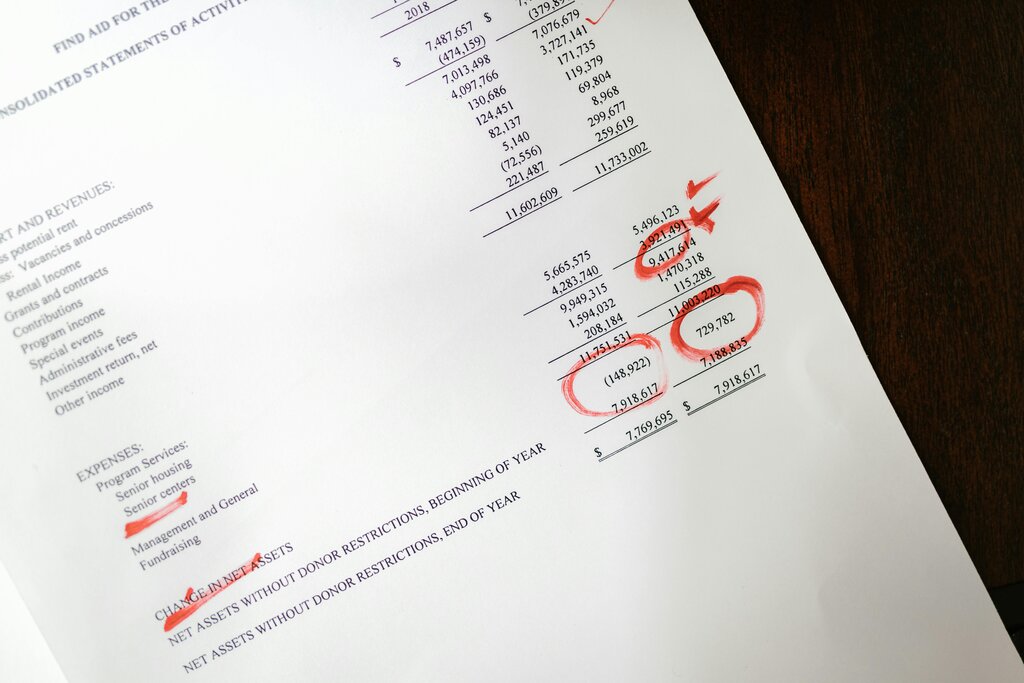
But profit isn't the same as cash. A company can look profitable on paper but have no cash in the bank. This is because of a core accounting principle called accrual accounting.
Accrual Accounting
noun
A method where revenue and expenses are recorded when they are earned or incurred, not necessarily when cash is exchanged.
Two key ideas stem from accrual accounting: revenue recognition and expense matching.
Revenue recognition dictates that you record revenue when it's earned, regardless of when the customer pays. If you complete a $10,000 consulting project in May, you record that revenue in May, even if the client doesn't pay you until July.
Expense matching means you must record expenses in the same period as the revenue they helped generate. If you paid a $2,000 commission to a salesperson for that May project, the expense is recorded in May, too. This gives a more accurate picture of profitability for that period.
A Financial Snapshot
Next is the balance sheet. Unlike the income statement, it doesn't cover a period of time. Instead, it’s a snapshot of a company's financial position on a single day, usually the last day of a quarter or year.
It’s governed by a simple, powerful equation:
Let’s define those terms:
- Assets are what the company owns (cash, inventory, equipment).
- Liabilities are what the company owes to others (loans, accounts payable).
- Equity is the difference between the two—what’s left over for the owners.
The balance sheet must always, well, balance. It shows what a company has and who has a claim to it, either creditors (liabilities) or owners (equity).
Following the Cash
Finally, the cash flow statement bridges the gap between the income statement and the balance sheet. It tracks the actual cash coming in and going out of the company over a period. It breaks all cash movements into three categories.
| Category | Description | Example |
|---|---|---|
| Operating Activities | Cash from the main business operations | Cash received from customers, cash paid to suppliers |
| Investing Activities | Cash used for investments | Buying or selling equipment, acquiring another company |
| Financing Activities | Cash from investors or lenders | Issuing stock, taking out a loan, repaying debt |
This statement is critical for debt analysis. A company needs cash to pay its bills and service its debt. The cash flow statement shows exactly where its cash is coming from and where it's going, revealing if the core business is generating enough cash to stay healthy.
How They Connect
The three statements are not independent; they are intricately linked and tell a cohesive story.
Here’s how they fit together:
-
Net Income from the income statement links to both the balance sheet and cash flow statement. It’s the starting point for the cash flow statement.
-
Net income (minus any dividends paid to shareholders) flows into Retained Earnings under Equity on the balance sheet. This links the profitability of a period to the company’s cumulative worth.
-
The Ending Cash balance calculated on the cash flow statement must match the cash amount listed under Assets on the balance sheet. This ensures everything reconciles.
Understanding these connections is fundamental. It allows you to check the consistency of the financial data and see the full picture of a company’s performance and position.
What is the primary purpose of an income statement?
A consulting firm completes a $50,000 project for a client in March. The client is invoiced in March but doesn't pay until May. According to the revenue recognition principle, when should the firm record the $50,000 revenue?
Mastering these basics is the first step in financial analysis. With this foundation, you can begin to assess a company's ability to take on and manage debt.