Debian Soft Router Mastery
Introduction to Debian Routing
Your Network's Traffic Cop
Every network, from a small home setup to a massive corporate infrastructure, needs a way to direct traffic. Think of a router as a digital traffic cop. Its job is to look at data packets coming in and decide the best path for them to take to reach their destination. Without a router, your computer wouldn't know how to send an email to a server across the world, and that server wouldn't know how to send a webpage back to you. It's the device that connects different networks together, most commonly connecting your local area network (LAN) to the wide area network (WAN) of the internet.
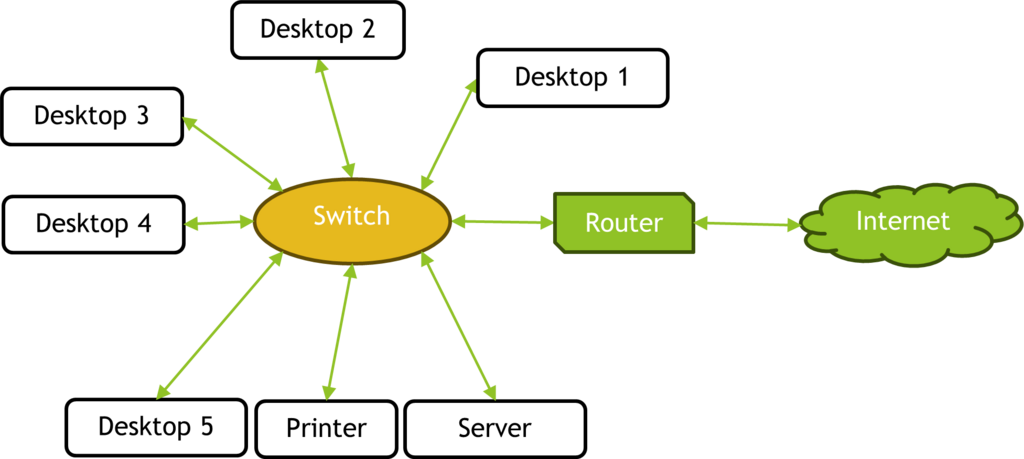
Routers make these decisions by consulting a routing table, which is essentially a map of the network. When a packet arrives, the router examines its destination IP address and compares it to the entries in its routing table to forward it along the most efficient route. This process happens millions of time a day, ensuring data gets where it needs to go.
Why Use Debian as a Router?
Consumer-grade routers are convenient, but they often lack flexibility and power. They run proprietary, stripped-down operating systems with limited features. By using a standard computer running Debian, you can build a "soft router" that is far more capable. Debian is a stable, secure, and highly customizable Linux distribution, making it an excellent foundation for a powerful router.
| Feature | Off-the-Shelf Router | Debian Router |
|---|---|---|
| Flexibility | Limited to manufacturer's firmware | Nearly infinite; install any Linux software |
| Hardware | Fixed, often underpowered | Scalable; use old or new hardware |
| Security | Dependent on manufacturer updates | Full control over updates and firewalls |
| Cost | One-time purchase | Can be free if using spare hardware |
| Functionality | Basic routing, Wi-Fi, DHCP | Can also be a VPN, firewall, file server, etc. |
Using Debian gives you granular control. You can configure advanced firewalls with iptables, set up a Virtual Private Network (VPN) for secure remote access, implement quality of service (QoS) rules to prioritize gaming or video traffic, and monitor your network in detail. It turns a simple routing device into a multi-functional network powerhouse.
What to Expect
This course assumes you're comfortable with the Linux command line and understand basic networking concepts like IP addresses, subnets, and the difference between a switch and a router. We won't be covering how to install Debian itself, but we will walk through everything else step-by-step.
Here's our roadmap:
- Enabling IP Forwarding: The core step that allows Linux to pass packets between interfaces.
- Configuring Network Interfaces: Setting up the connections for your internal and external networks.
- Setting up DHCP: Automatically assigning IP addresses to devices on your local network.
- Implementing Network Address Translation (NAT): Allowing multiple devices on your network to share a single public IP address.
By the end, you will have configured a functional and powerful router using Debian Linux.
The goal is to move from theory to a practical, working device that you control completely.
Ready to get started? Let's check your understanding of these core ideas before we dive in.
What is the primary function of a router in a computer network?
Which technology allows multiple devices on a local network to share a single public IP address when accessing the internet?