DDR Memory Explained
Introduction to DDR SDRAM
The Memory That Doubled Down
Your computer's short-term memory is called RAM, or Random Access Memory. It's where active programs and data are stored for quick access by the processor. For decades, the story of RAM has been a relentless quest for speed. One of the biggest leaps in this journey was the move to a technology called DDR SDRAM.
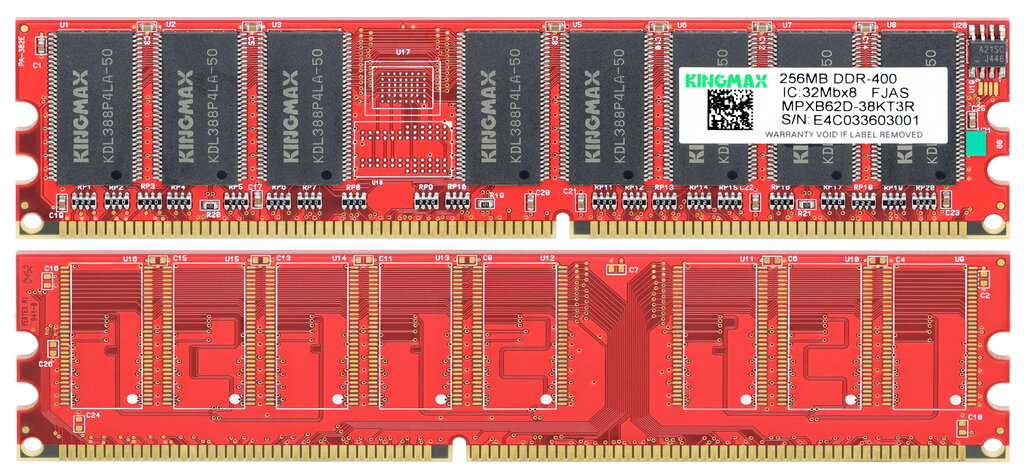
To understand why DDR SDRAM was such a breakthrough, we need to look at what came before it. Early forms of memory, known as asynchronous DRAM, were a bit chaotic. The processor would request data, and the memory would send it back, but not in sync with any master clock. It worked, but it wasn't very efficient. There was a lot of waiting around.
Getting in Sync
The first major improvement was the introduction of Synchronous DRAM, or SDRAM. This new type of memory connected its operations to the computer's system clock. Think of the system clock as a metronome, ticking at a steady pace. SDRAM would wait for a tick—specifically, the 'rising edge' of the clock signal—before performing an action, like sending or receiving data.
By synchronizing with the system clock, SDRAM made data transfers predictable and efficient, eliminating the idle time that plagued older memory types.
This was a huge step forward. Suddenly, the processor and the memory were working in harmony, like a well-rehearsed orchestra. But engineers knew they could squeeze even more performance out of the system. The clock was ticking at a certain speed, but what if you could do more with each tick?
Twice the Work, Same Clock
This is where Double Data Rate (DDR) SDRAM comes in. The brilliant idea behind DDR was to use both the rising and falling edge of the clock signal to transfer data. A clock signal isn't just a series of ticks; it's an oscillating wave that goes up and down. SDRAM only used the 'up' part of the wave. DDR SDRAM cleverly decided to use the 'up' part and the 'down' part.
This simple but powerful change effectively doubled the memory's bandwidth without needing to increase the clock speed. The memory could now push twice as much data through the pipeline in the same amount of time. This made computers feel significantly faster and more responsive, especially for tasks that involved moving large amounts of data, like gaming or video editing.
DDR SDRAM became the new standard, and it laid the groundwork for all the subsequent generations of memory we use today, like DDR2, DDR3, DDR4, and DDR5. Each new version has found ways to increase speeds and efficiency, but they all build on the fundamental principles of being synchronous and using a double data rate.