DBSCAN Clustering Explained
Introduction to Clustering
Grouping the Unknown
Imagine you have a huge box of mixed LEGO bricks with no instructions. How would you start to make sense of it all? You'd probably begin by sorting them. You might group them by color, by shape, or by size. This intuitive act of sorting is the core idea behind clustering in machine learning.
Clustering is a type of unsupervised learning. The term "unsupervised" is key—it means we don't have a pre-labeled dataset telling us what the groups should be. The algorithm has to figure out the underlying patterns on its own, just like you would with the LEGOs. Its job is to group data points so that items in the same group are more similar to each other than to those in other groups.
The main goal of clustering is to discover natural groupings in data.
Methods of Sorting
Just as you can sort LEGOs in different ways, there are several methods for clustering data. The best method depends on the structure of the data and what you're trying to find. Let's look at three main approaches.
Partition-based Clustering
other
This method divides the data into a pre-determined number of non-overlapping groups, or clusters. Each data point belongs to exactly one cluster.
Think of this as sorting your bricks into a fixed number of bins. If you decide you want three bins, you'll sort every brick into one of those three. The most well-known algorithm here is K-Means, where 'K' is the number of clusters you choose beforehand. The algorithm then works to make the clusters as distinct as possible.
Next up is hierarchical clustering.
Hierarchical Clustering
other
This method creates a tree-like structure of clusters, called a dendrogram. It doesn't require a pre-set number of clusters.
Imagine sorting your LEGOs by first pairing up the most similar individual bricks. Then, you pair up these small pairs to form slightly larger groups, and you continue this process until all the bricks are in one giant pile. This bottom-up approach creates a hierarchy. You can then look at the structure and decide which level of grouping makes the most sense.
Alternatively, you could start with one big pile and perform a top-down division, splitting it into smaller and smaller groups.
Finally, there is density-based clustering.
Density-based Clustering
other
This approach connects points that are tightly packed together into clusters. It can find arbitrarily shaped clusters and also identify points in sparse regions as outliers.
This method is like finding crowds in a park. You don't assume the crowds are circular. You just look for areas where people are gathered closely. Anyone standing far away from a group is considered an outlier. This is powerful because real-world clusters often have irregular shapes, and not every data point necessarily belongs to a group.
Clustering in the Wild
Clustering isn't just an abstract concept; it's used everywhere to make sense of complex data.
Some common applications include:
- Marketing: Businesses group customers with similar purchasing habits to create targeted advertising campaigns. This is called customer segmentation.
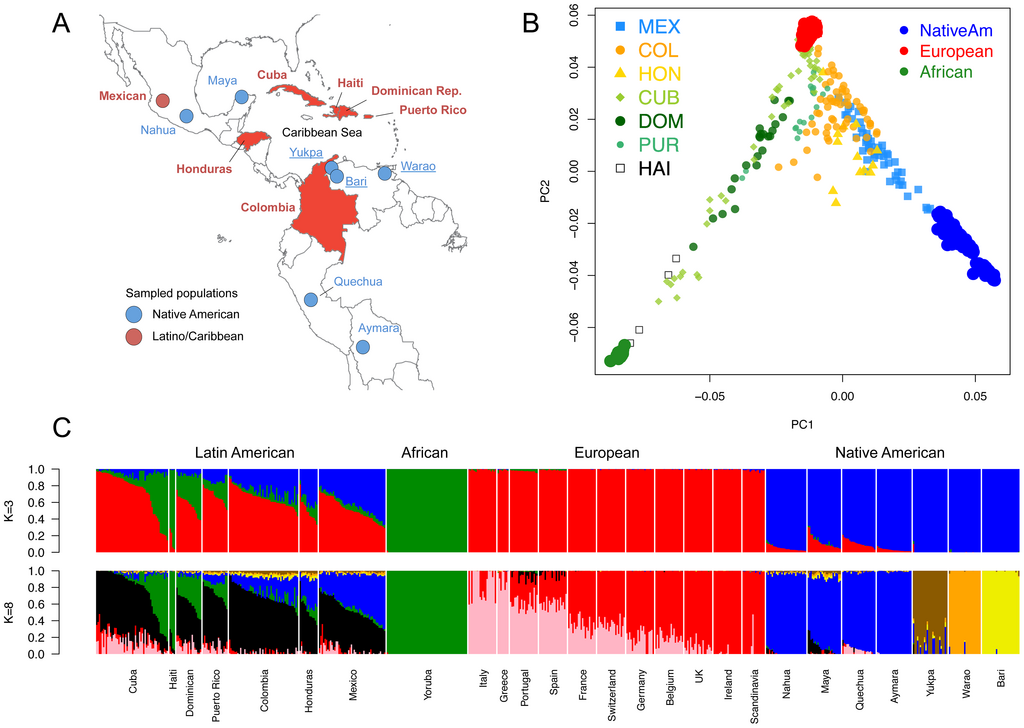
- Biology: Researchers cluster genes with similar functions or expression patterns to understand genetic diseases.
- City Planning: Analysts might cluster neighborhoods based on demographic and infrastructure data to better allocate resources.
- Image Recognition: Clustering can be used to segment an image into different objects or regions, like separating the sky from the ground in a landscape photo.
Unsupervised learning algorithms perform tasks like clustering, where they group similar data points together, or dimensionality reduction, which simplifies complex data while retaining its essence.
Each clustering technique offers a different lens through which to view your data. Understanding these basic approaches is the first step toward uncovering the hidden stories within it.