Daycare Teacher Essentials
Child Development Basics
The Building Blocks of Growth
Every child is on a unique journey of growth, but they all travel through the same general landscapes of development. Think of it like building a house. You need a foundation, walls, a roof, and wiring. For a child, these core components are their physical, cognitive, social, and emotional skills. Each part develops at its own pace, but they are all interconnected.
- Physical development is about the body. It includes large muscle skills (gross motor) like running and jumping, and small muscle skills (fine motor) like holding a crayon.
- Cognitive development is about the mind. This is how children think, learn, solve problems, and make sense of the world.
- Social development is about connecting with others. It’s learning to share, take turns, and build friendships.
- Emotional development is about feelings. It’s a child's ability to understand, express, and manage their emotions.
Milestones on the Journey
As children grow, they reach developmental milestones. These are skills, like waving goodbye, taking a first step, or saying their first word, that most children can do by a certain age. Milestones are not a strict timetable, but rather helpful signposts that show a child is generally on track.
It's important to remember that every child is an individual. Some children might walk early but talk later, while others might be social butterflies but slower to master puzzles. This variation is completely normal. The goal is not to compare children but to understand each one's unique path and provide the right support along the way.
| Age Group | Physical | Cognitive | Social & Emotional |
|---|---|---|---|
| Infants (0-1 year) | Rolls over, sits up, begins to crawl. | Recognizes familiar faces, explores with hands and mouth. | Smiles at people, shows stranger anxiety. |
| Toddlers (1-3 years) | Walks, runs, climbs stairs. | Begins to sort shapes and colors, says first words. | Shows independence, plays alongside other children. |
| Preschoolers (3-5 years) | Hops on one foot, uses scissors. | Asks “why” questions, can follow multi-step instructions. | Takes turns in games, shows empathy. |
How Children Think and Learn
A child's mind is not just a smaller version of an adult's. They think in fundamentally different ways. Young children learn through their senses and actions. They are little scientists, constantly experimenting to figure out how things work. They drop a spoon to see what happens, stack blocks to understand balance, and mix paint to discover new colors.
This hands-on exploration is what we call play. For children, play is not just for fun; it is the most important work they do. Through play, they practice new skills, test their ideas about the world, and develop creativity and problem-solving abilities.
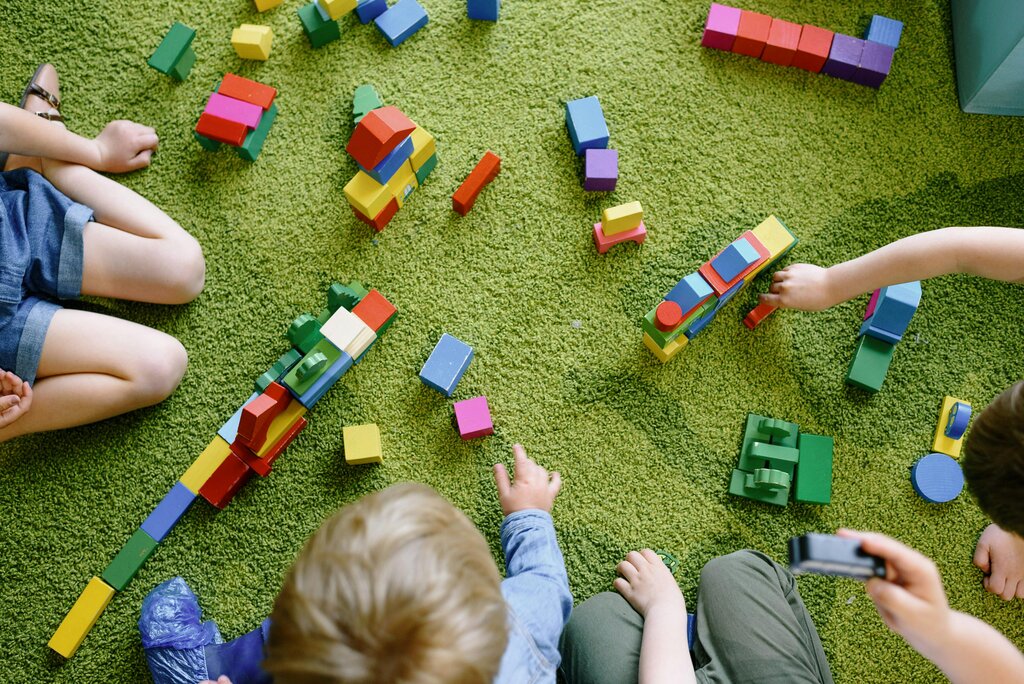
When a child builds a tower, they are learning about gravity and balance. When they engage in pretend play, they are practicing social roles and language skills. Providing a rich, playful environment is one of the most powerful ways to support cognitive development.
The World of Feelings
Learning to navigate the social and emotional world is just as critical as learning to walk or talk. Social development involves learning the unwritten rules of interaction, like sharing toys and listening when someone else is speaking. Emotional development involves learning to identify what they are feeling and how to handle big emotions like anger or frustration in healthy ways.
A child who can name their feelings is better equipped to manage them. As a caregiver, you can help by giving them the words for their emotions. For instance, you might say, “It looks like you’re feeling frustrated that the tower keeps falling down.”
Acknowledging a child's feelings helps them feel understood and teaches them that all emotions are okay, even if all behaviors are not.
Finally, always celebrate the individual. Each child brings their own temperament, interests, and learning style to your classroom. Some are quiet observers who need time to warm up, while others are bold explorers who dive right in. By understanding these fundamental areas of development and appreciating individual differences, you can create a nurturing space where every child can thrive.
Ready to check your understanding? Let's see what you've learned.
Which area of development is primarily concerned with a child's ability to think, learn, and solve problems?
What is the best way to think about developmental milestones?