Day Trading Professionalism in England
UK Asset Selection
Choosing Your Instruments
You understand what stocks, indices, and currency pairs are. The professional's task is to move beyond definitions and select instruments with the right personality for intraday trading. For traders in the UK, this means finding assets with sufficient volatility and liquidity during London market hours. Success isn't just about predicting direction; it's about choosing a vehicle that moves enough to be profitable but is liquid enough to enter and exit without costly slippage.
Equities: FTSE 100 vs FTSE 250
The two primary UK indices offer different characteristics. The is composed of the UK's largest 100 companies. Its components are generally highly liquid, meaning their shares are frequently traded in large volumes. For an intraday trader, this translates to tighter bid-ask spreads and the ability to execute large orders with minimal price impact. While often perceived as less volatile than its mid-cap counterpart, specific stocks within the index can experience significant daily swings, especially around earnings announcements or major economic data releases.
In contrast, the FTSE 250 tracks the next 250 largest companies. These are mid-cap stocks, often more domestically focused than the multinational giants in the FTSE 100. This domestic focus can make them more sensitive to the UK's economic health, leading to higher volatility. For a day trader, this increased price movement can present more opportunities. However, the trade-off is often lower liquidity. Spreads can be wider, and sudden news can cause more dramatic, less predictable price gaps.
Trading a FTSE 100 stock like BP offers deep liquidity, but you might need significant market news to see a large percentage move. A FTSE 250 stock might offer a 5% swing on a broker upgrade, but with a wider spread that eats into profits.
Quantifying Volatility and Volume
To make an informed choice between assets, you need objective measures. The (ATR) is a key indicator for this. It doesn't predict direction, but it measures the typical size of an asset's price movement over a specific period. By comparing the ATR of a FTSE 100 stock to a FTSE 250 stock, you can get a concrete sense of their relative daily volatility.
Volume is the other side of the coin. High volume confirms the conviction behind a price move. An intraday breakout on low volume is often a trap, likely to reverse. A breakout on a surge of volume, however, suggests strong institutional participation and a higher probability of continuation. Before entering a trade, look at the volume profile. Is the volume consistent, or does it only appear in short, unreliable bursts? For intraday trading, you need assets with sustained, high volume throughout the trading session.
FX: The London Session Advantage
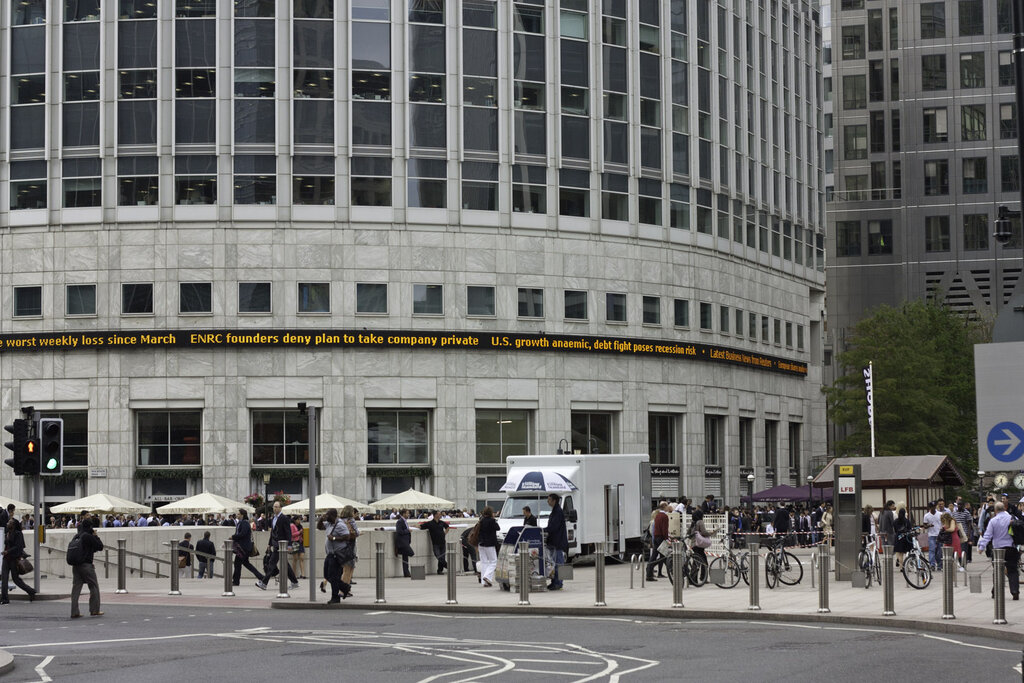
The forex market operates 24 hours a day, but liquidity and volatility are not constant. They peak when major financial centres are open. The is crucial, as it's the most liquid trading session globally. For several hours, it overlaps with both the Asian and New York sessions, creating massive trading volume.
For those focusing on UK assets, GBP pairs are the natural choice. Major pairs like GBP/USD (Cable) and EUR/GBP are extremely liquid during London hours. Their spreads are typically very tight, making them ideal for short-term strategies. Minor pairs, such as GBP/JPY or GBP/AUD, offer higher volatility but come with wider spreads and can be more susceptible to news from their non-GBP cross. Understanding currency correlations is also vital. A strong move in EUR/USD, for instance, will often have a ripple effect on EUR/GBP and GBP/USD as the relative values of the dollar, euro, and pound adjust.