Day Trading Futures Essentials
Introduction to Futures Markets
What Are Futures Contracts?
Imagine a farmer who grows wheat. She's worried the price of wheat will drop before her harvest is ready in three months. At the same time, a large bakery is worried the price of wheat will rise, increasing its costs. They could make a deal.
The bakery agrees to buy the farmer's entire harvest in three months at today's price. Both parties have just locked in a price, protecting themselves from future uncertainty. This simple agreement is the core idea behind a futures contract.
Futures Contract
noun
A legal agreement to buy or sell a particular commodity or financial instrument at a predetermined price at a specified time in the future.
Futures contracts serve two main purposes:
-
Hedging: This is what the farmer and the bakery did. Hedgers use futures to reduce the risk of price volatility. An airline might buy fuel futures to protect against rising oil prices, while an oil producer might sell them to lock in a profitable price.
-
Speculation: This is where day traders come in. Speculators aim to profit from price movements. They buy contracts hoping the price will go up and sell contracts hoping the price will go down. They have no intention of ever taking delivery of the actual oil, corn, or gold. Their activity provides essential liquidity to the market, making it easier for hedgers to find a counterparty.
The Marketplace and Its Players
These contracts aren't just informal agreements. They trade on regulated futures exchanges, like the CME Group (Chicago Mercantile Exchange). The exchange acts as a central marketplace and a middleman for all transactions.
This is crucial because it eliminates counterparty risk—the risk that the other side of your trade will fail to uphold their end of the bargain. The exchange's clearinghouse guarantees every transaction, ensuring that sellers get paid and buyers receive their contracts.
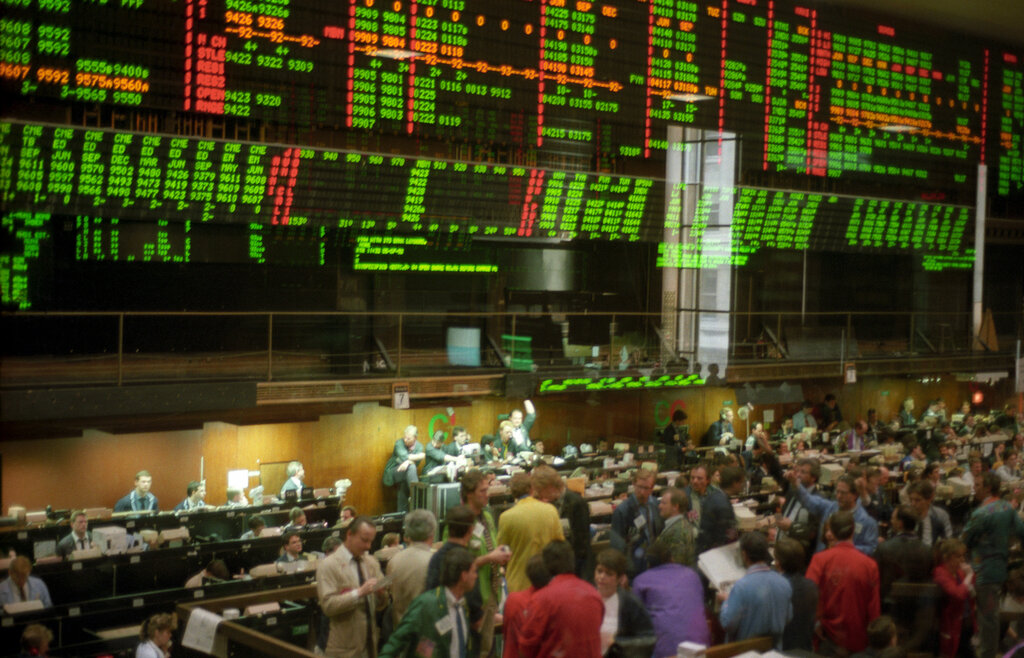
The people trading on these exchanges generally fall into two camps: hedgers and speculators. As a day trader, you'll be a speculator. You're not interested in the underlying bushels of corn or barrels of oil, but in the price fluctuations of the contracts themselves.
Contract Mechanics
To prevent chaos, every futures contract is standardized. The exchange sets the rules so everyone is trading the exact same thing. These rules are called contract specifications.
Key specifications include the asset (e.g., crude oil), the contract size (quantity), and the expiration date.
| Specification | Crude Oil (CL) | E-mini S&P 500 (ES) |
|---|---|---|
| Asset | WTI Crude Oil | S&P 500 Index |
| Exchange | NYMEX | CME |
| Contract Size | 1,000 barrels | $50 x S&P 500 Index Value |
| Price Quote | Dollars per barrel | Index points |
Understanding these details is vital because they determine the value of the contract and how much money you make or lose with each price tick.
Margin and Leverage
When you trade futures, you don't pay the full value of the contract. Instead, you post a good-faith deposit called margin. This isn't a down payment; it's collateral that you must maintain in your account to cover potential losses.
The initial margin is the amount required to open a position. For example, to control a crude oil contract worth over $75,000, you might only need an initial margin of around $7,000.
This brings us to leverage.
Leverage
noun
The use of borrowed capital (in this case, the value of the contract beyond the margin) to increase the potential return of an investment. It magnifies both gains and losses.
Because margin is only a small percentage of the contract's value, you are effectively using leverage. This is the main attraction of futures for day traders. A small price movement can lead to a large profit relative to your margin. However, the reverse is also true. A small price move against you can lead to significant losses, potentially even exceeding your initial deposit.
You must also keep a certain amount of money in your account, known as the maintenance margin. If your account balance drops below this level due to losses, you'll get a "margin call" from your broker, requiring you to deposit more funds to keep the position open.
Leverage is a double-edged sword. It amplifies profits and losses equally.
Now that you have the fundamentals down, let's test your knowledge.