Day Trading Fundamentals
Introduction to Day Trading
What is Day Trading?
Day trading is the practice of buying and selling financial assets within a single trading day. A day trader's goal isn't to hold onto a stock for weeks or months hoping it grows. Instead, they aim to profit from small price fluctuations that happen minute by minute.
The cardinal rule of day trading is simple: close all your positions before the market closes for the day. No holding overnight.
Why this rule? It's all about managing risk. A lot can happen when the market is closed. A company might release bad news, or a global event could shift market sentiment. By closing out all trades, day traders avoid the risk of waking up to a massive loss caused by an overnight price gap.
How It Compares
Day trading is just one of several ways to approach the markets. Its defining feature is its extremely short time frame. Other styles take a longer view.
| Trading Style | Holding Period | Primary Goal |
|---|---|---|
| Day Trading | Minutes to hours | Profit from small, intraday price moves |
| Swing Trading | Days to weeks | Capture larger price swings or 'swings' |
| Investing | Months to years | Long-term growth and capital appreciation |
As you can see, the main difference is how long you hold onto an asset. Day trading requires intense focus throughout the day, while swing trading is less demanding, and long-term investing is the most passive of the three. Each approach requires a different strategy and mindset.
Markets and Tools
Day traders can operate in any market, but they thrive where there's high liquidity and volatility. Liquidity means there are plenty of buyers and sellers, so you can enter and exit trades easily. Volatility means the price is moving enough to create profit opportunities.
Three common markets for day trading are:
- Stocks: Trading shares of companies like Apple or Tesla. The sheer number of available stocks offers endless opportunities.
- Forex (Foreign Exchange): Trading currency pairs, like the Euro versus the U.S. Dollar (EUR/USD). This is the largest financial market in the world and operates 24 hours a day during the week.
- Futures: Trading contracts that agree to buy or sell an asset at a predetermined price on a specific date in the future. These are popular for commodities and stock market indexes.
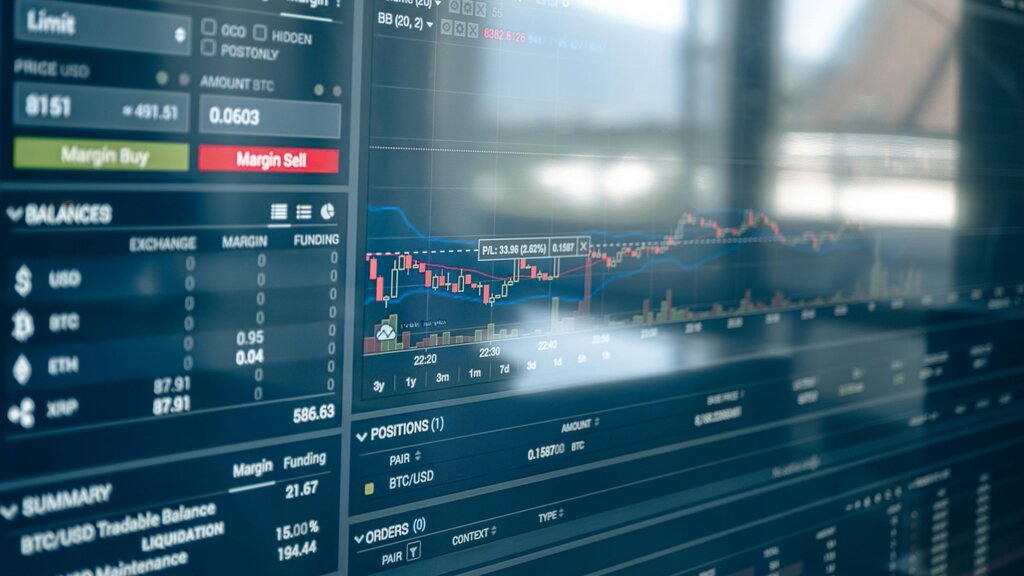
To succeed, a day trader needs the right equipment. This isn't just about having a fast computer. The essential toolkit includes:
- Real-time Data Feeds: You need to see price changes the instant they happen. Delayed data is useless for making split-second decisions.
- Direct-Access Trading Platform: These platforms provide the speed needed to execute trades quickly. In a game of seconds, a slow platform can be the difference between a profit and a loss.
- Analytical Software: Charting software is crucial for analyzing price patterns and identifying potential trades. These tools help traders make informed decisions rather than just guessing.
Paper trading allows you to practice advanced trading strategies, like options trading, with fake cash before you risk real money.
Before risking any actual capital, many new traders use paper trading simulators offered by their brokers. This allows you to practice with the same tools and real-time data but with virtual money. It's an essential step for testing strategies and getting comfortable with your platform.
What is the primary characteristic that defines day trading?
Why do day traders typically close all their positions before the market closes?