Day Trading Fundamentals
Introduction to Day Trading
What Is Day Trading?
Day trading is the practice of buying and selling financial assets within a single trading day. Unlike long-term investors who might hold stocks for years, a day trader's goal is to profit from small, short-term price movements. All positions are opened and closed before the market shuts down for the day, meaning no trades are held overnight.
The core objective is simple: accumulate small gains from many trades that add up over time. This high-frequency approach separates it from other styles like swing trading or buy-and-hold investing.
The Day Trader's Environment
Day traders thrive in a specific kind of market environment. Two factors are especially important: liquidity and volatility. Without them, it's nearly impossible to make the quick, small-margin trades that the strategy depends on.
Liquidity
noun
The ease with which an asset can be bought or sold at a stable price. In a liquid market, there are many buyers and sellers, so you can execute trades quickly without significantly moving the price.
High liquidity is a day trader's best friend. It ensures you can get in and out of a position almost instantly. If a market is illiquid, you might get stuck in a trade, unable to sell at your desired price because there aren't enough buyers.
Volatility
noun
The degree to which an asset's price fluctuates. High volatility means prices are moving up and down rapidly, while low volatility indicates stability.
If liquidity allows you to trade, volatility gives you a reason to. A stock that doesn't move in price offers no chance for profit. Day traders look for assets that have enough daily movement to create opportunities, but not so much that the risk becomes unmanageable.
Speaking the Language
Before placing a trade, you need to know some basic terminology. Every trade involves taking a 'position' and placing an 'order'.
| Position | Your Bet | How You Profit |
|---|---|---|
| Long | The price will go up. | You buy low and aim to sell high. |
| Short | The price will go down. | You borrow an asset, sell it high, and aim to buy it back low. |
Taking a long position is straightforward. It's what most people think of as investing. Short selling is more complex but allows traders to profit even when the market is falling.
Once you decide on your position, you need to tell your broker how to execute it. This is done with an order.
| Order Type | What It Does | When to Use It |
|---|---|---|
| Market Order | Buys or sells immediately at the best available current price. | When speed is your top priority and you're willing to accept the current market price. |
| Limit Order | Buys or sells only at a specific price or better. | When the price is more important than the speed of execution. Your order may not be filled if the price doesn't reach your limit. |
For example, if you place a limit order to buy a stock at $50, your order will only execute if the stock's price drops to $50 or lower. This gives you control over your entry and exit points.
Essential Tools of the Trade
Day trading isn't something you do from a basic mobile app while waiting in line for coffee. It requires a specific set of tools to compete effectively.
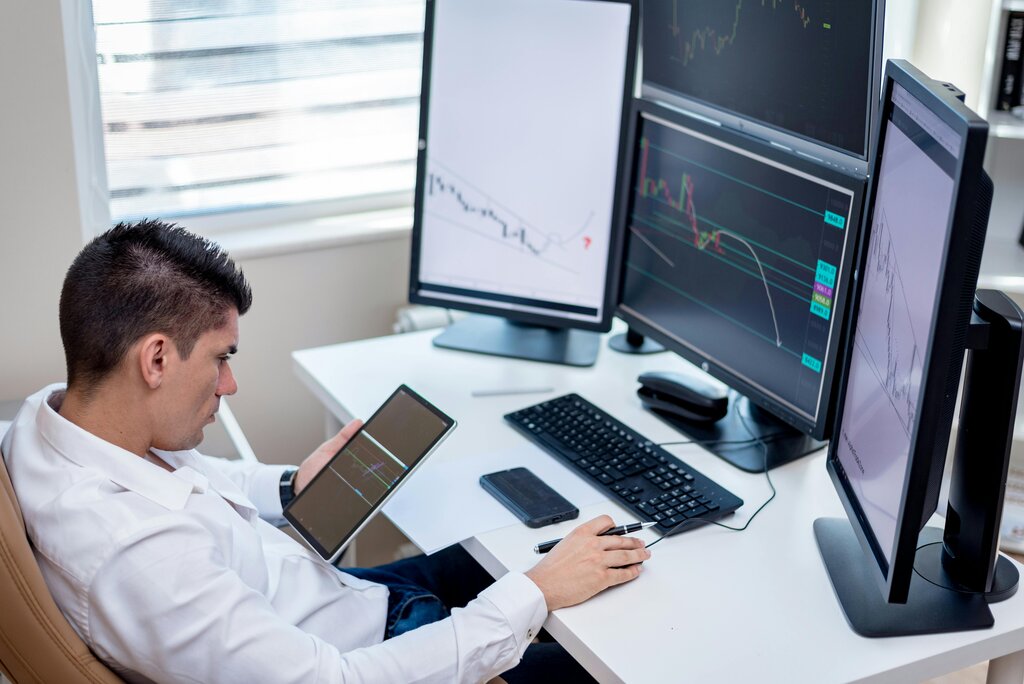
First, you need a powerful computer and a fast, reliable internet connection. Lag can cost you money when trades are executed in fractions of a second.
Next is a trading platform. This is the software you'll use to view market data and place orders. A good platform provides:
- Direct Market Access (DMA): This lets you place orders directly with the stock exchange, ensuring the fastest possible execution.
- Real-Time Data: You need live, streaming price quotes, not delayed information.
- Advanced Charting Tools: Charts are the primary tool for analyzing price movements and identifying potential trade setups.
A practical approach includes setting predefined entry and exit points based on thorough analysis rather than market noise.
This foundation of clear goals, key terms, and the right tools is the first step. It provides the framework for navigating the fast-paced world of intraday markets.