Databricks Unified Analytics
Introduction to Databricks
One Platform for All Your Data
Databricks is a platform that simplifies working with large amounts of data. Think of it as a central hub where all the different data-related tasks can happen together. Instead of having separate tools for storing data, cleaning it up, analyzing it, and building AI models, Databricks puts everything in one place. This makes it easier for teams to collaborate and move from raw data to useful insights.
By unifying data engineering, data science, analytics and machine learning into one ecosystem Databricks allows companies to transform raw data into production ready AI applications at scale.
This unified approach is built on a few core technologies that work together. The goal is to make data accessible and useful for everyone, from engineers who build data pipelines to scientists who create predictive models.
The Engine: Apache Spark
At the heart of Databricks is Apache Spark, a powerful open-source engine for processing massive datasets. When you have a task that’s too big for a single computer to handle, Spark breaks it down into smaller pieces and runs them across many machines at once. This is called distributed computing.
Imagine you have to count every word in a giant library. Doing it alone would take forever. Spark is like having thousands of assistants who each take a few books, count the words, and then combine their results to give you the final tally in a fraction of the time.
Databricks was created by the same people who originally developed Spark. They built the platform to make Spark easier to use, managing the complex setup of computer clusters so users can focus on their data tasks. This integration means that when you run code in Databricks, you're tapping into the power of distributed processing without having to manage the underlying infrastructure.
Smarter Storage and Architecture
How you store data is just as important as how you process it. Traditionally, companies faced a choice between two types of storage systems: data warehouses and data lakes.
| System | Best For | Downside |
|---|---|---|
| Data Warehouse | Structured data, business analytics | Inflexible, struggles with diverse data |
| Data Lake | Raw, unstructured data (images, logs) | Can become disorganized and unreliable |
Databricks champions a hybrid approach called the Lakehouse. It combines the flexibility and low cost of a data lake with the reliability and performance of a data warehouse.
This is made possible by Delta Lake, an open-source storage layer that sits on top of your data lake. Delta Lake adds critical features like ACID transactions, which ensure that your data operations complete fully or not at all, preventing data corruption. It also allows you to manage different versions of your data, making it possible to go back in time if a mistake is made.
Delta Lake is an open-source storage layer that brings ACID transactions, scalable metadata management, and batch and streaming data processing to Apache Spark.
Managing the ML Lifecycle
Building a machine learning model involves many steps: preparing data, experimenting with different algorithms, tracking results, and eventually deploying the best model. This process can get messy quickly, with countless versions of code, data, and models.
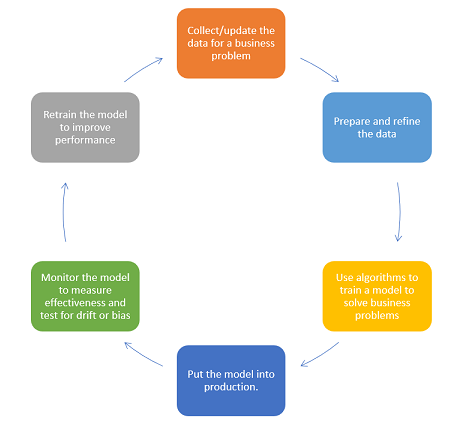
Databricks integrates another open-source tool called MLflow to manage this entire lifecycle. MLflow helps data scientists track their experiments by logging parameters, code versions, and performance metrics. It also simplifies packaging and deploying models, ensuring that a model that works on a laptop will also work in a production environment.
| MLflow Component | Function |
|---|---|
| Tracking | Records and compares experiment parameters and results. |
| Projects | Packages code in a reusable and reproducible format. |
| Models | Manages and deploys models from various ML libraries. |
| Model Registry | Provides a central place to manage the lifecycle of a model. |
By bringing Spark, Delta Lake, and MLflow together, Databricks provides a single, consistent environment for data teams. This integration speeds up the journey from raw information to impactful, data-driven decisions.