Databricks Fundamentals
Introduction to Databricks
What Is Databricks?
Databricks is a platform designed to handle the entire lifecycle of data, from raw storage to complex machine learning models. It brings together data engineering, data science, and business analytics into a single, collaborative environment. Think of it as a central workshop where all your data experts can work together with the same set of powerful tools, rather than being siloed in different departments with incompatible equipment.
Databricks is an advanced data and AI platform built on Apache Spark, designed to handle large-scale data engineering, machine learning, and analytics.
At its core, Databricks is built on top of Apache Spark, an open-source engine designed for big data processing. This foundation allows Databricks to process massive amounts of data incredibly quickly. However, Databricks adds a layer of user-friendly tools and collaborative features on top of Spark, making it more accessible to a wider range of users, not just highly specialized engineers.
Purpose and Benefits
The main goal of Databricks is to simplify big data analytics. In a traditional setup, a company might use one tool to extract and prepare data (ETL), another for analysis, and a third to build and deploy machine learning models. This creates a clunky, inefficient workflow where data has to be moved between different systems, increasing complexity and the potential for errors.
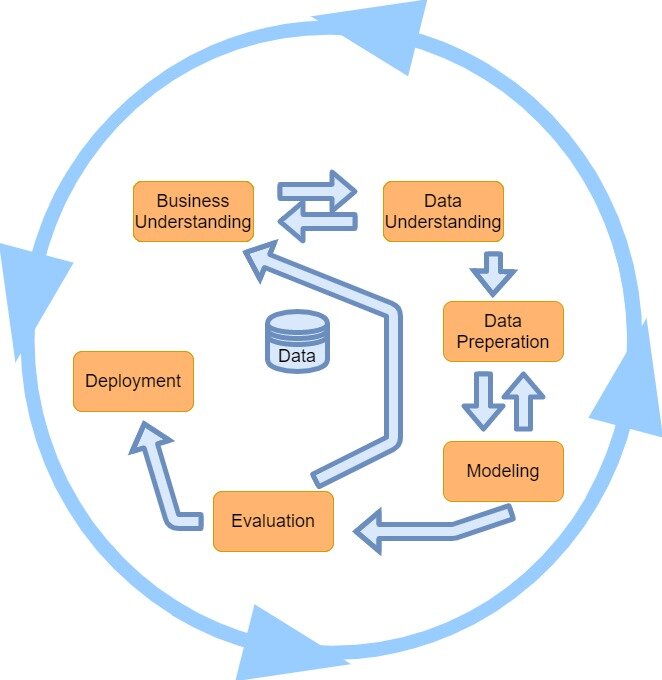
Databricks solves this by creating a unified space. This approach has several key benefits:
- Collaboration: Data engineers, scientists, and analysts can work together on the same data and code in shared notebooks. This breaks down silos and speeds up projects.
- Efficiency: By combining all the necessary tools in one place, it eliminates the need to move data between different platforms. This saves time and computational resources.
- Scalability: Since it's built on Spark and integrated with cloud providers, Databricks can easily scale up or down to handle any amount of data, from gigabytes to petabytes.
The platform consolidates data storage, processing, and analytics, creating a single source of truth for all data-related tasks.
How It Fits In Your Data World
Databricks isn't designed to replace your existing data storage. Instead, it integrates directly with it. Most companies store their data in cloud data lakes, like Amazon S3, Google Cloud Storage, or Azure Data Lake Storage. Databricks sits on top of this storage, providing the engine to process and analyze the data right where it lives.
Databricks serves as a cohesive data intelligence platform, seamlessly integrating with cloud storage and security within your cloud account.
This architecture is powerful because you don't need to create and maintain a separate copy of your data for the Databricks platform. It reads data directly from your data lake, processes it, and can write the results back to the same location. This maintains a single source of truth and simplifies data governance and security, as you manage access controls in one place: your cloud account.
What is the primary problem Databricks aims to solve for organizations working with big data?
What open-source processing engine is at the core of the Databricks platform, enabling it to handle massive datasets efficiently?
Now that you have a foundational grasp of what Databricks is, you're ready to explore how its different components work together.