Databricks Fundamentals for Data Professionals
Introduction to Databricks
A Workshop for Your Data
Think of a massive, messy workshop. You have tools for cutting wood in one corner, metalworking in another, and painting in a third. To build something complex, you'd have to constantly run back and forth, moving your project from station to station. It’s inefficient and complicated.
This is often what working with big data feels like. Data engineers, data scientists, and machine learning specialists use different tools and systems to do their jobs. Databricks was created to solve this problem by putting all the necessary tools in one organized, high-powered workshop.
Databricks is a unified, open analytics platform designed to build, deploy, and maintain enterprise-grade data, analytics, and AI solutions at scale.
Essentially, it’s a single, cloud-based environment where teams can work together on everything from raw data processing to building complex artificial intelligence models. It removes the need to switch between different, disconnected systems, making the entire process smoother and faster.
The Spark Connection
To understand Databricks, you need to know about Apache Spark. Spark is a powerful open-source engine designed to process enormous amounts of data quickly across many computers at once. The original creators of Spark founded the company Databricks to make Spark easier to use for businesses.
Think of Spark as a high-performance car engine. It’s incredibly powerful, but you need a car built around it—with a chassis, steering wheel, and pedals—to actually drive it. Databricks is that complete car. It provides a user-friendly interface, security, and collaborative tools built on top of the raw power of Spark.
Apache Spark
noun
An open-source, distributed computing system used for big data processing and analytics. It's known for its speed in handling large datasets.
This integration means that users get the best of both worlds: the lightning-fast processing of Spark without the complexity of managing the underlying infrastructure.
From Raw Data to AI
Databricks is built for the entire data lifecycle. It supports the distinct but connected workflows of data engineering and data science.
Data engineers are the architects of data. They collect raw data from various sources, clean it up, and structure it into reliable pipelines. In Databricks, they can build and manage these pipelines efficiently, ensuring that high-quality data is always available for analysis.
Data scientists and analysts then use this clean data to find insights and build predictive models. They can explore the data, visualize it, and use machine learning libraries to create AI applications. Databricks provides them with interactive notebooks where they can write code and see results instantly, making it easy to experiment and iterate.
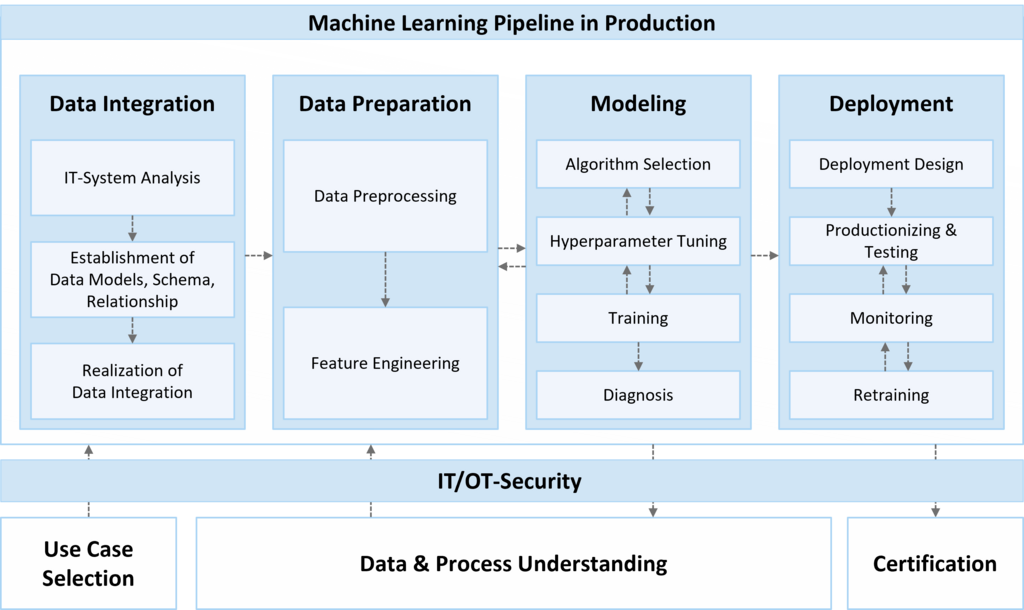
By having both of these roles work in the same platform, collaboration becomes seamless. A data scientist who finds an issue with the data can easily communicate with the data engineer, who can then fix the pipeline. This unified approach avoids the silos that slow down traditional data teams.
Why Not Just Stick to the Old Ways?
Traditional data processing tools often struggle with the scale and speed required today. A common setup might involve separate systems for data storage (a data warehouse), data processing (ETL tools), and machine learning (specialized platforms). Moving massive datasets between these systems is slow, expensive, and error-prone.
Databricks introduces a concept called the "lakehouse architecture." It combines the low-cost storage of a data lake with the performance and reliability of a data warehouse. This means you can store all your data—structured and unstructured—in one place and analyze it directly, without a lot of costly and complex data movement.
| Feature | Traditional Approach | Databricks Approach |
|---|---|---|
| Architecture | Separate, siloed systems | Unified lakehouse platform |
| Data Movement | Frequent and slow | Minimal; analyze data in place |
| Collaboration | Difficult between teams | Seamless and integrated |
| Data Types | Primarily structured data | All data types (structured, unstructured) |
This modern approach simplifies the entire data landscape for an organization. It leads to faster insights, more effective AI models, and better collaboration across teams.
What is the core problem that Databricks was created to solve?
Using the 'car' analogy, if Apache Spark is the high-performance engine, what is Databricks?
That's a brief look at what Databricks is and why it's become a key platform in the world of big data and AI. It brings together the people, processes, and tools needed to turn raw data into valuable outcomes.