Databricks for Data Architects
Databricks Fundamentals
What is Databricks?
Databricks is a platform designed to handle all of a company's data needs in one place. Think of it as a unified workspace where data engineers, data scientists, and machine learning specialists can all collaborate. It's built on top of Apache Spark, a powerful open-source engine for processing massive datasets quickly.
Databricks serves as a cohesive data intelligence platform, seamlessly integrating with cloud storage and security within your cloud account.
The main goal of Databricks is to simplify big data analytics. Instead of juggling separate tools for data processing, analysis, and machine learning, teams can use a single, integrated environment. This streamlines workflows and makes it easier to turn raw data into valuable insights.
Beyond Warehouses and Lakes
Historically, companies had two main options for storing data. A data warehouse was great for storing structured data, like sales reports, in a clean, organized way. It provided excellent performance for business queries but was expensive and rigid. It couldn't handle unstructured data like images or text.
A data lake, on the other hand, was a cheap way to store vast amounts of raw data in any format. This flexibility was its biggest strength and its biggest weakness. Without strong organization and quality checks, data lakes often turned into messy "data swamps" where finding reliable information was nearly impossible.
Databricks introduced the Lakehouse architecture to solve this problem. It combines the best features of both worlds: the reliability and performance of a data warehouse with the flexibility and low cost of a data lake. This approach creates a single source of truth for all data, from structured tables to raw video files, allowing for both traditional business analytics and advanced machine learning on the same platform.
The Role of Delta Lake
The technology that makes the Lakehouse possible is Delta Lake. It's an open-source storage layer that sits on top of your existing data lake (like Amazon S3 or Azure Data Lake Storage). Delta Lake brings reliability and performance to your raw data files.
Delta Lake adds a transaction log to your data files, bringing ACID transactions to your data lake. This means operations are atomic, consistent, isolated, and durable, preventing data corruption and ensuring reliability.
Key features of Delta Lake include:
- ACID Transactions: This database-level feature ensures that your data operations either complete successfully or not at all, preventing partial updates and data corruption.
- Schema Enforcement: It prevents bad data from being written into your tables by checking that the new data's schema matches the table's expected schema.
- Time Travel: Delta Lake versions your data, allowing you to query previous snapshots of a table. This is incredibly useful for auditing, rolling back mistakes, or reproducing experiments.
- Unified Batch and Streaming: It treats streaming data and batch data as a single concept, simplifying data pipelines that need to handle both.
Databricks recommends storing data with Delta Lake.
Essentially, Delta Lake transforms a standard data lake from a simple file repository into a reliable, high-performance database system, ready for any analytics task.
One Platform, Many Roles
The true power of the Databricks Lakehouse Platform is how it integrates the entire data lifecycle. Different teams can work on the same data without moving it between systems, which improves collaboration and efficiency.
- Data Engineers build and manage reliable data pipelines. They use tools to extract, transform, and load (ETL) data into the Lakehouse, ensuring it's clean and ready for analysis.
- Data Scientists and Analysts explore the data. They can use SQL to query the data directly for business intelligence reports or use collaborative notebooks with Python or R to perform exploratory analysis and build visualizations.
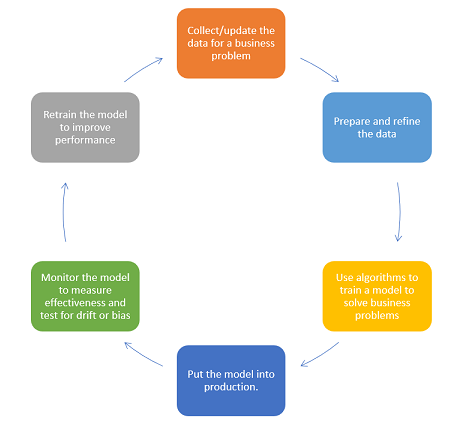
- Machine Learning Engineers develop, train, and deploy machine learning models at scale. They use integrated tools like MLflow to manage the entire machine learning lifecycle, from experimentation to production.
By bringing these functions together, Databricks eliminates the silos that often separate data teams, fostering a more collaborative and efficient data-driven culture.
What is the primary architectural concept that Databricks promotes to combine the benefits of data warehouses and data lakes?
Which open-source technology provides the foundational storage layer for the Databricks Lakehouse, adding reliability features like ACID transactions to a data lake?
This foundation sets the stage for designing modern data architectures. Understanding these core components is the first step toward building scalable and effective data solutions.