Databricks and Collibra for Data Governance
Introduction to Data Governance
What is Data Governance?
Think of a bustling city. For it to function, it needs rules: traffic laws, zoning regulations, and public services. Without this structure, you'd have chaos. Data governance is the set of rules for an organisation's data. It’s a framework of policies, processes, and roles that ensure data is managed as a valuable asset.
Data Governance
noun
The overall management of the availability, usability, integrity, and security of the data used in an enterprise.
In today's world, organisations collect vast amounts of data. But raw data isn't useful on its own. It can be messy, inconsistent, or insecure. Governance brings order to this chaos. It ensures that when someone in your organisation pulls up a customer report or analyses sales figures, they are working with information that is accurate, trustworthy, and secure. It's not just about control; it's about enabling people to use data confidently to make better decisions.
The Core Components
A strong data governance framework rests on a few key pillars. These components work together to create a reliable data ecosystem.
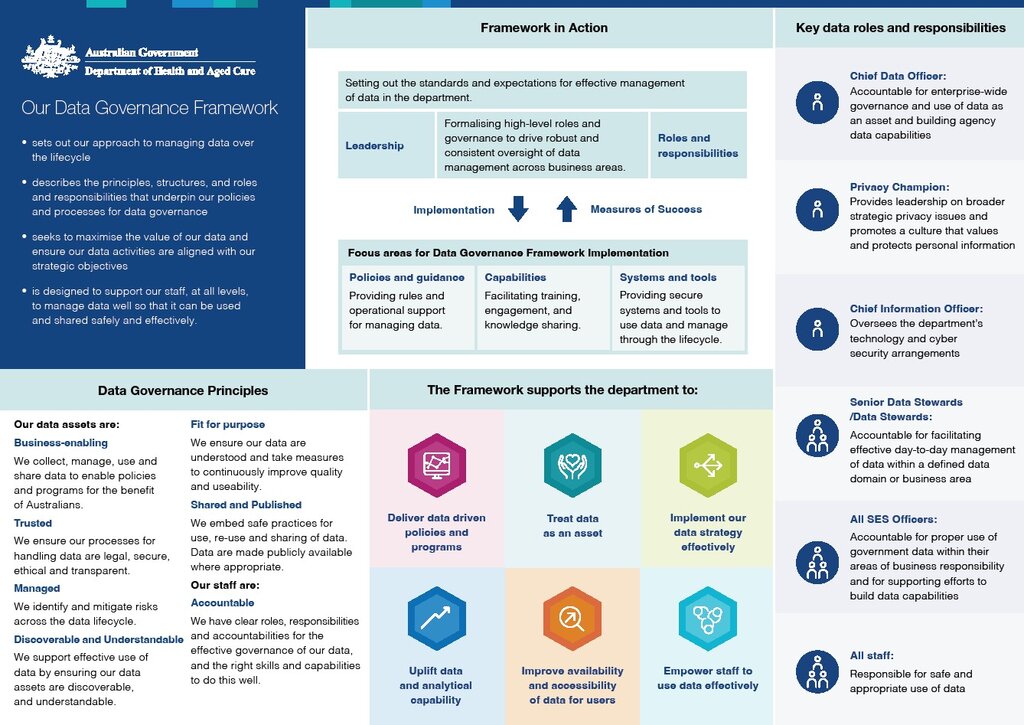
Data Quality This is about ensuring data is fit for its purpose. High-quality data is accurate, complete, consistent, and timely. Imagine a marketing team trying to send out a mailer. If the customer address data is full of typos, missing postcodes, or outdated information, the campaign will fail. Data quality initiatives focus on cleaning, standardising, and validating data so it can be trusted.
Data Security Security involves protecting data from unauthorised access, use, or disclosure. This isn't just about preventing hackers. It also means setting up internal controls so that employees can only access the data they need to do their jobs. Measures like encryption, access controls, and regular security audits are fundamental to keeping sensitive information safe.
Compliance Organisations must follow a web of laws and regulations governing data, such as the GDPR in Europe or various industry-specific rules. Compliance means understanding these legal requirements and building processes to meet them. Failing to comply can lead to hefty fines, legal trouble, and a loss of customer trust.
Common Challenges
Implementing data governance is not a simple task. It’s a significant organisational change that often faces hurdles.
One of the biggest challenges is simply getting started. Many organisations don't know where to begin or struggle to get buy-in from leadership and different departments.
Another major issue is breaking down organisational silos. Often, different departments manage their own data in their own way. The finance team's customer data might not match the sales team's, leading to confusion and inefficiency. A successful governance program requires cross-departmental collaboration.
One of the most significant challenges in data governance is breaking down organizational silos and fostering collaboration across departments and business units.
Finally, there's the human element. People are often resistant to change. Implementing new processes and assigning clear ownership for data can feel bureaucratic or threatening to existing workflows. Overcoming this requires clear communication about the benefits of governance and strong leadership support to drive the cultural shift.
Now, let's test your understanding of these core concepts.
What is the primary purpose of data governance in an organisation?
A marketing team's campaign fails because many customer addresses are outdated or contain typos. This is a failure in which pillar of data governance?