Database Sharding Explained
Introduction to Database Sharding
When a Database Gets Too Big
Imagine a library with a single, enormous book containing every piece of information. At first, it's manageable. But as more and more information is added, finding anything becomes incredibly slow. The book is too heavy to move, and only one person can read it at a time. This is what happens when a single database grows too large. Queries slow down, performance suffers, and the whole system becomes a bottleneck.
To solve this, we can't just get a bigger, stronger computer. That's called vertical scaling, and it has its limits. Eventually, you need a different approach. Instead of one giant book, what if we split the information into a collection of smaller, more focused books? This is the core idea behind sharding.
sharding
verb
The process of breaking up a large database into smaller, faster, more manageable parts called shards. Each shard is its own database, but together they act as a single logical database.
Sharding distributes data across multiple machines, allowing a system to scale horizontally by simply adding more servers.
How Sharding Works
In a sharded architecture, your application doesn't talk directly to dozens of different databases. Instead, it usually communicates with a routing layer or query broker. This component knows how the data is split up. When your application requests a piece of data, the router consults a 'shard key'—a specific piece of data like a user ID or geographic location—to figure out exactly which shard holds the information. It then directs the query to the correct database.
This setup makes the system incredibly efficient. Instead of one massive database searching through millions of records, a small, targeted database searches through only a fraction of them. To the application, it looks like a single, lightning-fast database.
Splitting the Data
Deciding how to split the data is the most critical part of designing a sharded system. There are two primary strategies for this: horizontal and vertical sharding.
Think of it like organizing a massive collection of user data. You could split it by the users themselves, or you could split it by the type of information you have about each user.
Horizontal Sharding
This is the most common approach. Horizontal sharding involves putting different rows into different tables. The schema (the columns) of each table is identical across all shards. For example, if you have a database of one billion users, you could split it into ten shards, each holding one hundred million users. A user's ID could be the shard key that determines which database their data lives on.
| User ID | Name | Shard | |
|---|---|---|---|
| 1 | Alice | alice@example.com | 1 |
| 2 | Bob | bob@example.com | 2 |
| 3 | Charlie | charlie@example.com | 1 |
| 4 | David | david@example.com | 2 |
Vertical Sharding
Vertical sharding involves splitting a table by its columns. You put different sets of columns into different tables. This is useful when some columns are queried much more frequently than others. For instance, you might have a user table with profile information (name, email) and also columns that track user activity (last login, posts created). The profile data is needed often, but the activity data is not. You could place the profile columns in one shard and the activity columns in another.
This strategy separates the data based on its function, which can help optimize performance for different types of queries. Each shard contains data for all users but only for a subset of columns.
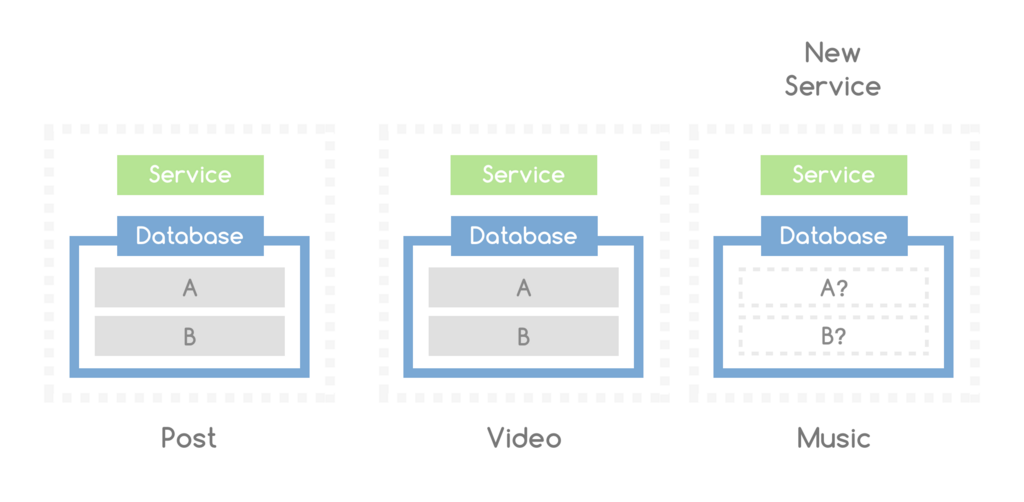
Many large-scale systems use sharding to manage massive amounts of data. E-commerce platforms shard customer orders by region or customer ID. Social media companies shard user posts and profiles. Financial systems shard transactions. It's a fundamental technique for building systems that can grow to handle global traffic without collapsing under the load.
What is the primary problem that database sharding is designed to solve?
The process of upgrading to a more powerful single server (e.g., adding more CPU or RAM) to handle increased load is known as what?