Database Design and Management Essentials
Introduction to Databases
What Is a Database?
At its core, a database is simply an organized collection of data. Think of it as a digital filing cabinet, but far more powerful. Instead of paper files, you have structured information that can be accessed, managed, and updated with incredible speed and efficiency. Every time you check your bank balance, scroll through a social media feed, or shop online, you're interacting with a database.
The main purpose of a database is to store large amounts of information in a way that makes it easy to find what you need. Without them, businesses would drown in data, and the apps we use daily wouldn't work. They provide a reliable way to handle everything from customer records and product inventories to user posts and financial transactions.
Databases are the organized memory behind almost every piece of modern software.
But a database isn't just the data itself. To interact with it, we use special software.
DBMS
noun
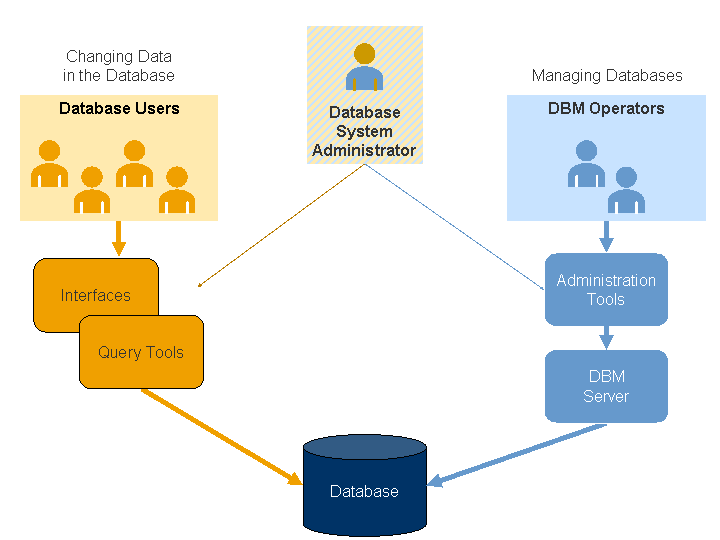
A Database Management System (DBMS) is the software that acts as an interface between the user and the database. It handles all the requests to read, write, update, or delete data, ensuring everything is secure and consistent.
Popular examples of DBMSs include MySQL, PostgreSQL, MongoDB, and Oracle. You don't interact with the raw data files directly; you use a DBMS to do the work for you. This system manages everything from user access to data backups and recovery.
Types of Databases
Databases come in two main flavors: relational and non-relational. The choice between them depends entirely on what kind of data you're storing and how you plan to use it.
Relational Databases
Relational databases have been the standard for decades. They organize data into tables, which are similar to spreadsheets. Each table consists of rows and columns.
- Columns represent a specific attribute, like
FirstNameorEmail. - Rows represent a single record, like one specific customer.
Tables can be linked to each other through relationships. For example, a Customers table might be linked to an Orders table. This structure is very predictable and great for ensuring data integrity. These databases use a language called SQL (Structured Query Language) to manage and query data.
Relational databases are best for structured data where relationships are clearly defined and consistency is key.
| UserID | FirstName | LastName | |
|---|---|---|---|
| 1 | Alice | Smith | alice.s@email.com |
| 2 | Bob | Johnson | bjohnson@email.com |
| 3 | Carol | Williams | carol@web.com |
Non-Relational Databases
Also known as NoSQL (Not Only SQL) databases, these are more flexible and don't rely on the rigid table structure. They're designed to handle large volumes of data that might not have a consistent structure, like social media posts, sensor data, or user comments.
There are several types of NoSQL databases, including:
- Document Databases: Store data in documents, often in a format like JSON. Each document can have its own unique structure.
- Key-Value Stores: The simplest type, where data is stored as a collection of key-value pairs.
- Graph Databases: Used to store data about networks, like social connections or supply chains, focusing on the relationships between data points.
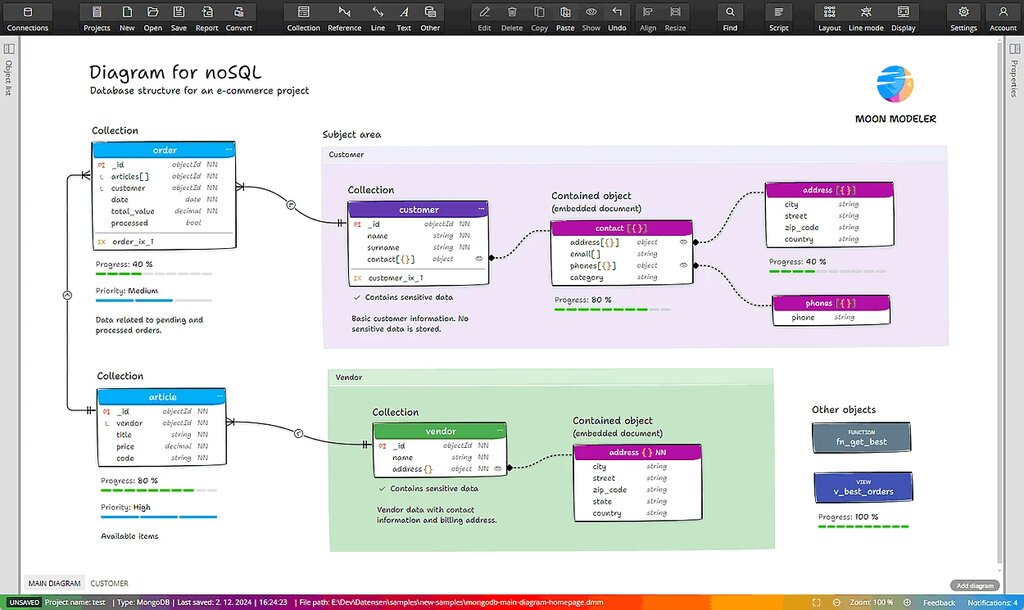
Non-relational databases offer flexibility and scalability, making them ideal for unstructured data and large-scale applications.
Which One to Choose?
Deciding between a relational and non-relational database depends on your project's needs. Here's a quick comparison:
| Feature | Relational (SQL) | Non-Relational (NoSQL) |
|---|---|---|
| Data Structure | Structured (tables, rows, columns) | Flexible (documents, key-value, graph) |
| Schema | Pre-defined and rigid | Dynamic and flexible |
| Scalability | Scales vertically (more power to one server) | Scales horizontally (more servers) |
| Use Cases | Financial systems, e-commerce, any application requiring high data consistency. | Big data, real-time web apps, content management, social media. |
Many modern applications actually use both. They might use a relational database for core business transactions and a non-relational one for handling things like user-generated content or analytics data.
What is the primary purpose of a database?
Which of the following scenarios is best suited for a relational (SQL) database?