Data Structures Explained
Introduction to Data Structures
What Are Data Structures?
Think about a library. If all the books were thrown in a giant pile, finding a specific one would be a nightmare. Libraries organize books by genre, then alphabetically by author. This system makes finding a book fast and efficient.
In computer science, a data structure is a way of organizing and storing data to be accessed and used effectively. It’s a container for data that follows a specific layout. Just like a library's system, the layout you choose depends entirely on what you want to do.
Some tasks require finding a specific item quickly, while others involve processing a long sequence of items in order. The right data structure makes these tasks much easier for a computer to handle.
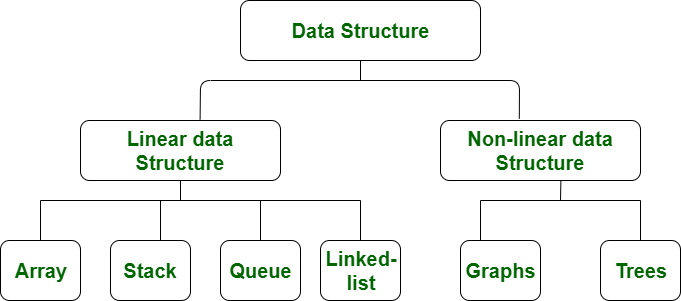
Choosing the wrong data structure is like trying to carry soup in your pocket. It might technically work, but it’s going to be slow, messy, and inefficient. The right choice makes your code faster and more powerful.
The Building Blocks of Data
Before we can build complex structures, we need to understand the basic materials. In programming, these are called primitive data types. They are the simplest, most fundamental units of data.
| Data Type | Description | Example |
|---|---|---|
| Integer | Whole numbers, without fractions or decimals. | 42, -7, 0 |
| Float | Numbers that have a decimal point. | 3.14, -0.001, 99.9 |
| Character | A single letter, number, or symbol. | 'A', '%', '5' |
| Boolean | Represents one of two values: true or false. | true, false |
These primitives are like individual bricks. You can't build a house with a single brick, but they are the essential components you need to create larger, more elaborate data structures like arrays, lists, and trees.
Why Structure Matters
A data structure doesn't exist in a vacuum. It works hand-in-hand with an algorithm, which is a step-by-step procedure for solving a problem. Think of it this way: the data structure is your kitchen's layout, and the algorithm is the recipe. A well-organized kitchen with ingredients in logical places makes following the recipe much faster.
The relationship between data structures and algorithms is fundamental. The choice of a data structure directly impacts an algorithm's efficiency. We measure this efficiency in two primary ways: time complexity and space complexity.
Time Complexity
noun
Measures how the runtime of an algorithm grows as the size of the input data grows. It's about how many steps the computer has to take.
Imagine looking for a name in a phone book. Because the names are sorted alphabetically (a simple data structure), you can flip to the right section and find it quickly. Now, imagine trying to find that same name in a giant, unsorted pile of business cards. It would take you much, much longer. The sorted structure allows for a more efficient search algorithm.
Space Complexity
noun
Measures the amount of memory or storage space an algorithm needs to run as the size of the input data grows. It's about how much room the process takes up.
If a recipe requires you to have ten mixing bowls out on the counter at once, you're using a lot of space. An algorithm that creates many temporary copies of data has high space complexity. A good data structure helps you design algorithms that are not only fast but also mindful of memory usage.
Ultimately, the goal is to pick a data structure that allows for an algorithm with the lowest possible time and space complexity for your specific problem.
Ready to check your understanding? Let's try a few questions.
What is the primary purpose of a data structure in computer science?
If an algorithm is like a recipe, what is the data structure most like?
Understanding these core concepts is the first step. Data structures are the foundation upon which efficient, scalable, and powerful software is built.