Data Structures and Algorithms Essentials
Introduction to Data Structures
Organizing Your Digital World
Think about how you organize your clothes. You might fold T-shirts in a drawer, hang coats in a closet, and keep socks paired together. Each method is chosen for a reason. It would be silly to hang each sock on its own tiny hanger, just as it would be messy to throw all your coats into a single drawer. The way you organize things makes them easier to find and use.
In the world of computing, data needs to be organized too. A data structure is simply a specific way of organizing and storing data in a computer so it can be accessed and used efficiently. The goal is to arrange data to suit a specific purpose, so you can solve a particular problem with as little effort as possible.
Choosing the right data structure is like choosing the right tool for a job. A hammer is great for nails, but not so great for screws. The right structure makes your code faster, more efficient, and easier to manage.
A Tour of Common Structures
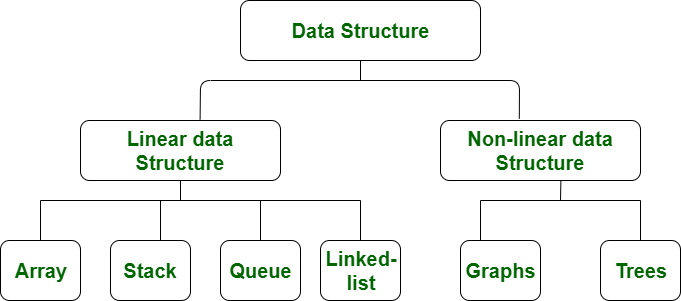
Just as there are different ways to organize a kitchen, there are many different data structures programmers can use. Let's look at a few of the most fundamental ones. We won't get into the nitty-gritty of how to build them, but we'll explore the main idea behind each.
Arrays
An array is like a row of numbered mailboxes. It’s a collection of items stored in a sequence, and each item has a specific numbered slot, or index. If you know the index, you can go directly to that item, just like finding a letter in mailbox #5. This makes arrays very fast for retrieving data when you know its position.
Linked Lists
A linked list is more like a scavenger hunt. Each item in the list, called a node, holds some data and also contains a pointer to the location of the next item. To find something, you start at the beginning and follow the chain of pointers from one node to the next. They aren't as fast for direct access as arrays, but they're very flexible when it comes to adding or removing items in the middle of the list.
Stacks
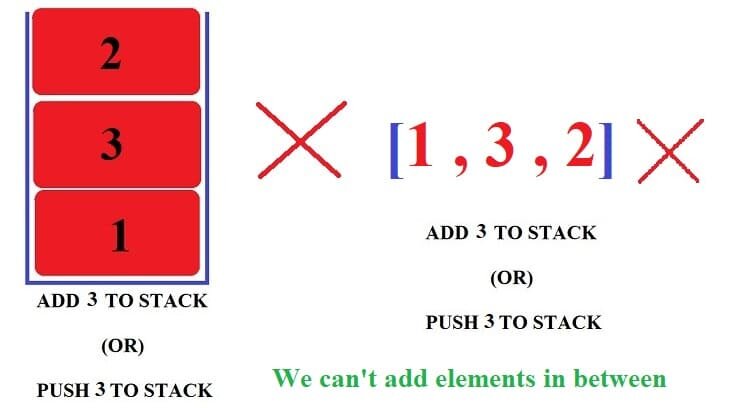
Imagine a stack of plates. You can only add a new plate to the top, and you can only take a plate from the top. This is exactly how a stack works. It follows a “Last-In, First-Out” (LIFO) principle. The last item you add is the first one you can remove. This structure is commonly used for tasks like the "undo" feature in a text editor or tracking function calls in a program.
Queues
A queue is the opposite of a stack. Think of a line at a checkout counter. The first person to get in line is the first person to be served. A queue follows a “First-In, First-Out” (FIFO) principle. New items are added to the back, and items are removed from the front. Queues are useful for managing tasks in order, like handling print jobs or processing requests on a server.
Trees
So far, the structures we've seen are linear, meaning the data is arranged in a sequence. A tree is a hierarchical data structure. It starts with a single root node, which branches out to other nodes, which can then branch out further. A family tree or a company's organizational chart are perfect real-world examples. Trees are great for representing information that has a parent-child relationship, like the file system on your computer.
Graphs
What if the relationships between data points aren't hierarchical? That's where graphs come in. A graph is a collection of nodes (or vertices) connected by edges. Think of a social network, where people are nodes and their friendships are edges. Or a map, where cities are nodes and the roads between them are edges. Graphs are incredibly powerful for modeling complex networks and relationships.
Ready to check your understanding of these core concepts?
Which data structure is most like a stack of plates, where you can only add or remove from the top?
If you needed to model a social network, showing how different people are connected to each other as friends, which data structure would be the most suitable choice?
These are just a few of the foundational building blocks that programmers use every day. By understanding these different ways to structure data, developers can write more powerful and efficient software to solve all kinds of problems.