Data Storytelling Essentials
Introduction to Data Storytelling
Data Doesn't Speak for Itself
Numbers on a spreadsheet can tell you what happened, but they rarely tell you why it matters. Raw data is objective, but it's also silent. To make data meaningful, we need to give it a voice and a purpose. This is the essence of data storytelling.
Data Storytelling
noun
The practice of communicating data insights through a compelling narrative, often supported by visualizations.
Think of it as translating data from the language of spreadsheets into the language of human decision-making. A good data story doesn't just present facts; it weaves them into a narrative that is memorable, persuasive, and easy to understand. It guides your audience through the information, connecting the dots and leading them to a clear conclusion. The goal is to move beyond simply showing data to inspiring action and driving change.
Effective data visualization transforms complex datasets from overwhelming spreadsheets into compelling stories that drive understanding, reveal insights, and inspire action.
The Three Key Ingredients
Every powerful data story is built on three core components: data, narrative, and visuals. When combined effectively, they create something that is much more impactful than the sum of its parts.
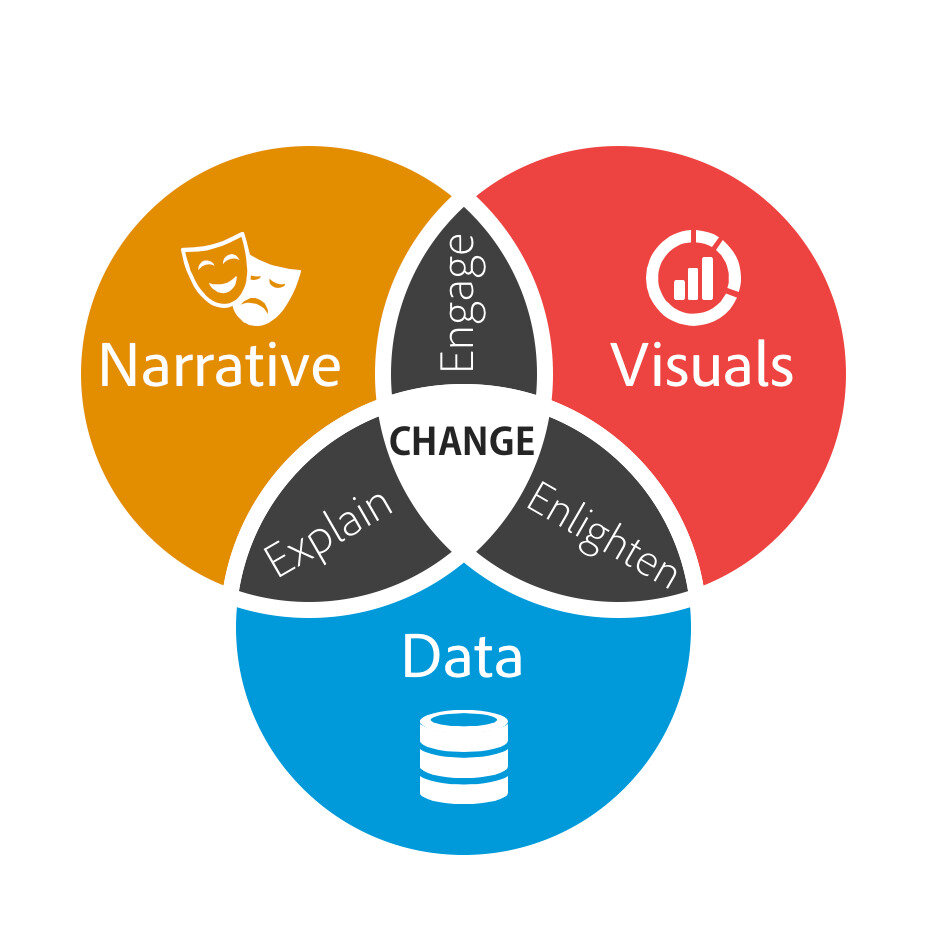
1. Data: This is the foundation of your story. Your data must be accurate, reliable, and relevant to the point you're trying to make. It provides the evidence and credibility for your narrative. Without solid data, a story is just an opinion.
2. Narrative: This is the story itself. It's the structure that gives your data context, meaning, and emotion. The narrative explains what's happening in the data, why it's important, and what might happen next. It's the plot that connects your data points into a coherent journey.
3. Visuals: These are the charts, graphs, and images that make your data and narrative easier to understand. Visuals appeal to our natural ability to process images quickly, helping to reveal patterns, trends, and outliers that might be hidden in a table of numbers.
Know Your Audience
Before you build a single chart or write a single sentence, you must ask: Who is this story for? A story crafted for a team of data scientists will look very different from one designed for the company's CEO. Understanding your audience is crucial for making your message stick.
Consider their level of expertise. Are they familiar with the technical terms and concepts? What do they already know about the topic? You need to meet them where they are, avoiding jargon if they're non-experts or providing deeper detail if they are.
Also, think about what they care about. What are their goals and pain points? Your story will only resonate if it connects to their world and helps them solve a problem or make a better decision. Tailoring your message shows you respect their time and understand their needs.
The best data story isn't the one with the most complex data or the fanciest visuals. It's the one that speaks most directly to its audience.
Start with a Clear Goal
A story without a point is just a collection of facts. To create an effective data narrative, you need a clear and specific objective. What is the single most important message you want your audience to walk away with? What action do you want them to take after hearing your story?
Defining your goal first acts as a filter, helping you decide which data to include and which to leave out. Every element of your story—every data point, every visual, every word—should serve that primary objective.
To clarify your goal, ask yourself these questions:
- What decision do I need to influence?
- What is the key insight I need to communicate?
- After my presentation, what should my audience think, feel, or do differently?
Having a crisp answer to these questions is like having a destination for a road trip. It ensures you don't get lost along the way.
Now, let's test your understanding of these foundational concepts.
What is the primary goal of data storytelling?
A powerful data story is built on the effective combination of which three core components?
By mastering these core principles, you can start turning raw information into stories that not only inform but also inspire and persuade.