Data Science for Absolute Beginners
Data Journey Defined
The Data Journey
Data science is the process of turning raw information into useful insights. Think of it less as a technical field and more as a problem-solving journey. You start with a jumble of facts—customer purchases, patient health records, website clicks—and end with a clear, actionable decision, like which products to recommend or which patients need immediate care.
In 2025, this journey is more important than ever. In healthcare, data scientists analyze patient data to predict the likelihood of diseases, allowing doctors to intervene earlier. In retail, they forecast shopping trends to ensure the right products are on the shelves at the right time. The goal isn't just to look at data; it's to ask smart questions and find answers that have a real impact.
The core of data science is curiosity. It starts with a question, not a spreadsheet.
This whole process follows a reliable roadmap. Just like building a house requires a plan, a successful data project follows a structured lifecycle. This ensures that the final result is sound, useful, and actually solves the original problem.
A Six-Stage Roadmap
One of the most common roadmaps for a data science project is the framework. It breaks the journey down into six distinct stages. While it might sound technical, the idea is simple and logical.
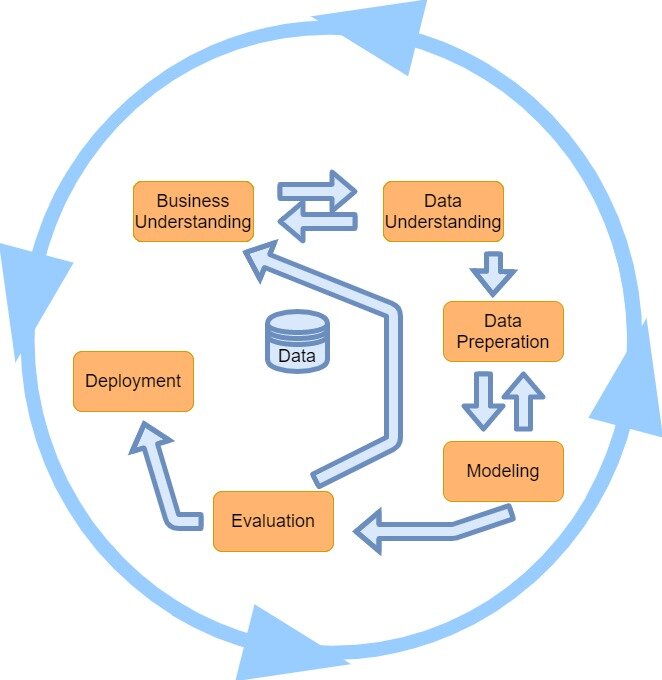
1. Business Understanding This is the most critical step, and it happens before you even look at any data. The goal is to define what you want to achieve. Are you trying to reduce customer churn? Increase sales of a specific product? Improve patient recovery times? You wouldn't start building a house without a blueprint. This is the blueprint phase, where you ask the right questions.
Here, the data scientist acts like a for the project. They don't just analyze numbers; they coordinate with different teams to understand the business needs, define the goals, and map out a strategy for winning. They need to understand the field of play before calling the shots.
2. Data Understanding Once you know the goal, you start gathering the raw materials. You collect the initial data and get a feel for it. Is it clean or messy? Are there missing pieces? This is like a chef inspecting their ingredients before they start cooking.
3. Data Preparation This stage often takes the most time. Raw data is rarely perfect. You'll need to clean it up, handle missing values, and format it correctly. It's the unglamorous but essential work of prepping your ingredients—washing the vegetables, trimming the fat—so the final dish is perfect.
4. Modeling Now for the exciting part. You apply various statistical and machine learning techniques to find patterns in the data. This is where insights start to emerge. Each model is a different lens for viewing your data, helping to answer the question from the first stage.
5. Evaluation Does the model actually work? Before you put it to use, you have to test it rigorously. You check if its predictions are accurate and if it truly addresses the business goal you started with. This is the quality control step.
6. Deployment Finally, the solution is put into action. This could be a new feature in an app, a dashboard for executives, or an automated system that flags potential issues. The journey doesn't end here; you continuously monitor the model's performance and repeat the cycle to make improvements.
In the past, this entire journey required deep expertise in coding and statistics. But today, modern AI-powered tools are making these powerful techniques more accessible. While understanding the process is still key, you don't always need to be a programmer to start your own data journey.
What is the primary goal of data science?
According to the text, which stage of the CRISP-DM framework often takes the most time?