Data Science Essentials
Introduction to Data Science
What Is Data Science?
Data science is the practice of using information to understand the world in a deeper, more complete way. It's an interdisciplinary field that pulls together methods from statistics, computer science, and business or domain knowledge to turn raw data into meaningful insights.
Data Science is an interdisciplinary field that uses various techniques from statistics, mathematics, computer science, and domain-specific knowledge to extract insights from vast amounts of data.
Think of a data scientist as a detective. They start with a set of clues (data), and they use their tools (programming, statistics) and understanding of the situation (domain expertise) to solve a mystery. This mystery could be anything from predicting which customers are likely to stop using a service to identifying new drug targets for a disease.
The three core components are:
- Computer Science: For collecting, processing, and managing large datasets.
- Statistics & Math: For designing experiments, analyzing data, and building predictive models.
- Domain Expertise: For understanding the context of the data, asking the right questions, and interpreting the results in a meaningful way.
The Data Science Lifecycle
Data science isn't just one task; it's a process. This process, often called the data science lifecycle, provides a structured approach to solving problems with data. While the exact steps can vary, they generally follow a consistent pattern.
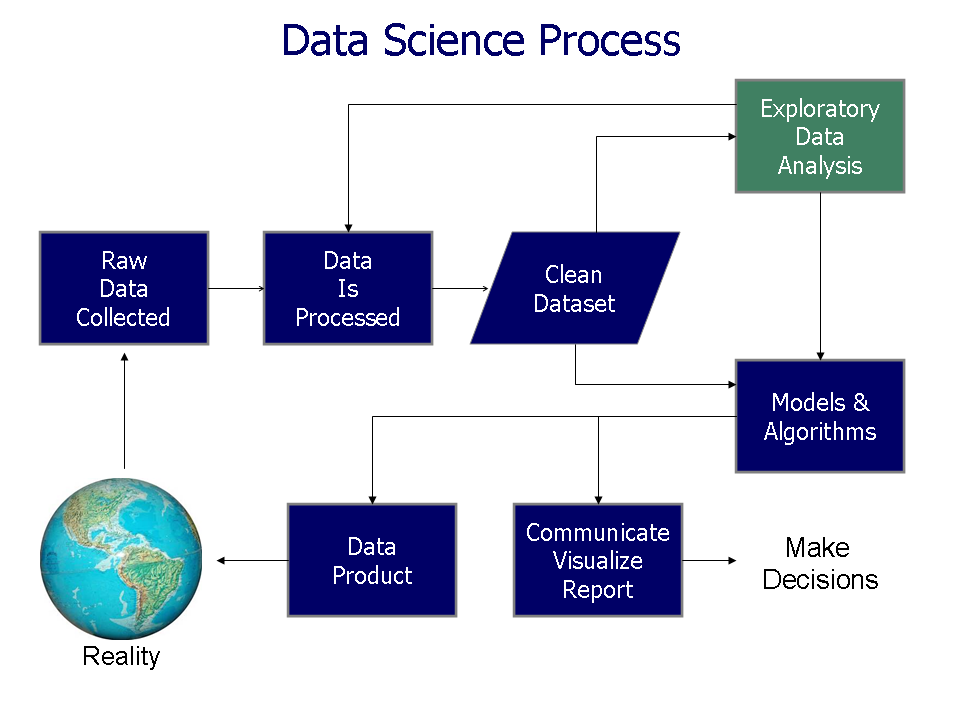
The lifecycle typically includes these stages:
-
Problem Definition: It all starts with a question. What business problem are we trying to solve? This stage involves working with stakeholders to understand the goals and define what a successful outcome looks like.
-
Data Collection: Once you know the question, you need data to answer it. This can involve gathering information from databases, web scraping, connecting to APIs, or using public datasets.
-
Data Preparation: Raw data is almost never ready for analysis. This is often the most time-consuming step. It involves cleaning the data (handling missing values, correcting errors), transforming it into a usable format, and creating new features that might be helpful for analysis.
-
Analysis & Modeling: This is where the core discovery happens. Data scientists explore the data to find patterns and trends. They might use statistical tests or build machine learning models to make predictions.
-
Reporting & Deployment: Finding an insight isn't enough; you have to communicate it. This stage involves creating visualizations, dashboards, and reports to explain the findings to a non-technical audience. Sometimes, it also involves deploying a model into a live production environment where it can make real-time decisions.
Data Quality Is Everything
The success of any data science project hinges on the quality of its data. No matter how sophisticated your analysis or powerful your model, the results will be meaningless if the underlying data is flawed.
This is often summarized by the phrase "garbage in, garbage out." If you feed a model inaccurate, incomplete, or biased data, you will get inaccurate, incomplete, or biased results.
Ensuring high data quality means making sure the data is:
- Accurate: Does it reflect the real world?
- Complete: Are there missing values?
- Consistent: Are units and formats the same across the dataset?
- Relevant: Does the data actually help answer the question at hand?
This is why data preparation and cleaning are such critical parts of the lifecycle. A data scientist spends a significant amount of time just making sure the data is trustworthy.
Data Science in Action
Data science is not an abstract academic field. It drives decisions and creates value in nearly every industry. A data scientist's main responsibility is to bridge the gap between raw data and actionable strategy.
| Industry | Application of Data Science |
|---|---|
| E-commerce | Recommending products to customers based on past purchases and browsing history. |
| Healthcare | Predicting patient risk for certain diseases to enable preventative care. |
| Finance | Detecting fraudulent credit card transactions in real time. |
| Transportation | Optimizing shipping routes to save fuel and time. |
| Entertainment | Analyzing viewer data to decide which new TV shows or movies to produce. |
In each case, data scientists collect and analyze data to find patterns that help a business make smarter decisions. Their role is a blend of technical analyst, strategic advisor, and storyteller.
Let's review the key terms we've covered.
Now, let's test your understanding of the basics.
Which of the following are considered the three core, interdisciplinary components of data science?
According to the typical data science lifecycle, which stage is often the most time-consuming?
Understanding these core concepts provides the foundation for exploring the tools and techniques that bring data science to life.