Data Roles and Tools
Introduction to Data Roles
The Data Dream Team
In the world of data, not all roles are the same. While you might hear terms like 'data analyst' and 'data scientist' used interchangeably, they represent distinct jobs with unique responsibilities. Think of it like a film crew: you have a director, a cinematographer, and a sound engineer. They all work with the same movie, but their focus and skills are completely different. The three core roles on a data team are the data analyst, the data scientist, and the data engineer.
Let's start with the role many people enter first: the data analyst. Analysts are detectives who work with existing data. They sift through spreadsheets, databases, and dashboards to find trends, patterns, and answers to business questions. Their job is to look at what has already happened and explain why.
A data analyst's primary goal is to translate numbers into a clear story that can inform business decisions.
For example, an analyst might figure out which marketing campaign led to the most sales last quarter or identify the time of day when customer support gets the most calls.
Key Responsibilities:
- Cleaning and organizing data to ensure accuracy.
- Creating visualizations like charts and graphs to present findings.
- Building dashboards to track key performance indicators (KPIs).
- Writing reports that summarize insights for stakeholders.
Common Skills & Tools:
- SQL for querying databases.
- Spreadsheet software like Excel or Google Sheets.
- Business Intelligence (BI) tools like Tableau or Power BI.
The Fortune Teller
If the data analyst is a detective looking at the past, the data scientist is a fortune teller trying to predict the future. Data scientists use their expertise in statistics and machine learning to build complex models that forecast what might happen. They move beyond describing the past to creating systems that can make automated predictions or classifications.
A data scientist uses data to build models that can predict future outcomes or uncover deeper, less obvious insights.
A scientist might develop an algorithm to predict which customers are likely to stop using a service, or build a system that recommends products to users based on their browsing history. This requires a deeper understanding of programming and advanced mathematics than the analyst role.
Key Responsibilities:
- Developing and testing predictive models.
- Using machine learning algorithms to find complex patterns.
- Designing experiments to test hypotheses.
- Communicating complex findings to both technical and non-technical audiences.
Common Skills & Tools:
- Programming languages like Python or R.
- Machine learning libraries (e.g., Scikit-learn, TensorFlow).
- Advanced statistics and probability.
The Architect
None of this work would be possible without the data engineer. The engineer is the architect and plumber of the data world. They design, build, and maintain the systems that collect, store, and transport vast amounts of data. Their job is to make sure that clean, reliable data is available and accessible for analysts and scientists to use.
A data engineer builds the pipelines, storage, and processing systems to transform that raw mess into clean, structured, reliable data that analysts, scientists, and AI models can actually use.
A data engineer might build a 'pipeline' that automatically pulls sales data from a dozen different sources every hour, cleans it up, and loads it into a central database called a data warehouse. Without their work, the data team would be working with a messy, unreliable puddle of information instead of a clean, well-organized reservoir.
Key Responsibilities:
- Building and maintaining data pipelines (ETL/ELT processes).
- Managing databases and data warehouses.
- Ensuring data quality and reliability.
- Optimizing data systems for speed and efficiency.
Common Skills & Tools:
- Advanced SQL and database design.
- Cloud platforms like AWS, Azure, or Google Cloud.
- Big data technologies like Spark and Hadoop.
- Programming languages like Python or Scala.
How They Work Together
These three roles are highly collaborative and form a powerful team. A typical project might start with a business question, like 'How can we reduce customer churn?'
The data engineer first ensures all the necessary customer data is collected and organized in one place. Then, the data analyst might examine past data to identify the main reasons customers have left. Finally, the data scientist could use those findings to build a model that predicts which current customers are at high risk of leaving, allowing the business to intervene proactively.
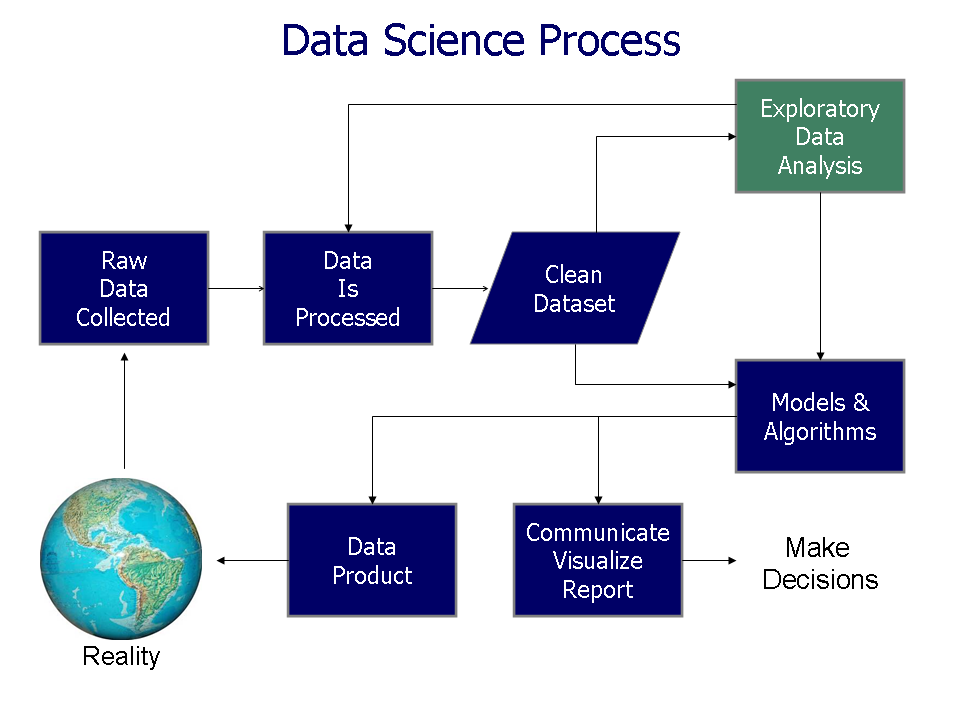
Understanding these roles is the first step toward finding your place in the data world. Each one requires a different mix of skills and appeals to different strengths, but all are essential for making smart, data-driven decisions.
Ready to check your understanding? Let's see if you can tell these roles apart.
Which data professional is primarily focused on building complex models to predict future outcomes?
A professional's daily tasks involve creating dashboards in Tableau and writing SQL queries to find trends in last quarter's sales data. What is their most likely job title?
By understanding the unique contributions of each role, you can better appreciate how data teams work together to turn raw information into valuable action.