Data Pipelines Explained
Introduction to Data Pipelines
What Is a Data Pipeline?
Think about the plumbing in your house. A network of pipes brings fresh water from a source, like a reservoir, to your faucet. You don't have to go fetch the water yourself. It just arrives, clean and ready to use, whenever you need it.
A data pipeline works in a similar way, but for information. It's a system for automatically moving data from one place to another.
A data pipeline is a series of automated steps that takes raw data from various sources and moves it to a destination where it can be stored and analyzed.
Companies today collect huge amounts of data. This information might come from website clicks, sales transactions, social media feeds, or even sensors on a factory floor. This raw data isn't very useful on its own. It's often messy, disorganized, and spread across many different systems.
The purpose of a data pipeline is to bridge this gap. It automates the entire process of gathering, cleaning, and delivering data, making it available for people and tools that need it for analysis, reports, and making smart decisions.
A data pipeline is a system that automatically moves and prepares data so it can be used anywhere in your business.
Why Pipelines Matter
Without pipelines, managing data would be a slow, manual, and error-prone process. Imagine an employee having to download spreadsheets from three different departments every morning, copy-paste the information into one master file, and then email it to the analytics team. It would take hours, and a single mistake could throw everything off.
Data pipelines solve this problem by making the process efficient and reliable. They are crucial for:
| Benefit | Description |
|---|---|
| Speed | Pipelines move data automatically, often in real-time, so businesses have up-to-date information for making decisions. |
| Reliability | Automation reduces the risk of human error, ensuring the data is consistent and accurate. |
| Scalability | As a company grows and collects more data, pipelines can handle the increased volume without slowing down. |
| Efficiency | They free up data professionals from tedious manual work, allowing them to focus on analysis and finding insights. |
By ensuring a smooth and dependable flow of information, data pipelines form the backbone of modern business intelligence and data analytics. They make it possible to turn a flood of raw data into the clear, actionable insights that drive a business forward.
The Journey of Data
Every data pipeline follows a basic path, moving data from a starting point to an endpoint. While the specifics can get complex, the overall flow is straightforward.
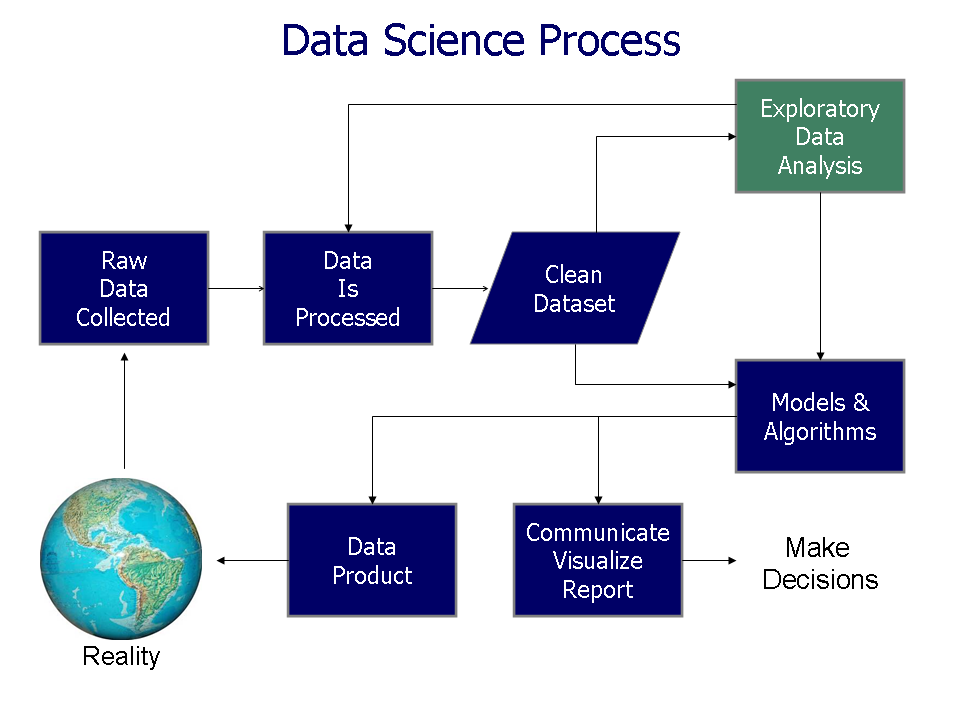
The journey has three main stages:
-
Source (Extraction): This is where the data is born. A pipeline pulls data from one or more sources. These could be anything from a customer database, a mobile app, a public API like a weather service, or logs from a web server.
-
Processing (Transformation): Once extracted, the raw data is rarely ready for use. It needs to be cleaned up and reshaped. This transformation stage can involve many steps, such as filtering out irrelevant information, converting data into a standard format (like making sure all dates are written as YYYY-MM-DD), combining data from multiple sources, or performing calculations.
-
Destination (Loading): Finally, the processed, high-quality data is delivered to its destination. This is often a data warehouse, which is a large, centralized repository designed for analysis. From there, it can be used to power dashboards, create reports, or train machine learning models.
For example, an e-commerce company might have a pipeline that takes sales data from its website (source), calculates the daily revenue for each product category (transformation), and loads the results into a dashboard for the sales team (destination).
This automated flow, from raw source to refined destination, is what makes data pipelines so powerful. They are the essential infrastructure that allows organizations to harness their data effectively.
What is the primary function of a data pipeline?
True or False: The main benefit of a data pipeline is that it makes managing data a more manual, but more controlled, process.