Data Lakes Explained
Introduction to Data Lakes
What Is a Data Lake?
Think of a natural lake. Rivers and streams of all sizes flow into it, carrying different kinds of sediment, minerals, and life. The lake doesn't filter or organize this water upon entry; it simply holds it all in its natural, raw state. A data lake operates on a similar principle for information.
A data lake is a central repository that can store a massive amount of data in its original, unprocessed format. It doesn't matter if the data is structured, like a neat spreadsheet, semi-structured like an email, or completely unstructured like a video file or a social media post. Everything is welcome and stored as-is.
A data lake is a centralized repository that stores raw data from various sources: images, tabular data, video, etc. are all stored in their native formats.
This approach is fundamentally different from traditional data storage systems, which often require data to be cleaned, structured, and organized before it can be stored. By holding on to the raw data, a data lake ensures that no information is lost and that analysts can approach it from different angles later on.
Flexible by Design
The key feature that gives a data lake its flexibility is an approach called "schema-on-read." This might sound technical, but the idea is simple.
Imagine you have a box of LEGO bricks. Instead of being forced to build a specific house the moment you get the bricks (a "schema-on-write" approach), you can just dump all the bricks into the box. Later, when you decide you want to build a car, a spaceship, or a castle, you pull out the bricks you need and apply the structure then. You impose a plan, or schema, only when you read the data for a specific purpose.
Schema-on-read means data is stored in its raw form and structure is applied only during analysis. This provides maximum flexibility for future, often unknown, uses.
This is perfect for data exploration and discovery. Data scientists can experiment with the raw data, looking for patterns and insights without being confined to a predefined structure. It allows for a wider range of questions to be asked of the data, as you're not locked into the assumptions made when the data was first collected.
A Response to Big Data
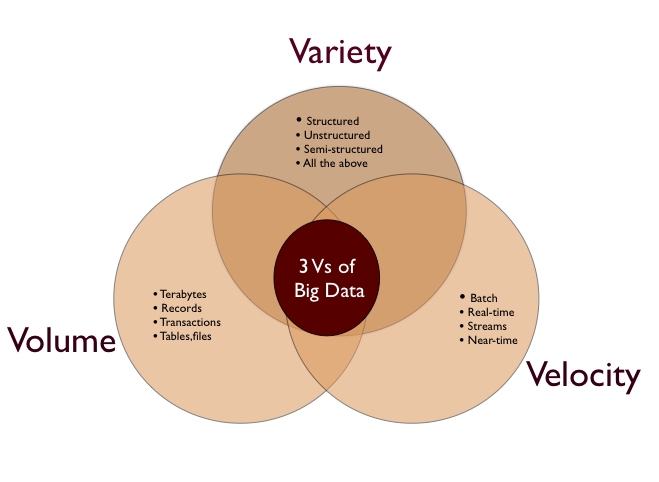
Data lakes didn't emerge in a vacuum. They are a direct response to the era of big data. In the early 21st century, the amount of data being generated exploded. The rise of the internet, mobile devices, social media, and the Internet of Things (IoT) created torrents of information far beyond what traditional systems were built to handle.
This new data wasn't just big; it was also messy and diverse. It came in quickly and in every format imaginable. Storing this information in conventional databases was often too slow, too expensive, or simply impossible.
The development of cloud computing was the final piece of the puzzle. Cloud providers made it affordable to store enormous quantities of data, making the concept of a vast, centralized data lake a practical reality for businesses of all sizes. This combination of need and technology cemented the data lake's role as a foundational element in modern data strategy.