Data for Smart Decisions
Understanding Data-Driven Decision Making
What It Means to Be Data-Driven
At its core, data-driven decision-making (DDDM) is the practice of using facts, metrics, and data to guide strategic business decisions. Instead of relying on intuition, gut feelings, or personal experience, you let the evidence lead the way. It’s a shift from "I think" to "I know."
Data-driven decision making is a systematic approach where product choices are grounded in verifiable data rather than intuition or opinion.
Think of it like a doctor diagnosing a patient. A doctor doesn't just guess what's wrong. They run tests, look at lab results, and review the patient's history. The treatment plan is based on that concrete data, not a hunch. Businesses that operate this way make smarter, more effective choices.
data-driven
adjective
Basing decisions on the analysis and interpretation of hard data rather than on observation or intuition.
The Benefits of Following the Data
Adopting a data-driven culture brings significant advantages. When decisions are backed by evidence, they become more consistent and reliable. This builds confidence across the organization, as teams can see the logic behind a chosen path.
| Benefit | Description |
|---|---|
| Increased Accuracy | Decisions based on data are more likely to be correct, reducing costly errors. |
| Faster Decisions | With clear data, teams can act more quickly and decisively. |
| Improved Efficiency | Understanding performance metrics helps identify and eliminate waste, saving time and money. |
| Greater Clarity | Data provides a single source of truth, aligning teams around common goals and objectives. |
Ultimately, these benefits lead to better outcomes. Businesses can understand their customers more deeply, optimize their operations, and respond to market changes with greater agility. It's about making small, informed adjustments that compound into major successes over time.
The Data-Driven Process
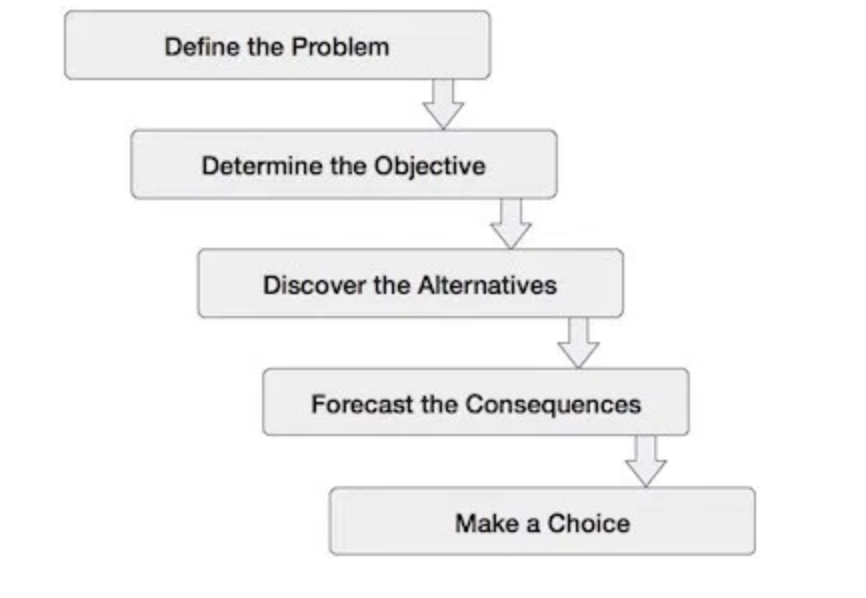
Making decisions with data isn't a single action but a cyclical process. It begins with a clear objective and flows through several key stages. While specific tools and techniques can vary, the foundational steps remain consistent.
1. Define the Objective: Start with a clear, specific question. Instead of asking, "How can we increase sales?" ask, "Which marketing channel gave us the highest return on investment last quarter?" A well-defined problem focuses your efforts.
2. Gather Data: Once you know what you're looking for, you can collect the relevant information. This stage is about identifying and accessing the right data sources to answer your specific question.
3. Analyze and Interpret: This is where you look for meaning in the numbers. You're searching for patterns, correlations, or outliers that tell a story. The goal is to transform raw data into actionable insights.
4. Act and Measure: Based on your analysis, you make a decision and put it into action. But it doesn't end there. You must also measure the outcome of your decision to see if it had the intended effect. This final step feeds back into the first, creating a cycle of continuous improvement.
This cycle ensures that each decision is not just a one-time event, but a learning opportunity that makes the next decision even smarter.
Ready to test your understanding?
What is the core principle of data-driven decision-making (DDDM)?
According to the DDDM process, what is the crucial first step before gathering any data?
By following these steps, organizations can build a culture where data is not just collected, but actively used to drive progress and achieve goals.