Data Engineering for AI and LLMs
Introduction to Data Engineering
The Foundation of Modern Tech
Think about the water system in a city. Water starts in a river or lake, but you can't just drink it from there. It has to be collected, cleaned, stored in a reservoir, and then sent through a network of pipes to reach your home, ready to use. Data engineering does the same thing, but for data.
Data engineering is the work of designing and building systems to collect, store, and prepare large amounts of data so it can be used for analysis, machine learning, and other applications.
It's the hidden infrastructure that makes modern technology possible. Every time you get a personalized recommendation, use a voice assistant, or see a fraud alert from your bank, data engineering is working behind the scenes. Without a solid foundation to manage data, even the most powerful AI algorithms would be useless.
Data engineering is the backbone of any modern data-driven organization.
The Data Lifecycle
Data doesn't just appear ready to use. It moves through a lifecycle, a series of stages that data engineers manage. This process ensures that raw information becomes a valuable asset.
Here's a breakdown of the four key stages:
-
Data Generation: This is where data is born. It can come from anywhere: users clicking on a website, sensors in a smart home, transactions at a grocery store, or posts on social media.
-
Data Ingestion: Once data is created, it needs to be collected. Ingestion is the process of moving this raw data from its many sources into a central storage system.
-
Data Storage: Data can't just be piled up. It needs to be stored in an organized, secure, and accessible way. This could be in a structured system like a data warehouse or a more flexible one like a data lake, depending on the need.
-
Data Retrieval: Stored data is only useful if you can get it back out. Retrieval involves making the data available for people like data scientists or for automated systems like AI models to access and analyze.
Fuel for AI and LLMs
Artificial intelligence and Large Language Models (LLMs) are incredibly powerful, but they have a huge appetite for data. They learn by analyzing vast quantities of information, and the quality of their performance depends directly on the quality of that data.
This is where data engineering becomes critical. An AI model can't learn from messy, incomplete, or disorganized data. Data engineers build the systems that transform a chaotic flood of raw information into a clean, structured, and reliable stream that AI can consume. They ensure the right data gets to the right models at the right time.
Pipelines and Architecture
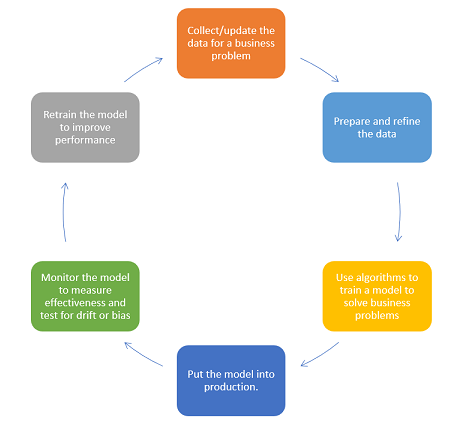
To manage the data lifecycle, engineers build data pipelines. A pipeline is an automated series of steps that moves data from point A to point B. It might involve ingesting data from a website, cleaning it up to remove errors, transforming it into a standard format, and then loading it into a data warehouse where an AI model can access it.
Think of it as an assembly line for data. Raw materials go in one end, and a finished, usable product comes out the other.
The overall design of all these pipelines and storage systems is called the data architecture. A good architecture ensures that data flows efficiently and reliably across an entire organization. It's the blueprint that data engineers use to build a robust foundation for everything from business analytics to the most advanced AI applications.
Building this foundation is the core of data engineering. It’s the essential, often invisible, work that turns raw data into insight and intelligence.
Let's check your understanding of these foundational concepts.
According to the data lifecycle, what is the first stage where data is created?
What is the primary role of a data pipeline?