Data Driven Readiness: Analytics in Military Instructional Design
Data-Centric Military Instruction
Training Data as a Strategic Asset
For decades, military training has followed a familiar rhythm: instruct, practice, certify. The data generated—course completions, test scores, qualifications—was often treated as an administrative record. It proved a task was completed, then it was filed away. That mindset is obsolete.
In modern warfare, data is as critical as ammunition. The Department of Defense now views data as a strategic asset, and this fundamentally changes the purpose of instructional design. Training is no longer just a hurdle to clear; it's a primary source of high-value data about personnel readiness, unit cohesion, and tactical proficiency. Every training evolution, from a simple rifle qualification to a complex joint-force simulation, generates a rich stream of data. When captured and analyzed, this data provides a near real-time picture of warfighting capability, directly informing senior leader decisions and enhancing operational lethality.
The goal is to shift from a model where training produces readiness to one where the data from training continuously defines and refines readiness.
Connecting Strategy to Instruction
This shift isn't just a good idea; it's mandated by top-level strategy. The of 2020 laid the groundwork by establishing a set of guiding principles for the entire department. It framed data as a core resource essential for maintaining a competitive advantage. Two principles are especially relevant for instructional designers.
First, Data is a Strategic Asset. This principle demands that we design training environments to generate, collect, and preserve data with the same rigor we apply to managing equipment or intelligence. The data from a flight simulator, for instance, isn't just about the pilot's score; it's a dataset detailing decision-making under stress, reaction times, and procedural adherence that can be aggregated to assess squadron readiness.
Second, Collective Data Stewardship. This means training data doesn't belong to a single schoolhouse or unit. It's a shared resource. An Army medic's performance data in a field exercise could be invaluable to a Navy corpsman's training curriculum designers. This requires building learning systems that can share data securely and seamlessly across services and echelons.
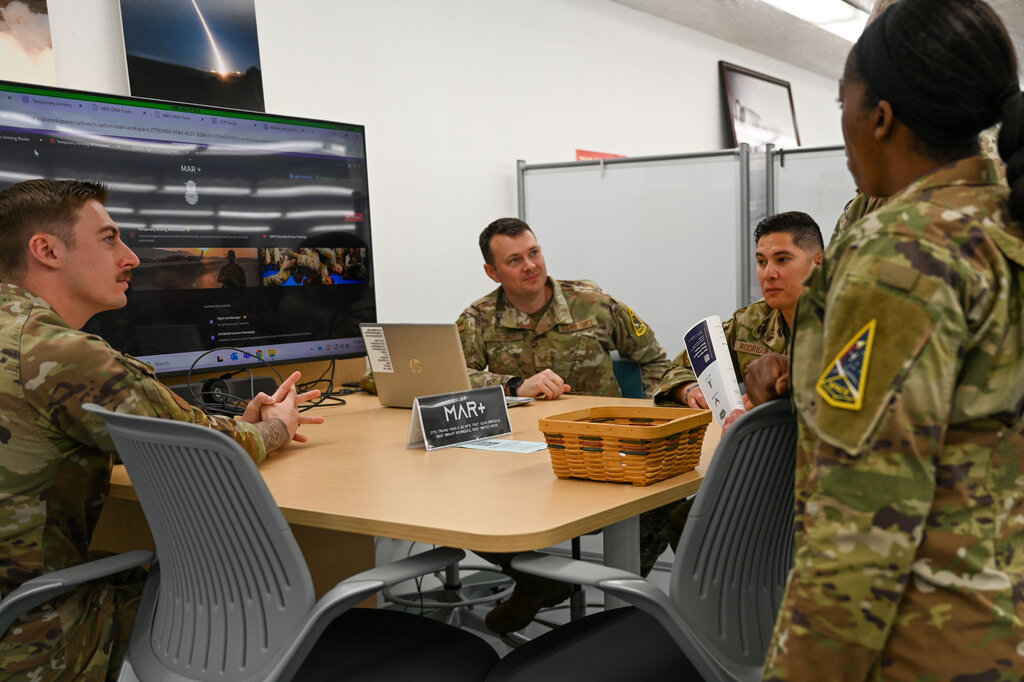
Building on this foundation, the 2023 Data, Analytics, and AI Adoption Strategy focuses on accelerating the use of this data. It pushes beyond just collecting information toward creating a "data-driven decision-making culture." For military instruction, this means the data lifecycle doesn't end when a course is complete. The insights from training must feed a continuous loop, informing everything from individual career progression and unit deployment schedules to future acquisitions and doctrine development.
The VAULTIS Framework
To make data a true strategic asset, it must be useful. The DoD uses the VAULTIS framework to define the essential qualities of decision-ready data. When designing training systems, these pillars should guide every choice about technology, data structure, and user access.
Think of as the user manual for creating valuable training data. If the data you generate from a learning environment doesn't meet these criteria, it's just noise. It cannot be used to drive decisions, and it fails to contribute to the operational advantage.
| Pillar | Description |
|---|---|
| Visible | Leaders and analysts can easily find the data they need through common catalogs. |
| Accessible | Data is available to the widest possible audience of authorized users. |
| Understandable | The data is well-documented with clear definitions and context. |
| Linked | Datasets can be joined with other data for deeper analysis. |
| Trustworthy | Data is accurate, secure, and has a clear lineage. |
| Interoperable | Systems can exchange and use the data without special effort. |
| Secure | Data is protected from unauthorized access and modification. |
Imagine a new cyber warfare training platform. To be VAULTIS-compliant, its performance data must be:
- Visible in a joint training data catalog.
- Accessible by other service's cyber commands.
- Understandable, with a clear data dictionary defining terms like "network intrusion response time."
- Linked to a service member's primary personnel record.
- Trustworthy, with logs showing who completed the training and when.
- Interoperable, using a standard format like xAPI that other systems can ingest.
- Secure, with access controls based on role and clearance.
By applying this framework, instructional designers move from being content creators to being architects of data ecosystems. The result is training that not only builds skills but also generates a constant, reliable stream of data that directly contributes to a more lethal and efficient fighting force.
According to the text, what is the fundamental shift in the purpose of military instructional design?
A U.S. Army medic's performance data from a field exercise is used to refine the training curriculum for U.S. Navy corpsmen. This is a direct application of which principle from the DoD Data Strategy?