Data Centers and Model Training Essentials
Introduction to Machine Learning
What Is Machine Learning?
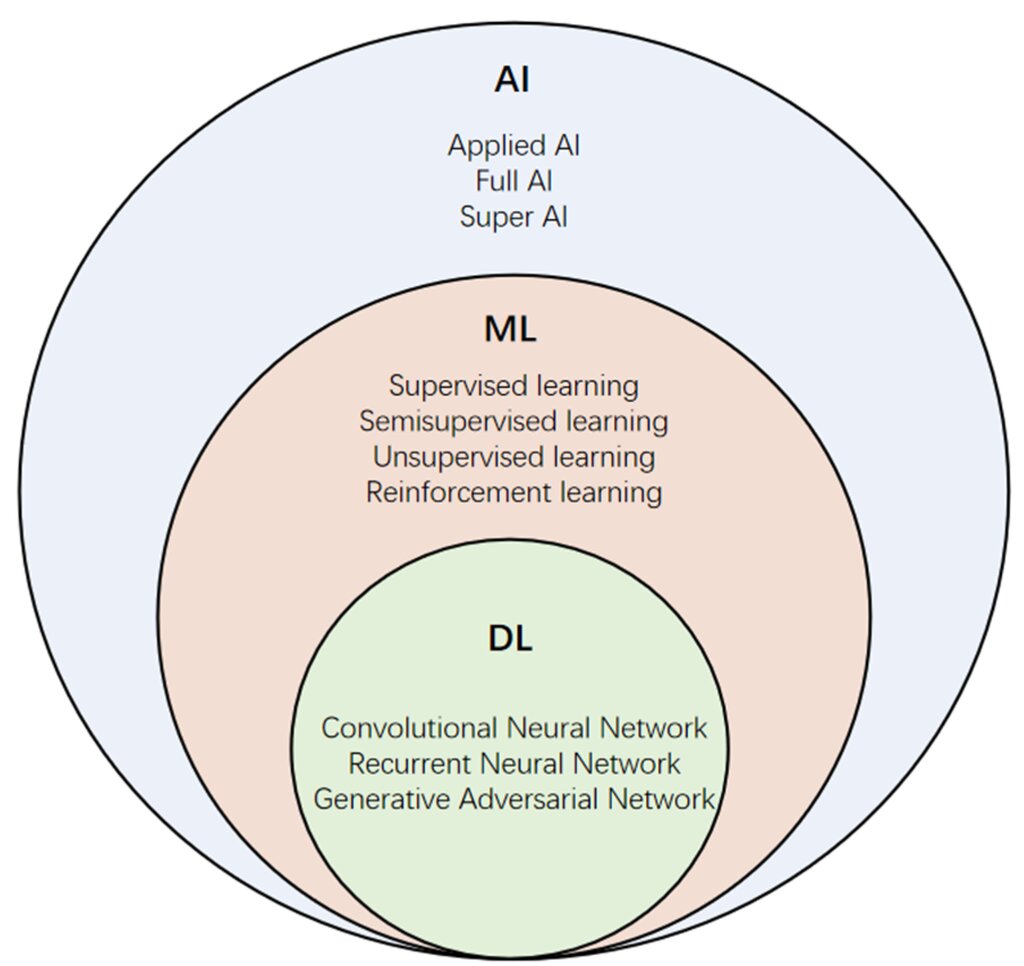
Machine learning teaches computers to learn from data. Instead of writing explicit, step-by-step instructions for a task, developers create algorithms that allow a computer to find patterns and make predictions on its own. Think of it as the difference between giving someone a fish and teaching them how to fish. Traditional programming gives the computer a fish; machine learning teaches it to find its own.
The core idea is simple: a machine learns from examples, just like we do. It looks at a massive amount of information, identifies underlying patterns, and then uses those patterns to make judgments about new, unseen data.
This approach has become incredibly powerful for two main reasons: the explosion of available data and the increase in computing power. We now have vast datasets from websites, sensors, and social media, along with the powerful computers needed to process it all. This combination allows machine learning models to tackle complex problems that were once impossible to solve, from recommending movies to detecting diseases.
Three Flavors of Learning
Machine learning isn't a one-size-fits-all tool. The approach you use depends on the problem you're trying to solve and the kind of data you have. The methods fall into three main categories: supervised, unsupervised, and reinforcement learning.
Machine Learning (ML) is a branch of Artificial Intelligence that enables computers to learn patterns from data and make predictions or decisions without being explicitly programmed.
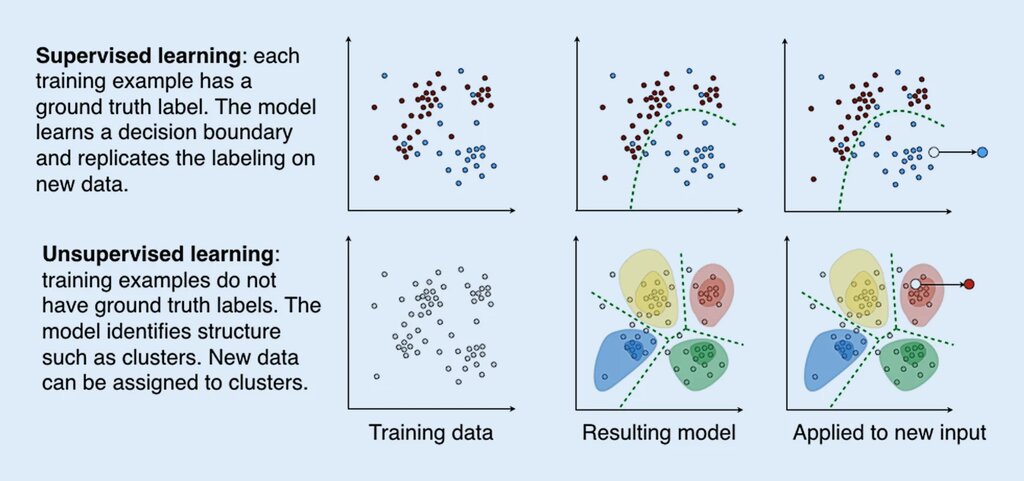
Supervised Learning is like studying with flashcards. The algorithm is given a dataset where each piece of data is labeled with the correct answer. For example, you might feed it thousands of pictures of cats, each labeled "cat," and thousands of pictures of dogs, each labeled "dog." The model learns the features that distinguish cats from dogs. After training, it can look at a new picture and predict whether it's a cat or a dog.
Real-world examples include:
- Spam filters: Your email service learns from emails you mark as spam to automatically filter out future junk mail.
- Price prediction: A real estate website can predict a house's price based on features like its size, location, and the prices of similar, labeled houses.
Unsupervised Learning is about finding hidden patterns in data without any labels. The algorithm is given a jumble of information and asked to find structure on its own. It’s like being given a box of mixed Lego bricks and sorting them into piles by color and shape without being told what the categories are.
This is useful for:
- Customer segmentation: An online store might group customers based on their purchasing habits to send them targeted marketing campaigns.
- Topic modeling: A news site can automatically group articles about the same event together.
Reinforcement Learning is a goal-oriented approach based on trial and error. An algorithm, or "agent," learns to make decisions by performing actions in an environment. It receives rewards for good actions and penalties for bad ones, gradually learning the best strategy to maximize its total reward. It's similar to how you might train a dog with treats.
Applications include:
- Game playing: AI systems like AlphaGo learned to master the game of Go by playing millions of games against itself and learning from the outcomes.
- Robotics: A robot can learn to navigate a room by being rewarded for moving towards a target and penalized for bumping into walls.
The Machine Learning Workflow
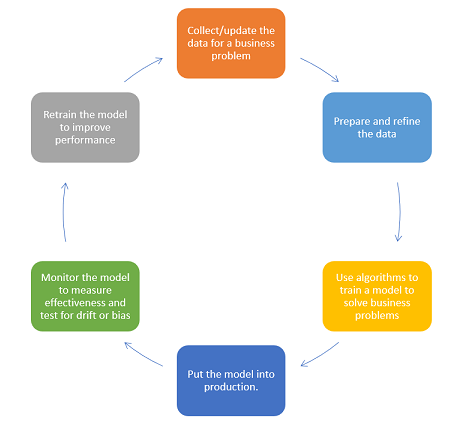
Creating a successful machine learning model involves more than just choosing an algorithm. It's a cyclical process with several key stages. While the details vary, most projects follow a general path.
Even though it might seem surprising, the most important key point of a machine learning project does not regard machine learning: it regards your dataset properties and arrangement.
First, you define the problem and collect data. What do you want to predict? What data do you need to make that prediction? This data is the raw material for learning.
Next comes data preparation. Raw data is often messy, with missing values or errors. This stage involves cleaning, formatting, and organizing the data so the model can understand it. This is often the most time-consuming part of the entire process.
With clean data, you can train the model. Here, the algorithm processes the data and learns the underlying patterns. After training, you evaluate the model using data it has never seen before to see how well it performs. Finally, the model is deployed into a real-world application where it can be monitored and retrained over time as new data becomes available.
Data is the lifeblood of machine learning. The quality and quantity of your data directly determine the performance of your model. Without good data, even the most advanced algorithm will fail.
Now, let's test what you've learned about these fundamental concepts.
What is the fundamental difference between machine learning and traditional programming?
An e-commerce company wants to group its customers into different segments based on their browsing and purchasing habits to send them targeted ads. This is a classic example of which type of machine learning?
Understanding these core ideas—what machine learning is, its different types, and the general workflow—provides a solid foundation for exploring this powerful technology further.