Data Center Structured Cabling
Hierarchical Star Topology
Structuring the Data Centre
A data centre's cabling can't be a chaotic mess. To manage thousands of connections efficiently, professionals use a structured approach called the hierarchical star topology. Unlike a simple star network where every device connects to a single central point, this model creates a multi-layered system. It's a design strategy defined by standards like that brings order to large-scale deployments, ensuring the network can grow without becoming unmanageable.
Think of it like a national postal service. A letter doesn't go directly from your house to its destination. It first goes to a local sorting office, then to a regional hub, and finally out for delivery. This hierarchy makes the entire system efficient and scalable. In a data centre, this structure is built around specific functional areas.
The Distribution Areas
At the top of the hierarchy is the Main Distribution Area (MDA). This is the nerve centre of the data centre network. It houses the high-capacity that connect the data centre to the outside world and link different parts of the facility together. All traffic coming into or leaving the data centre passes through the MDA, making it the primary point of aggregation.
From the MDA, high-capacity backbone cabling (typically fibre optic) runs to one or more Horizontal Distribution Areas (HDAs). Each HDA acts as a distribution point for a specific section of the data centre, like a row of server racks or a specific zone. The HDA contains switches that connect the backbone network from the MDA to the individual server cabinets.
The final destination is the Equipment Distribution Area (EDA). This is simply the server cabinet or rack where the actual computers, storage devices, and other network equipment reside. Horizontal cabling, which can be copper or fibre, runs from the HDA to patch panels within the EDA. Short patch cords then complete the connection from the patch panel to the individual servers.
This three-tiered structure (MDA -> HDA -> EDA) isolates traffic and simplifies troubleshooting. A problem in one row of servers (EDA) is contained by its HDA and is less likely to affect the entire data centre.
Adding Flexibility
In very large or high-density environments, one more layer can be introduced: the Zone Distribution Area (ZDA). The ZDA is an optional consolidation point located between the HDA and the EDAs. It doesn't contain any active equipment like switches; it's purely a passive patching location.
Imagine you have a row of racks with servers that are frequently changed or reconfigured. Instead of running dozens of individual cables all the way from the HDA, you can run a smaller number of bundled cables to a ZDA located nearby. From the ZDA, shorter and more manageable cables connect to the final server racks (EDAs). This makes moves, adds, and changes much faster and cleaner, as you only need to alter the short connections within the zone.
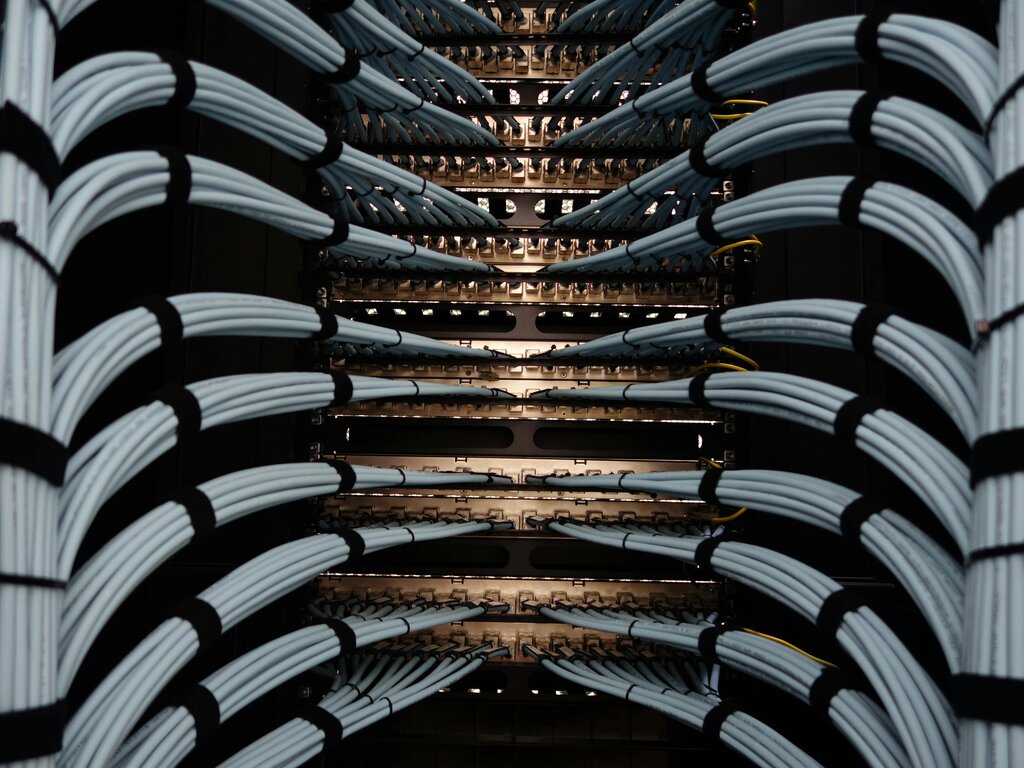
The hierarchical star topology provides a scalable and logical framework for building robust data centre networks. It ensures that as the facility grows, the underlying infrastructure remains organized, manageable, and resilient.