Data Center Optimization Strategies
Data Center Fundamentals
The Digital Fortress
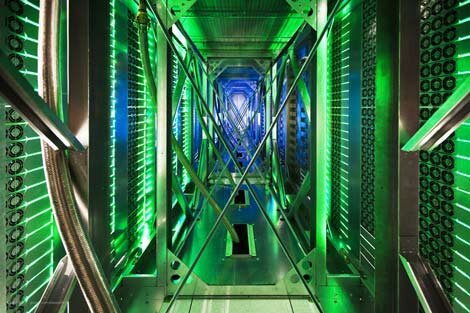
Think of a data center as the brain of the internet. Every time you stream a movie, send an email, or use an app, you're connecting to one. It's a physical facility that organizations use to house their critical applications and data. A data center is much more than just a room full of computers; it's a carefully engineered environment designed for one primary purpose: to keep digital information safe, accessible, and running smoothly 24/7.
Data centers are the building blocks of IT business organizations providing the capabilities of centralized repository for storage, management, networking and dissemination of data.
Without them, the digital services we rely on for business, entertainment, and communication simply wouldn't exist. They are the backbone of modern business operations, powering everything from a small company's website to the massive cloud platforms run by giants like Amazon and Google.
Core Components
Data centers are complex ecosystems, but they're built on three fundamental pillars: compute, storage, and networking.
Server
noun
A high-powered computer designed to process requests and deliver data to other computers over a local network or the internet.
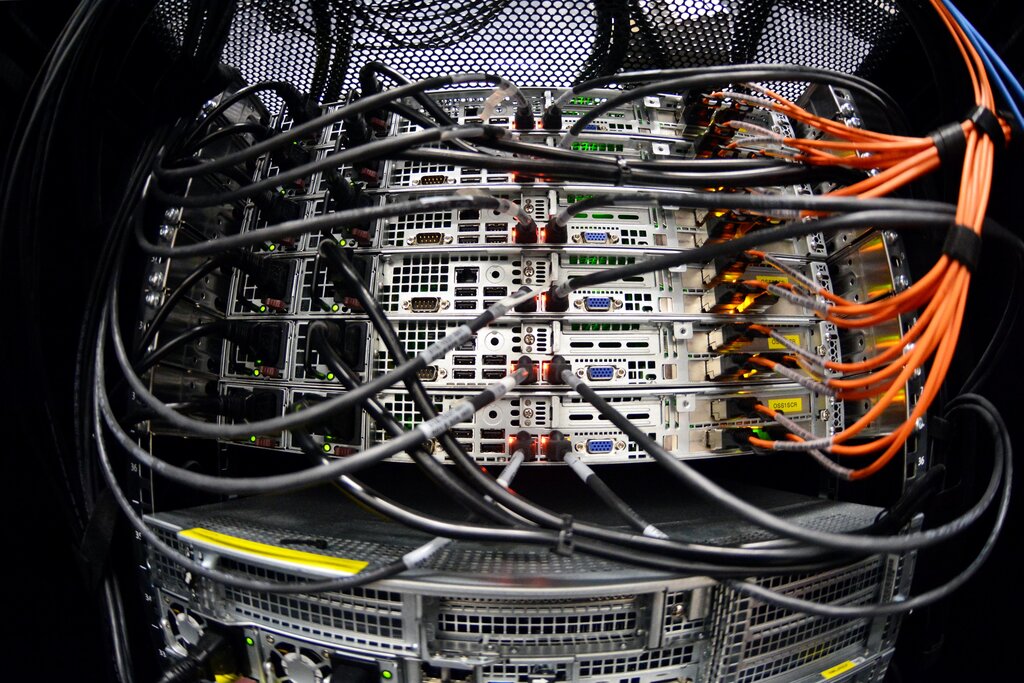
Compute: This is the processing power, provided by servers. Servers are the engines of the data center. They run applications, crunch numbers, and perform the calculations needed to deliver services. Imagine rows upon rows of powerful computers stacked in racks, all working together.
Storage: This is where the data lives. Storage systems, like hard disk drives (HDDs) or faster solid-state drives (SSDs), hold all the information, from customer records to cat videos. The goal is to keep data safe and retrieve it quickly when needed.
Networking: This is the nervous system connecting everything. Networking equipment—like switches, routers, and fiber-optic cables—links the servers and storage together and connects the entire data center to the outside world. This intricate web ensures that data can flow rapidly and reliably where it needs to go.
Architecture and Design
Not all data centers are created equal. Their design, or architecture, depends on the needs of the business they support. A key way to classify them is through a tier system, which ranks a data center's reliability and uptime.
Uptime is the measure of time a system has been operational. A data center with 99.99% uptime is down for less than an hour per year.
The tiers, developed by the Uptime Institute, range from I to IV. Each successive tier adds more redundancy, which is the duplication of critical components to ensure the system keeps running even if something fails. Think of it like a hospital having backup generators. A Tier I facility has a single path for power and cooling, while a Tier IV facility has multiple, independent systems to prevent any single point of failure.
| Tier | Redundancy | Uptime Guarantee (Approx.) |
|---|---|---|
| Tier I | Basic capacity, no redundancy | 99.671% |
| Tier II | Redundant capacity components | 99.741% |
| Tier III | Concurrently maintainable, multiple paths | 99.982% |
| Tier IV | Fault tolerant, fully redundant systems | 99.995% |
Higher tiers cost more to build and maintain, so companies choose a level that matches their operational needs. A small business might be fine with a Tier II data center, but a major financial institution would require the near-perfect reliability of a Tier IV facility to process transactions without interruption.
What is the primary purpose of a data center?
The three fundamental pillars of a data center's infrastructure are Compute, Storage, and ________.
Understanding these fundamentals provides a solid base for exploring how data centers are optimized for performance and efficiency.