Data Center Essentials
Data Center Basics
The Digital World's Engine Room
Every time you stream a movie, send an email, or use an app, you're connecting to a data center. Think of them as the powerful, centralized brains behind our digital lives. They are secure, specialized buildings that house the computer systems and components that store, process, and distribute the massive amounts of data we rely on every day.
Data centers are the building blocks of IT business organizations providing the capabilities of centralized repository for storage, management, networking and dissemination of data.
At their core, data centers are all about managing information. Their purpose isn't just to hold data, but to make sure it's always available, secure, and fast. For a business, this could mean running a company website, processing customer payments, or analyzing sales data. For you, it means your photos are saved safely and your favorite shows stream without interruption.
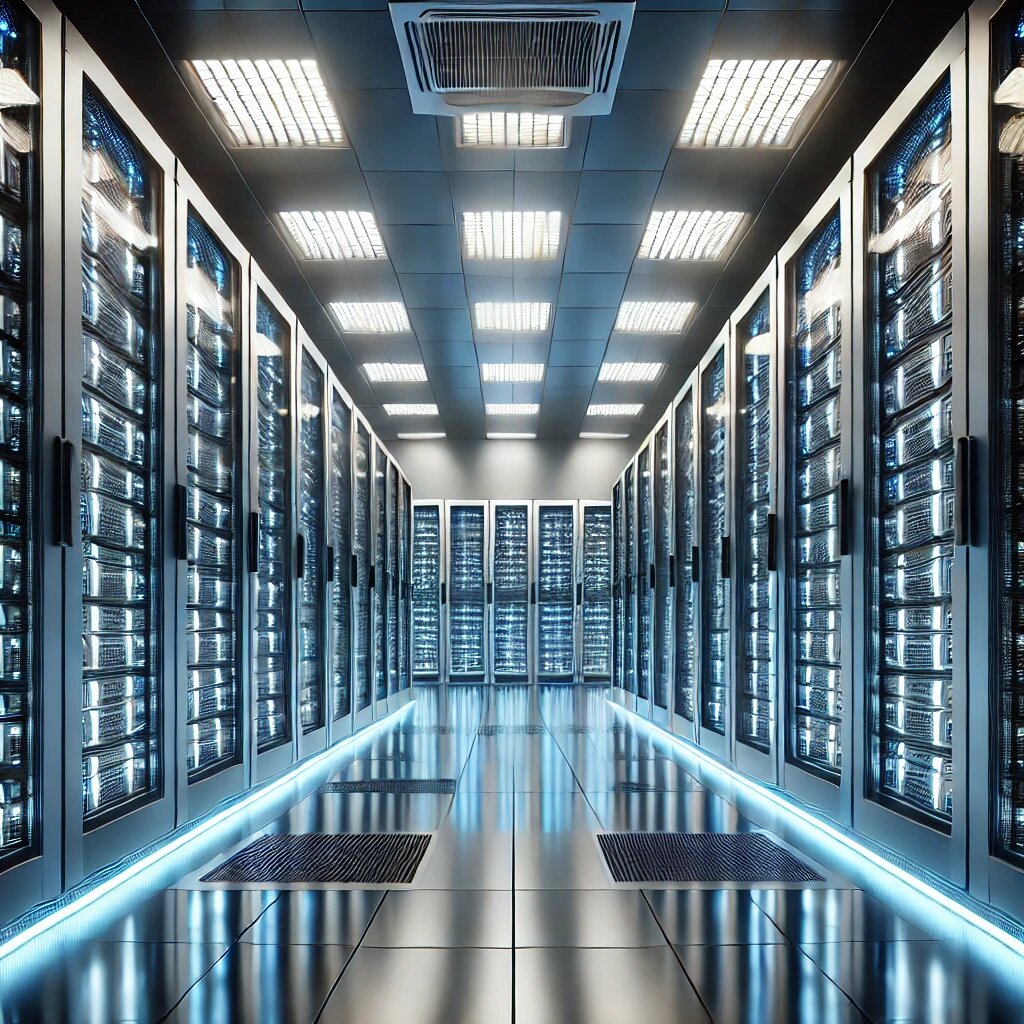
Inside the Box
While data centers are complex facilities, they are built around three fundamental components.
server
noun
A powerful computer that provides data or services to other computers, known as clients, over a network. In a data center, thousands of servers work together.
Servers are the workhorses. They perform the actual computing, from running applications to processing calculations. They're typically mounted in tall racks to save space.
Storage systems hold the vast amounts of data. This includes everything from databases and business documents to photos and videos. These systems are designed for reliability and quick access.
Networking equipment connects everything together. Switches, routers, and cables create a high-speed network that links servers, storage, and the outside world through the internet. This is the communication backbone that allows data to flow seamlessly.
From Rooms to the Cloud
Data centers have changed dramatically over time. They started in the 1950s and 60s as large, single-purpose rooms built around massive mainframe computers. As technology became smaller and more distributed, companies began building their own private data centers to manage their IT needs.
The rise of the internet created a new model: the colocation facility. Here, a company rents space and infrastructure to house its own servers. It's like an apartment building for computer hardware.
Today, the biggest shift is cloud computing. Tech giants like Amazon, Google, and Microsoft have built enormous, hyper-efficient data centers around the world. Businesses can now rent computing power, storage, and other services from these cloud providers without ever needing to buy or manage their own physical hardware. This gives them immense flexibility and power.
Cloud computing isn't a magical, abstract thing. It's a service running on physical servers in a physical data center somewhere in the world.
Beyond just day-to-day operations, data centers are crucial for business continuity. Companies rely on them for disaster recovery. By backing up critical data to a secondary data center in a different geographic location, a business can quickly get back online if its primary site is affected by a fire, flood, or power outage. Without this redundancy, a single incident could be catastrophic.
Ready to test your knowledge?
What is the primary purpose of a data center?
Servers, Storage, and ______ are the three fundamental components of a data center.
Understanding data centers is key to understanding the modern digital world. They are the invisible but essential infrastructure that powers our connected lives.