Data Analytics Mastery
Introduction to Data Analytics
What Is Data Analytics?
Data analytics is the science of examining raw data to draw conclusions about that information. It’s a bit like being a detective. You gather clues (data), look for patterns, and solve a mystery—like why sales dropped last month or which customers are likely to buy a new product.
The primary goal of data analytics is to help individuals or organizations to make informed decisions based on patterns, behaviors, trends, preferences, or any type of meaningful data extracted from a collection of data.
Instead of relying on gut feelings, data-driven decision-making uses facts to guide strategy. This process helps companies optimize their processes, understand their customers, and ultimately, become more successful. Every time you get a personalized recommendation on a streaming service, you're seeing data analytics at work.
The Data Analytics Lifecycle
Data analytics isn't a single action but a structured process. This series of steps, known as the data analytics lifecycle, provides a roadmap from a raw question to a clear insight. While different models exist, most follow a similar path.
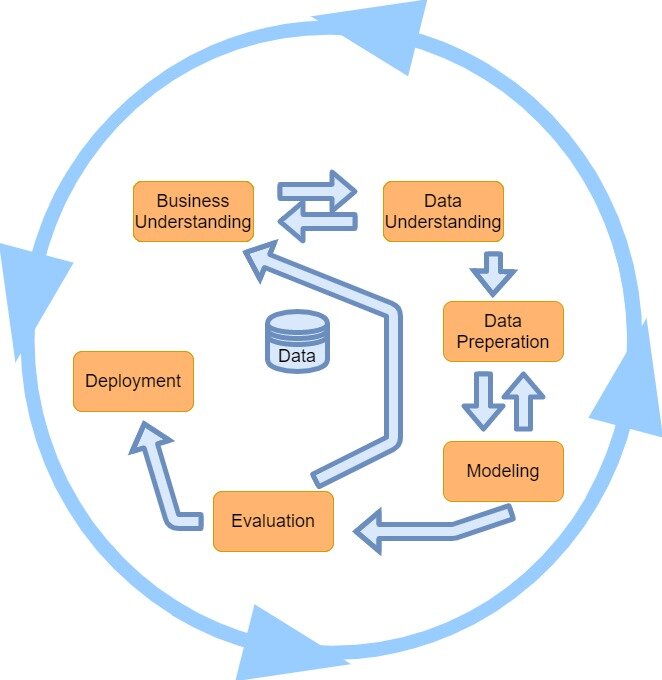
Let's break down these phases:
- Business Understanding: It all starts with a question. What problem are we trying to solve? This could be anything from “How can we reduce customer churn?” to “Which marketing campaigns are most effective?” A clear objective is crucial.
- Data Understanding: Next, you identify and collect the necessary data. This involves figuring out what data you need and where to get it.
- Data Preparation: Raw data is often messy. It might have errors, missing values, or inconsistencies. This phase, often the most time-consuming, involves cleaning and organizing the data to make it ready for analysis.
- Modeling & Analysis: This is where the detective work happens. Analysts use various techniques to explore the data, find patterns, identify relationships, and extract meaningful insights.
- Evaluation: Once you have some findings, you need to check your work. Do the results make sense? Do they actually help answer the initial question?
- Deployment: The final step is to communicate your findings. An insight is useless if it isn't shared with the people who can act on it. This often involves creating reports or visualizations to tell a clear story with the data.
Types of Data
Data comes in all shapes and sizes, but it can generally be sorted into two main categories: structured and unstructured.
Structured Data
noun
Data that is highly organized and formatted in a way that is easily searchable in relational databases. Think of a well-organized spreadsheet.
Structured data is neat and tidy. It fits nicely into tables with rows and columns. This organization makes it straightforward for computers to process and analyze.
Unstructured data is the opposite. It has no predefined model or organization, making it much more difficult to analyze. It’s like a messy pile of documents rather than a clean filing cabinet.
| Feature | Structured Data | Unstructured Data |
|---|---|---|
| Format | Predefined, tabular | No predefined format |
| Examples | Phone numbers, zip codes, sales figures | Emails, social media posts, videos, audio files |
| Ease of Analysis | Easy to search and analyze | Difficult to search and analyze |
| Volume | About 20% of all data | About 80% of all data |
The Role of a Data Analyst
A data analyst is a professional who collects, processes, and performs statistical analyses of data. They are storytellers who use data to help organizations make better decisions. Their responsibilities span the entire data lifecycle, from asking the right questions to presenting the final insights.
Key skills for a data analyst include:
- Curiosity: A desire to dig deep and understand the 'why' behind the numbers.
- Attention to Detail: Ensuring data is accurate and the analysis is sound.
- Problem-Solving: Figuring out how to answer complex business questions with data.
- Communication: Clearly explaining technical findings to a non-technical audience.

Data analytics is not limited to tech companies. It's used in nearly every industry.
- Healthcare: Hospitals analyze patient data to predict disease outbreaks and improve care.
- Retail: Stores use purchase history to recommend products and manage inventory.
- Finance: Banks analyze transaction data to detect and prevent fraud.
- Sports: Teams analyze player performance to make strategic decisions during games.
Now, let's review some of the key concepts we've covered.
Ready to test your knowledge?
A company wants to understand why sales have declined in a specific region. According to the data analytics lifecycle, what is the first step they should take?
Which of the following is an example of structured data?
Understanding these core concepts is the first step into the world of data. By knowing the process, the types of data, and the role of an analyst, you have a solid foundation for exploring how data shapes our world.