Data Analytics for Professionals
Strategy and Business Understanding
Start with the Goal
Every data analytics project begins not with data, but with a question. The first phase of the Cross-Industry Standard Process for Data Mining (CRISP-DM) is called Business Understanding. Its entire purpose is to figure out the right question to ask. Before you write a single line of code or clean any data, you must clearly define what the business needs to achieve.
Think of it like building a bridge. You wouldn't start by ordering steel. You'd first ask: Where does the bridge need to go? Who will use it? How much traffic must it support? Answering these questions ensures you build a useful bridge, not just a technically impressive structure.
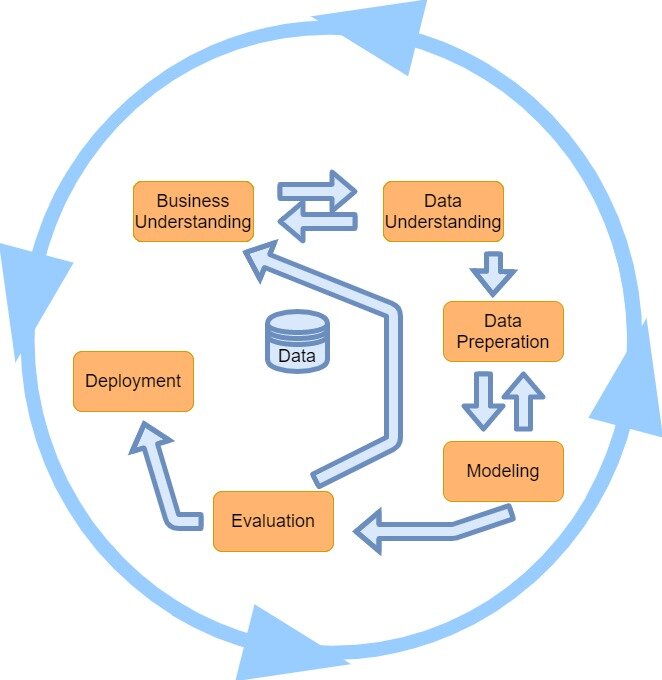
This phase translates a vague business request, like "we need to improve sales," into a concrete, measurable data problem. It involves understanding the current situation, defining objectives from a business perspective, and then creating a plan to meet those objectives using data.
Define Success Clearly
A common mistake is confusing technical achievements with business success. They are not the same. A model that is 99% accurate is a technical success. But if it doesn't help the business increase revenue, reduce costs, or mitigate risk, it's a business failure. The Business Understanding phase forces you to define success in both contexts and to prioritize the business outcome.
| Business Goal | Business Success Metric | Technical Goal | Technical Success Metric |
|---|---|---|---|
| Reduce customer churn | Decrease churn rate by 5% in the next quarter | Predict which customers are likely to churn | Achieve >90% precision on churn predictions |
| Increase marketing effectiveness | Improve campaign conversion rate by 15% | Segment customers for targeted ads | Identify 5 distinct customer segments with unique purchasing behaviors |
| Minimize equipment failure | Reduce unscheduled downtime by 20% | Forecast machine breakdowns | Build a model with a Root Mean Square Error (RMSE) below a set threshold |
The technical goals serve the business goals. Your target is always the business metric. The technical metrics are just guideposts to let you know if your model is on the right track.
Assess the Situation
Once you know what success looks like, you need a reality check. A situational assessment involves looking at the resources, constraints, risks, and assumptions related to the project. This is where you conduct a resource inventory.
- Data: Do we have the necessary data? Is it accessible? Is it of high enough quality?
- People: Does the team have the right skills (e.g., data engineering, machine learning, domain expertise)?
- Tools: Do we have the required software and computing infrastructure to handle the data and build the models?
This audit prevents you from planning a project that is impossible to execute.
Alongside the resource audit, a cost-benefit analysis is crucial. This weighs the expected benefits of the project against its costs. Benefits are often tied to the business success criteria, like increased revenue from reduced churn. Costs include not just software and salaries, but also the time and effort of the team. This analysis ensures the project provides a worthwhile return on investment (ROI).
Develop the Plan
The final output of the Business Understanding phase is a formal project plan. This document synthesizes everything you've learned. It's not just a list of tasks; it's a strategic document that connects the business problem to the proposed data solution.
A good project plan includes:
- Business Objectives: What the business wants to achieve.
- Data Mining Goals: How data analytics will help achieve those objectives.
- Success Criteria: The specific business and technical metrics for success.
- Resource Inventory: What you have to work with.
- Risks and Contingencies: What might go wrong and how you'll handle it.
- Initial Timeline: A high-level schedule of project phases.
- Cost-Benefit Analysis: The justification for the project's existence.
CRISP-DM provides a roadmap for data science projects, ensuring that every step, from understanding the business need to deploying a solution, is clear, organized, and effective.
This plan becomes the foundation for the entire project. It aligns stakeholders, sets clear expectations, and provides a framework for measuring progress. Skipping or rushing this phase is a recipe for a project that delivers a technically sound model that solves the wrong problem.
What is the primary purpose of the Business Understanding phase in the CRISP-DM methodology?
A data science team builds a model with 99% accuracy, but it doesn't lead to increased profits or reduced costs for the company. In the context of the Business Understanding phase, this project is considered a business failure.
With a solid business understanding, you're ready to move to the next phase: exploring the data itself.