Data Analyst Fundamentals
Introduction to Data Analysis
Turning Data into Decisions
Every day, we create a massive amount of data. From the shows we stream to the items we buy, these actions are all recorded as individual data points. On their own, they don't mean much. But when collected and examined, they can tell a powerful story.
Data analysis is the process of cleaning, changing, and modeling data to discover useful information. It's about finding patterns and insights that can help people and businesses make better choices. Instead of relying on a gut feeling, data analysis uses evidence to guide decisions.
Data analysis is a critical process in transforming raw data into meaningful insights that drive decision-making and strategy.
The person who does this work is a data analyst. They are detectives of the digital world, sifting through clues to solve a problem or answer a question.
data analyst
noun
A professional who collects, processes, and performs statistical analyses of data to help a business make better decisions.
Think of a coffee shop owner who wants to know their most popular drink. A data analyst would look at sales records, identify which drinks sell most often and at what times, and present that information clearly. With this insight, the owner might decide to run a promotion on their best-selling latte or ensure they have extra ingredients on hand for the morning rush. That's data-driven decision-making in action.
The Data Analysis Journey
Data analysis isn't a single action but a structured process. While the details can change depending on the project, the core journey generally follows a few key steps. It transforms raw, messy numbers into a clear, actionable story.
Let's walk through what each step means.
-
Ask Questions: Every analysis starts with a goal. What problem are you trying to solve? What do you need to find out? A clear question focuses the entire process. For our coffee shop, the question was, "What is our most popular drink?"
-
Collect Data: Once you know what you're asking, you need to gather the relevant information. This data could come from sales reports, customer surveys, website traffic, or public databases.
-
Clean Data: Raw data is rarely perfect. It might have errors, duplicates, or missing pieces. This step involves tidying up the data to make sure it's accurate and consistent. It's a critical, and often time-consuming, part of the process.
-
Analyze Data: This is where the discovery happens. The analyst uses various techniques to explore the data, find patterns, identify relationships, and build models. The goal is to find the answer to the initial question.
-
Share Insights: The final step is to communicate the findings. An answer is only useful if others can understand it. Analysts create charts, reports, and dashboards to present their insights in a way that is clear and compelling. This helps stakeholders make informed, data-driven decisions.
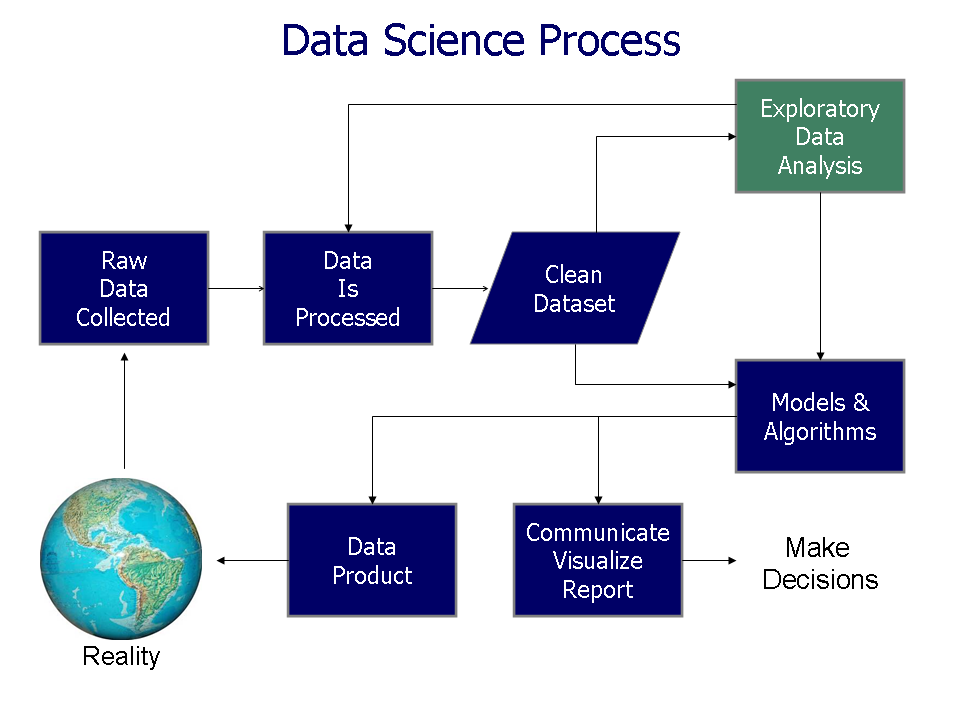
This cycle is what empowers organizations to move beyond guesswork. By systematically questioning, collecting, and analyzing data, they can understand past performance, identify current opportunities, and even predict future trends.
Why It Matters
Imagine trying to navigate a new city without a map. You might get to your destination eventually, but you'd likely take wrong turns and waste a lot of time. Making decisions without data is similar. You're operating on intuition alone.
Data-driven decision-making provides the map. It helps businesses understand their customers better, streamline their operations, and create better products. For a streaming service, it means recommending a show you'll probably love. For a hospital, it can mean identifying at-risk patients sooner. The applications are endless.
Ultimately, data analysis helps us replace opinions with facts and turn uncertainty into opportunity.
Ready to check your understanding?
What is the primary purpose of data analysis?
Which of the following steps in the data analysis process is often the most time-consuming and deals with fixing errors, duplicates, and missing values?
Understanding these foundational concepts is the first step into the world of data. It's a field built on curiosity and a desire to find the story hidden within the numbers.