Data Analysis Fundamentals
Introduction to Data Analysis
Making Sense of Information
Data analysis is the process of inspecting, cleaning, transforming, and modeling data to discover useful information, draw conclusions, and support decision-making. Think of a detective solving a case. They gather clues (data), look for patterns, and piece them together to figure out what happened. Data analysis works the same way, but the clues are numbers and facts, and the goal is to solve a business problem or answer a research question.
Without analysis, data is just a collection of raw facts. A list of every sale a company made in a year is not very useful on its own. But through analysis, you can find your best-selling product, your busiest month, or your most valuable customer. This process turns raw data into actionable insights, helping businesses operate more efficiently and plan for the future.
Different Questions, Different Analyses
Not all data analysis is the same. The method you use depends on the question you're trying to answer. We can group these methods into four main types.
| Type of Analysis | Key Question | Example |
|---|---|---|
| Descriptive | What happened? | Summarizing last quarter's sales figures. |
| Diagnostic | Why did it happen? | Finding a correlation between a marketing campaign and a sales spike. |
| Predictive | What will happen? | Forecasting product demand for the next six months. |
| Exploratory | What patterns can we find? | Discovering a new customer segment by looking at purchasing behavior. |
Descriptive analysis is the most common type. It focuses on summarizing data to describe what has already occurred. It answers the "what" question by using statistics like mean, median, and mode to provide a snapshot of the past. A retail manager looking at a report of total daily sales is using descriptive analysis.
Diagnostic analysis takes a step further by digging into the "why." After seeing that sales dipped last week, a manager might use diagnostic analysis to find the cause. Did a competitor run a promotion? Was there a problem with the website? This type of analysis looks for causes and relationships.
Predictive analysis uses historical data to make forecasts about the future. It's about answering the "what will happen" question. Companies use predictive analysis to estimate future sales, identify customers likely to churn, or predict which products will be popular next season.
Exploratory analysis is about discovery. Unlike the other types, you don't start with a specific question. Instead, you sift through data to find previously unknown patterns, relationships, or anomalies. It's a bit like wandering through a new city without a map to see what you can find. This process often leads to new questions that can be investigated with other types of analysis.
These four types of analysis often build on one another. You start by describing what happened, diagnose why it happened, and then use that understanding to predict what will happen next.
The Analysis Process
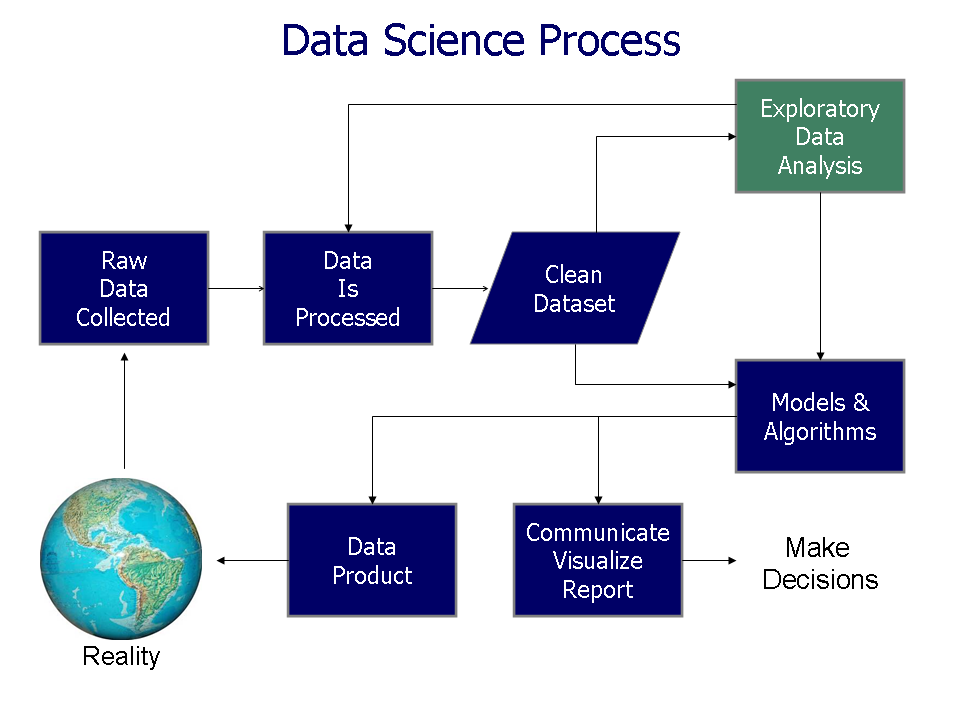
Regardless of the type, data analysis generally follows a standard process. It's a cycle that ensures the work is organized, thorough, and leads to reliable conclusions.
This framework provides a roadmap for turning raw data into valuable knowledge. Each phase is critical. A poorly defined question can lead to a useless analysis, while poorly cleaned data can lead to incorrect conclusions. By following these steps, analysts can ensure their work is focused, accurate, and impactful.
What is the primary goal of data analysis?
A retail company wants to forecast its sales for the upcoming holiday season based on the past five years of sales data. Which type of data analysis would be most appropriate for this task?