Data Analysis Application and Strategy
Modern Data Lifecycle
The Real-World Data Lifecycle
Forget a simple, straight line. The modern data lifecycle is a dynamic, iterative loop designed to solve real business problems. While academic exercises might present a clean, linear path, professional data work is messy, creative, and constantly circling back on itself. The entire process is driven by a clear business objective. You don't just collect data for the sake of it; you start with a question you need to answer or a goal you want to achieve.
This business-first approach guides every decision. The question you're trying to answer determines what data you collect, how you clean and structure it, and which analytical models you apply. Think of it like building a custom car. You don't start welding random parts together. You first decide if you're building a drag racer or a family van. That goal dictates everything from the engine choice to the type of tires.
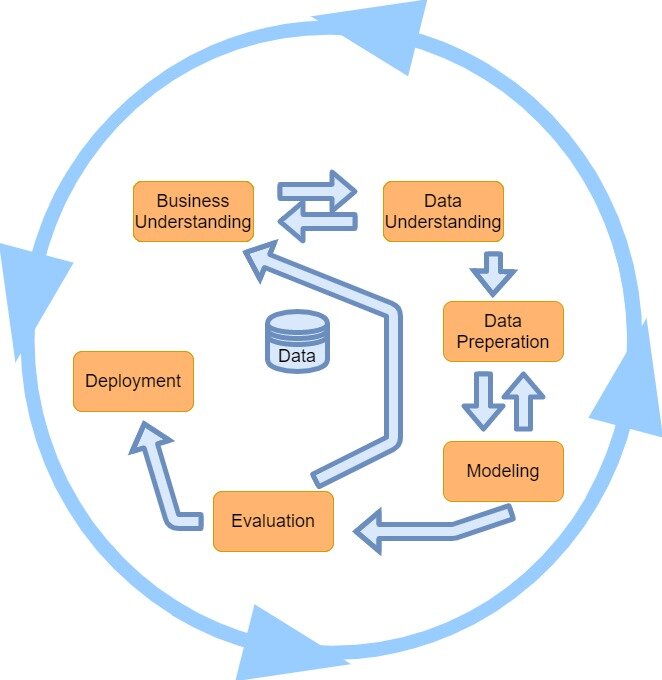
The standard lifecycle follows several core phases, often visualized using a framework like (Cross-Industry Standard Process for Data Mining). It starts with Business Understanding, where you define the problem. Next comes Data Understanding and Data Preparation, where you collect, explore, and clean your raw data. This is often the most time-consuming part of the process. Only then do you move to Modeling, where you apply algorithms to find patterns. Finally, in the Evaluation and Deployment phases, you assess the model's performance and integrate it into business operations to deliver value.
The key takeaway is that these phases are not a one-way street. Your exploratory analysis might reveal that the data you collected is insufficient, sending you back to the collection phase. A model might perform poorly, forcing you to re-engineer your features or even redefine the business problem.
The Currents Beneath the Surface
Running parallel to these core phases are crucial undercurrents that ensure the entire system is robust, secure, and reliable. These aren't just steps in the process; they are continuous practices that sustain a professional data environment.
Data Governance sets the rules of the road. It defines who can access what data, how it should be managed, and how its quality is maintained. It ensures data is handled securely and ethically, complying with regulations like GDPR or CCPA. Without strong governance, a data lake can quickly turn into a data swamp—a messy, unusable repository of untrustworthy information.
Another critical current is . Borrowing principles from the software development world of DevOps, DataOps focuses on automating and streamlining the data lifecycle. The goal is to reduce the time it takes to get from an idea to a deployed data product, whether that's a dashboard or a machine learning model. It emphasizes collaboration between data scientists, engineers, and business stakeholders, using automation to ensure data pipelines are reliable and efficient.
Keeping an Eye on the System
Finally, you can't manage what you can't see. Data observability is the practice of monitoring the health of your data systems. It's more than just checking if a pipeline has failed. Observability tools provide deep insights into the data itself. Is the data arriving on time? Has its format changed unexpectedly? Is the quality degrading?
Answering these questions in real time helps teams catch problems before they impact business decisions. It's like the dashboard in your car telling you not just that the engine is on, but that your oil pressure is low or a tire needs air. Together, these practices transform the data lifecycle from a simple sequence of steps into a mature, reliable system for generating value.
What is the primary driver of the modern, business-oriented data lifecycle?
Which continuous practice is responsible for setting the rules for data access, management, and security, helping to prevent a 'data lake' from becoming a 'data swamp'?