DARPA's Generative Optogenetics Program
Introduction to Optogenetics
Controlling Cells with Light
Optogenetics is a technique that gives scientists remote control over living cells using light. It merges genetics with optics, allowing for precise manipulation of cellular activity, especially in neurons. By introducing light-sensitive genes into specific cells, researchers can turn them on or off with a simple flash of light, much like flipping a switch.
This powerful method grew out of discoveries in microbiology. Scientists found that certain single-celled organisms, like algae, produce proteins that react to light. These proteins help the microbes navigate their environment, moving toward or away from light sources. By borrowing the genes for these proteins, we can install light-sensitivity into cells that don't normally have it.
The Light-Activated Switches
The key components of optogenetics are microbial opsins. These are special proteins that sit in the cell membrane and act as light-gated channels or pumps. When light of a specific wavelength hits the opsin, it changes shape, opening a pathway for ions to flow across the membrane. This flow of ions is what changes the cell's electrical state, either activating it or shutting it down.
opsin
noun
A type of protein found in cell membranes that can react to light.
Two of the most widely used opsins are Channelrhodopsin and Halorhodopsin. They function as an 'on' and 'off' switch, respectively.
-
Channelrhodopsin (ChR2) comes from green algae. When exposed to blue light, it opens and allows positive ions, like sodium (), to rush into the cell. This influx of positive charge excites the neuron, causing it to fire an action potential.
-
Halorhodopsin (NpHR) originates from a type of archaea. It responds to yellow or orange light. When activated, it pumps negative ions, such as chloride (), into the cell. This makes the inside of the neuron more negative, making it much harder to fire. It effectively silences the cell.
| Opsin | Light Color | Ion Flow | Effect on Neuron |
|---|---|---|---|
| Channelrhodopsin | Blue | Positive ions in | Activation (ON) |
| Halorhodopsin | Yellow/Orange | Negative ions in | Inhibition (OFF) |
Putting It All Together
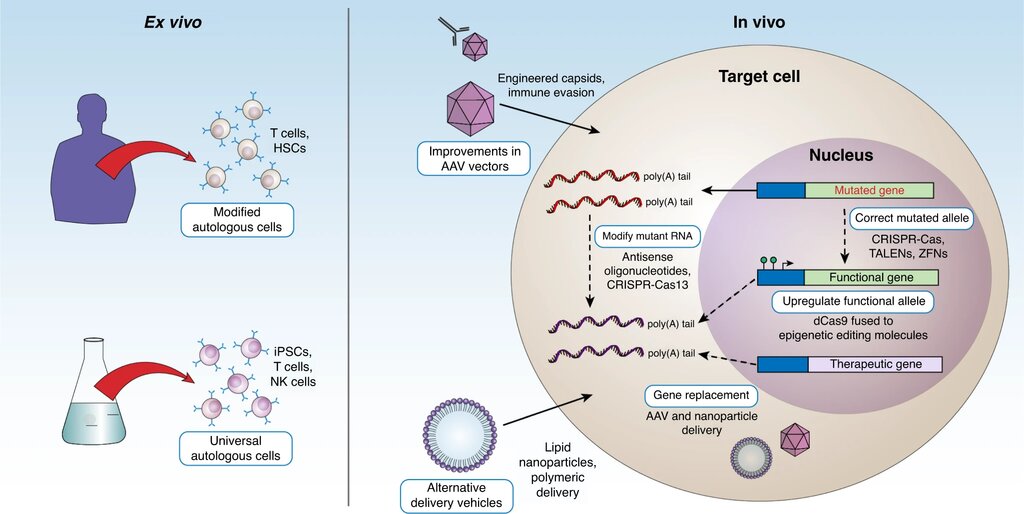
The process begins with genetic engineering. Scientists package the gene for a specific opsin into a harmless virus. This modified virus is then introduced into the target tissue. The virus acts as a delivery vehicle, inserting the opsin gene into the DNA of specific cells.
Once the cells start producing the opsin protein, they become light-sensitive. Researchers can then implant a tiny fiber-optic cable to deliver precise pulses of light to these engineered cells. By controlling the color, intensity, and timing of the light, they can control the activity of these cells with incredible precision.
This level of control has revolutionized neuroscience. Scientists can now activate a specific neural circuit to see how it affects behavior, or silence another to understand its function. This helps in mapping the brain's complex wiring and understanding the basis of neurological disorders. Beyond the brain, optogenetics is being explored for applications like restoring vision and controlling heart rhythms.
By linking specific behaviors to the activity of specific neurons, optogenetics provides a direct look into the workings of the brain.