Darija for Family Connection
Introduction to Darija
What is Darija?
If you're planning a trip to Morocco, you'll hear a language that flows with a unique rhythm. It's not quite the formal Arabic you might see on the news, nor is it French or Spanish, though you might catch hints of them. This is Darija, the vibrant spoken language of Morocco.
Darija is the language of the street, the market, the home, and the heart. It’s how Moroccans connect with each other every day.
While Modern Standard Arabic (MSA) is the official language used in government, media, and formal writing, Darija is what you'll hear in everyday life. Think of it like this: MSA is the language of books, while Darija is the language of conversation. You can't truly experience Moroccan culture without it.
Darija is a fascinating mix. Its foundation is Arabic, but it's seasoned with words and influences from Amazigh (Berber) languages, French, and Spanish. This blend reflects Morocco's rich history as a cultural crossroads.
Darija vs. Arabic
So, how different is Darija from Modern Standard Arabic? An MSA speaker from Egypt or Saudi Arabia would find Moroccan Darija quite challenging to understand at first. The pronunciation, vocabulary, and even some grammar are distinct.
One of the first things you'll notice is how Darija often shortens words. Vowels can disappear, making the language sound faster and more compact. It also borrows heavily from other languages, especially French.
For example, to ask "How are you?", you wouldn't use the formal MSA phrase. In Darija, you’d say 'kif dayr?' or 'labas?'.
How are you? / Is everything okay?
Let's look at a few more examples to see the difference.
| English | Modern Standard Arabic (MSA) | Moroccan Darija |
|---|---|---|
| Yes | Na'am (نعم) | Iyeh (اه) |
| No | La (لا) | La (لا) |
| Thank you | Shukran (شكرا) | Shokran (شكرا) |
| What? | Mādhā (ماذا) | Ashno (اشنو) / Shno (شنو) |
| Car | Sayyāra (سيارة) | Tomobil (طوموبيل) |
| Kitchen | Maṭbakh (مطبخ) | Kozina (كوزينة) |
Notice how words like 'tomobil' (from the French automobile) and 'kozina' (from the Spanish cocina or French cuisine) have become part of everyday Darija.
Regional Flavors
Just as English has different accents and dialects, so does Darija. The way someone speaks in the northern city of Tangier will be different from someone in Marrakech or in the Sahara. These variations are part of the language's charm.
For instance, someone from the north might say 'jbel' for mountain, while someone in another region might use a different pronunciation. Don't worry about mastering these regional differences. People will appreciate any effort you make to speak their language.
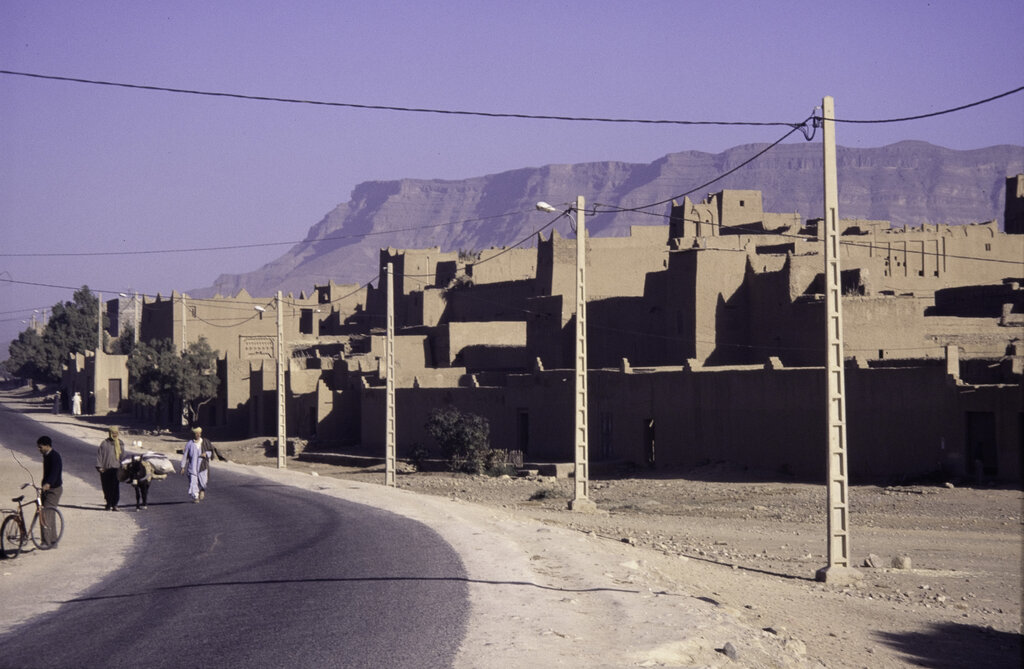
One interesting thing I learned from my trip to Morocco is that Moroccans are multilingual and tend to code switch between languages when speaking and it is considered the norm.
Learning a few key phrases in Darija will open doors. It shows respect for the local culture and can turn a simple transaction into a friendly interaction. Whether you're ordering a mint tea, hailing a taxi, or bargaining in a souk, a little Darija goes a long way.
Ready to check your understanding?
What is the primary difference between how Modern Standard Arabic (MSA) and Darija are used in Morocco?
Moroccan Darija's vocabulary is a rich mix, drawing from its Arabic foundation and influences from other languages. Which language is NOT mentioned as a significant influence?
Now you have a sense of what Darija is and why it's so central to Moroccan life. As we continue, you'll start picking up the essential words and phrases you need to communicate.