Dance Floor Confidence: Overcoming Social Anxiety
Understanding Social Anxiety
The Spotlight Feeling
You step onto the dance floor, the music starts, and suddenly it feels like every eye in the room is on you. Your heart starts to beat a little faster. Your palms get sweaty. You worry about messing up the steps, what your partner is thinking, or how you look to everyone watching. If this sounds familiar, you're experiencing a form of social anxiety.
anxiety
noun
A feeling of worry, nervousness, or unease, typically about an imminent event or something with an uncertain outcome.
Social anxiety isn't just about being shy. It's a more intense fear of being judged or scrutinized by others in social situations. In a dance class or at a social dance event, this feeling can be amplified. You're not just having a conversation; you're performing a physical skill, often with a partner, right out in the open.
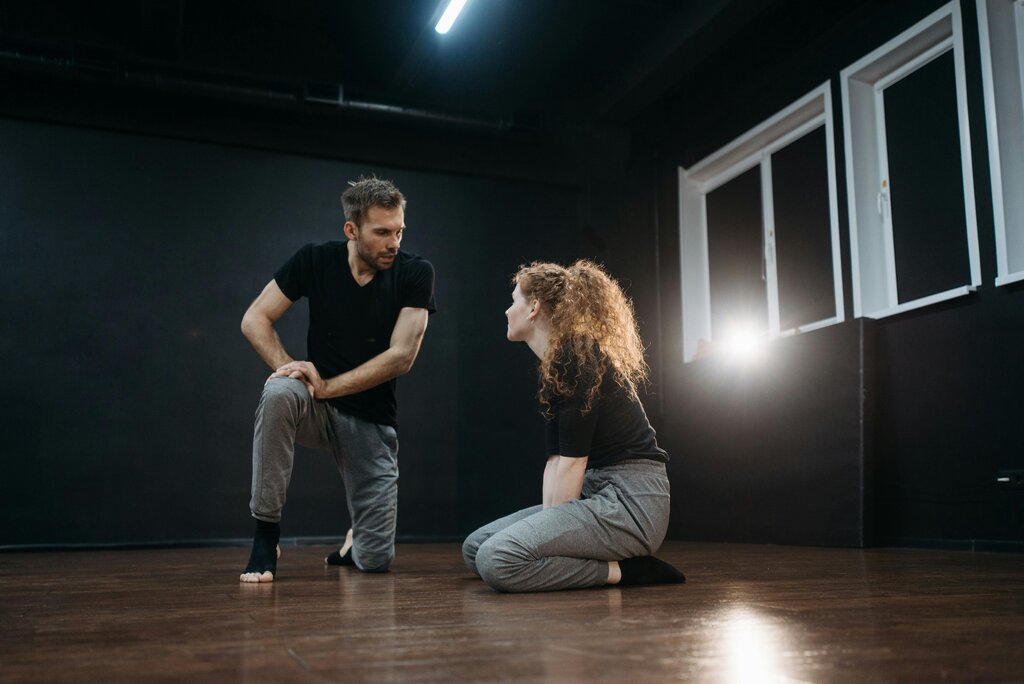
This pressure can turn a fun hobby into a stressful ordeal. The fear of negative judgment can be overwhelming, making it hard to relax, learn, and connect with your partner.
Mind and Body on High Alert
When social anxiety kicks in, it triggers your body's "fight or flight" response. This is a primitive survival mechanism that prepares you to deal with a perceived threat. Even though a dance class isn't a life-threatening situation, your brain might react as if it is.
| Physiological Symptoms | Psychological Symptoms |
|---|---|
| Rapid heartbeat | Racing thoughts |
| Sweating | Fear of making mistakes |
| Shaking or trembling | Negative self-talk |
| Muscle tension | Difficulty concentrating |
| Blushing | Feeling self-conscious |
| Dry mouth | Desire to escape the situation |
These symptoms create a feedback loop. You feel your heart pound, which makes you more nervous. You start thinking about how nervous you are, which makes your heart pound even faster. Your focus shifts from the music and your partner to your own internal panic. This can lead to stiffness, missed cues, and a general feeling of being disconnected from the dance.
Physically, your body tenses up. Psychologically, your mind gets stuck on worrying what others think. Neither is helpful for graceful, fluid movement.
Finding Your Triggers
What sets off these feelings? Triggers are personal, but in dancing, they often fall into a few common categories.
Think about your own experiences. When do you feel most anxious? Is it when you're learning a new step? When the instructor is watching you? When you have to ask someone new to dance? Identifying these specific situations is the first step toward managing your reaction to them.
For example, dancing with a new partner can be a major trigger. You might worry about leading or following correctly, stepping on their toes, or just not 'clicking' with them. This worry can make you rigid and hesitant, which ironically can make the dance feel more awkward. Knowing this is a trigger for you allows you to acknowledge the feeling when it arises, which is a crucial first move.
try to not allow yourself to be intimidated, which is helpful in you being able to enjoy your dance activity
Acknowledging anxiety doesn't make it disappear, but it does take away some of its power. By understanding what social anxiety is, how it affects your body and mind, and what your personal triggers are, you've already started to change your relationship with it. You're no longer a passenger on a runaway train of fear. You're learning to be the conductor.
In the context of dancing, social anxiety is best described as:
When social anxiety is triggered during dancing, the body often activates its "______" response, a primitive survival mechanism.