Dairy Farm Biogas Anaerobic Digestion Systems
Anaerobic Digestion Basics
Digestion Without Air
Anaerobic digestion is a natural process where microorganisms break down organic material, like manure or food scraps, in an environment without oxygen. The term 'anaerobic' literally means 'without air'. It’s similar to what happens inside a cow's stomach, which is one of nature's most efficient digesters.
This process produces two main things: biogas and digestate. Biogas is a mixture of gases, mostly methane, that can be used as a renewable energy source. Digestate is the leftover solid and liquid material, which is rich in nutrients and makes an excellent fertilizer. On a dairy farm, this means turning waste into valuable resources.
A Four-Step Process
Anaerobic digestion doesn't happen all at once. It’s a complex teamwork-based process that unfolds in four distinct stages. Different types of microbes are responsible for each step, handing off the partially digested material to the next group in line.
This chain reaction is a perfect example of a microbial assembly line. Each group of organisms must do its job correctly for the next group to take over. If one stage fails, the entire process can grind to a halt.
The Microbial Team
The hard work of anaerobic digestion is done by a diverse community of microorganisms, primarily bacteria and another group of single-celled organisms called archaea.
Bacteria are the workhorses of the first three stages. They excel at breaking down complex materials and converting them into simpler compounds that others can use.
Archaea are the specialists that handle the final, crucial step: methanogenesis. These microbes are distinct from bacteria and are uniquely adapted to survive in extreme, oxygen-free environments. The specific archaea responsible for this step are called methanogens, because they generate methane as a metabolic byproduct.
Archaea
noun
A domain of single-celled organisms. These microbes are prokaryotes, meaning they have no cell nucleus. While they share some traits with bacteria, they have a unique evolutionary history and are biochemically different.
Creating Biogas
The final stage, methanogenesis, is where the magic happens. Methanogens take the simple products from the previous stages—mainly acetic acid and hydrogen gas—and convert them into biogas. Two main chemical reactions are responsible for most of the methane produced.
Another key reaction involves hydrogen gas and carbon dioxide, which are also byproducts of the earlier stages.
The resulting biogas is typically composed of about 50-70% methane () and 30-50% carbon dioxide (), with small amounts of other gases. Methane is the component that makes biogas a valuable fuel, as it is the primary component of natural gas.
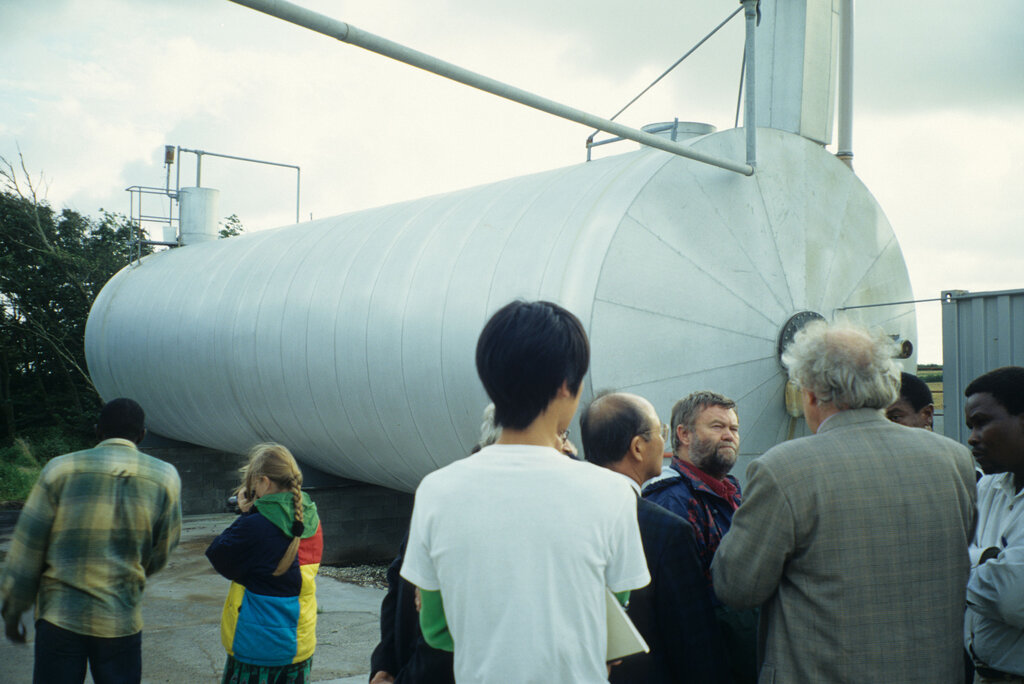
Now, let's test your understanding of how this process works.
The term 'anaerobic' in anaerobic digestion describes an environment that is:
What are the two main outputs of anaerobic digestion that are considered valuable resources?
Understanding these fundamental steps is key to seeing how a dairy farm can transform manure from a waste product into a source of clean energy and potent fertilizer.