Daily Meditation for Stress Reduction
Understanding Stress
What is Stress?
Stress is your body's natural response to a challenge or demand. When you encounter a trigger, known as a stressor, your body kicks into gear. This response isn't inherently bad. In short bursts, stress can be helpful. It's what gives you a surge of focus to finish a project on deadline or the burst of energy to swerve out of the way of a car.
Stressor
noun
Any event, condition, or stimulus that causes a stress response.
This short-term, beneficial stress is called acute stress. It's the most common form we experience. Once the stressor is gone, your body returns to its normal state.
The problems begin when the stressor doesn't go away, or when you constantly feel under attack. This leads to long-term, or chronic, stress. Your body stays in a high-alert state, which can seriously affect your health over time.
How Your Body Reacts
When you perceive a threat, your brain's hypothalamus sets off an alarm system. This system prompts your adrenal glands, located on top of your kidneys, to release a flood of hormones, including adrenaline and cortisol.
Adrenaline increases your heart rate, elevates your blood pressure, and boosts energy supplies. Cortisol, the primary stress hormone, increases sugars (glucose) in the bloodstream, enhances your brain's use of glucose, and curbs functions that would be nonessential in a fight-or-flight situation. This complex cascade of hormones is known as the hypothalamic-pituitary-adrenal (HPA) axis.
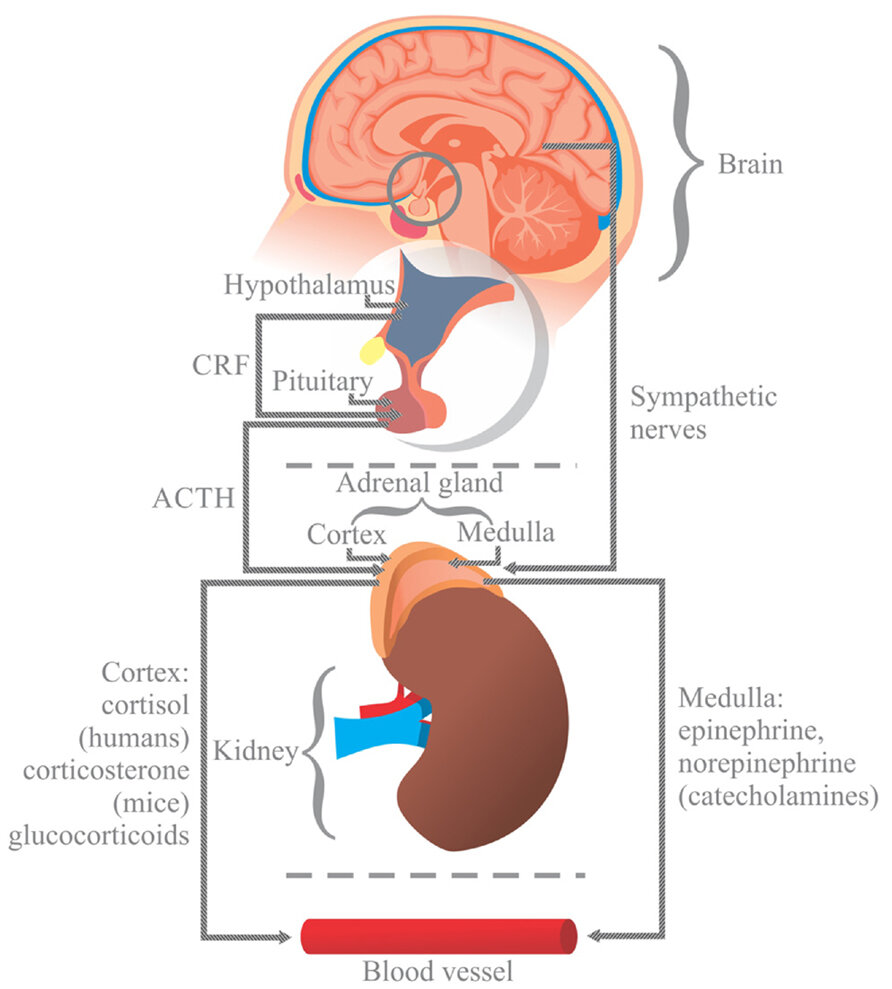
This reaction is what prepares you to either fight the threat or flee to safety. Your muscles tense up, your breathing quickens, and your senses become sharper. It's an ancient survival mechanism that's incredibly effective for escaping predators, but less so for dealing with a stressful work environment or financial worries.
The Mind Under Pressure
Stress doesn't just affect the body; it has a profound impact on your mind. The same hormones that ready your body for action also affect your mood and thinking. While a little bit of stress can sharpen your focus, too much can make it difficult to concentrate.
Psychologically, you might experience a range of symptoms, including:
- Anxiety or worry
- Irritability or anger
- Sadness or depression
- Feeling overwhelmed
- Difficulty making decisions

These mental and emotional symptoms are direct results of your brain being marinated in stress hormones. The constant state of alert makes it hard to relax, and the mental fatigue from being constantly 'on' can make even small tasks feel monumental.
When Stress Sticks Around
If the stress response stays activated for an extended period, it becomes chronic stress. This constant activation can disrupt almost all of your body's processes and put you at increased risk for numerous health problems.
Chronic stress can weaken your immune system, making you more susceptible to infections. It can also contribute to high blood pressure, heart disease, obesity, and diabetes.
Other health issues linked to chronic stress include:
- Digestive problems, like heartburn or irritable bowel syndrome.
- Sleep problems and insomnia.
- Headaches and migraines.
- Memory impairment.
- Worsening of pre-existing conditions.
Because stress can affect so many different systems in the body, learning to manage it is a crucial part of maintaining your overall health.
Stress management was developed and premised on the idea that stress is not a direct response to a stressor but rather an individual's resources and abilities to cope and mediate the stress response which are amenable to change, thus allowing stress to be controllable.
You can't eliminate stress from your life, but you can learn to control your response to it. Techniques like exercise, healthy eating, and getting enough sleep are foundational. Other powerful tools include developing mindfulness and practicing meditation, which help you regulate your internal reactions to external pressures.
What is the primary function of the body's acute stress response?
Which hormone is referred to as the primary stress hormone, responsible for increasing sugars in the bloodstream?