D Block Oxidation Trends
Introduction to d-Block Elements
Meet the Transition Metals
In the heart of the periodic table, spanning groups 3 through 12, lies a fascinating collection of elements known as the d-block elements. You probably know them by their more common name: transition metals. This block includes some of the most familiar and important metals we use every day, like iron, copper, gold, and silver.
As their name suggests, these elements are all metals. They share the classic metallic properties you'd expect: they are good conductors of heat and electricity, they are shiny when polished, and they are typically strong and hard. Most have high densities and high melting and boiling points. Think of the heft of a gold bar or the strength of an iron beam.
The Electron Story
What truly sets the d-block elements apart is their electronic configuration. As you move across a period in the main s- and p-blocks, electrons are added to the outermost energy shell. But for transition metals, something different happens. The electrons are added to an inner shell, specifically the d-subshell of the second-to-last energy level.
For example, let's look at the first row of transition metals (Period 4). The outermost shell is the 4th energy level, which holds electrons in the 4s orbital. However, as we move from Scandium (Sc) to Zinc (Zn), we are progressively filling the 3d orbital from the 3rd energy level. This might seem a bit backward, but it's a key feature that gives these elements their unique chemical properties.
This filling of an inner d-shell is why transition metals can have variable oxidation states and form colorful compounds, topics we'll explore later.
Here are the electron configurations for the first row of d-block elements. Notice how the 3d subshell fills up as the atomic number increases.
| Element | Symbol | Atomic Number | Electron Configuration |
|---|---|---|---|
| Scandium | Sc | 21 | [Ar] 3d¹4s² |
| Titanium | Ti | 22 | [Ar] 3d²4s² |
| Vanadium | V | 23 | [Ar] 3d³4s² |
| Chromium | Cr | 24 | [Ar] 3d⁵4s¹ (an exception!) |
| Manganese | Mn | 25 | [Ar] 3d⁵4s² |
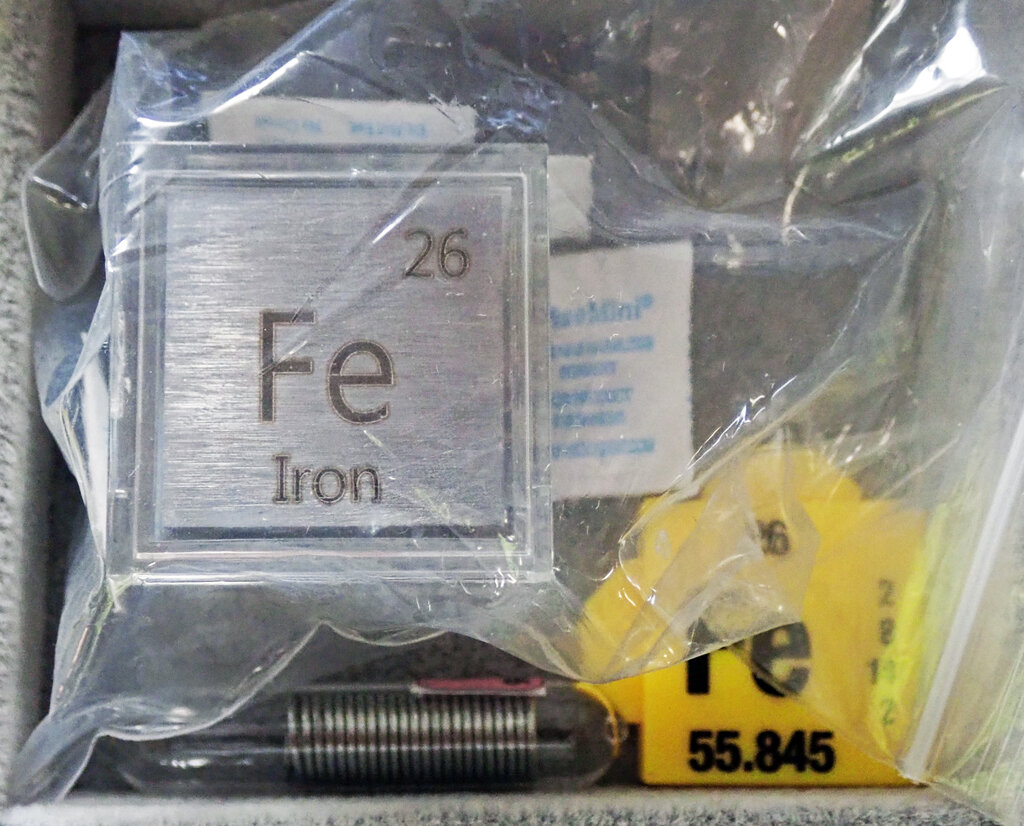
| Iron | Fe | 26 | [Ar] 3d⁶4s² |
| Cobalt | Co | 27 | [Ar] 3d⁷4s² |
| Nickel | Ni | 28 | [Ar] 3d⁸4s² |
| Copper | Cu | 29 | [Ar] 3d¹⁰4s¹ (an exception!) |
| Zinc | Zn | 30 | [Ar] 3d¹⁰4s² |
Everyday Importance
It's hard to overstate the importance of d-block elements. They are vital components of our modern world.
- Industry and Construction: Iron is the backbone of the steel industry, used to build everything from skyscrapers to cars. Titanium is prized in aerospace for its strength and low density.
- Electronics: Copper's excellent conductivity makes it essential for electrical wiring. Gold and silver are used in high-end electronic components because they resist corrosion.
- Biology: Many transition metals are essential for life. Iron is a key component of hemoglobin in our blood, which carries oxygen. Zinc is crucial for many enzymes in the body.
They also play a huge role as catalysts, substances that speed up chemical reactions without being consumed. Platinum, for instance, is used in the catalytic converters of cars to reduce pollution.
Now, let's test your knowledge of these essential metals.
Which groups on the periodic table contain the d-block elements, also known as transition metals?
What is the key feature of the electron configuration of d-block elements as you move across a period?
Understanding the location and basic electronic structure of d-block elements is the first step in appreciating their rich and complex chemistry.