Czech Language Fundamentals
Czech Alphabet and Pronunciation
The Czech Alphabet
The Czech alphabet is based on the Latin script, just like English. However, it has 42 letters in total. Many of these extra letters are created by adding small marks, called diacritics, to familiar letters. These marks change how the letter is pronounced.
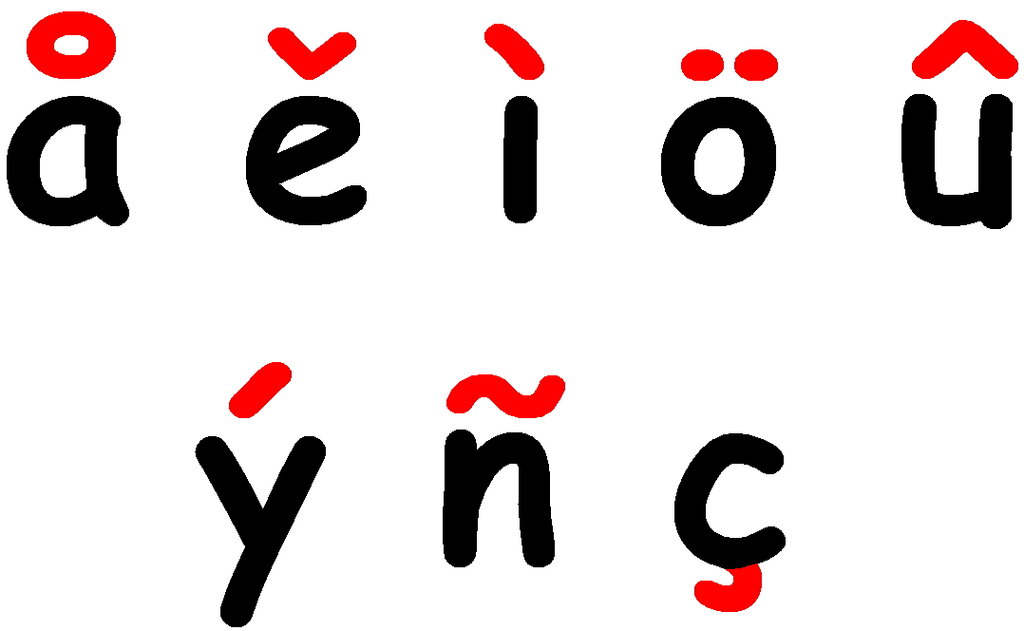
There are three main diacritics you'll see in Czech:
- The čárka (acute accent), like in á. This mark makes a vowel sound longer.
- The háček (caron), which looks like a little hook, as in č. This mark softens a consonant or changes its sound entirely.
- The kroužek (ring), found only on ů. It also indicates a long vowel sound, just like the čárka.
Here is the full alphabet: A, Á, B, C, Č, D, Ď, E, É, Ě, F, G, H, Ch, I, Í, J, K, L, M, N, Ň, O, Ó, P, Q, R, Ř, S, Š, T, Ť, U, Ú, Ů, V, W, X, Y, Ý, Z, Ž.
Notice that Ch is treated as a single letter. In a Czech dictionary, it comes right after H. The letters Q and W are only used in words borrowed from other languages.
Unique Sounds
Many Czech letters sound just like their English counterparts, but a few are special. Let's look at the ones that often trip up learners. The háček is responsible for many of these unique sounds.
| Letter | Pronunciation Tip |
|---|---|
| Č | Like "ch" in "church" |
| Š | Like "sh" in "shoe" |
| Ž | Like the "s" in "pleasure" or the French "j" |
| Ď | Like the "d" in "dew" |
| Ň | Like the "ny" in "canyon" |
| Ť | Like the "t" in "stew" |
| Ě | Softens the preceding consonant. For example, dě sounds like ďe. |
These sounds are consistent. Once you learn them, you can apply the rule every time you see the letter.
Unlike English, Czech pronunciation is very phonetic. What you see is almost always what you get. There are very few silent letters or tricky exceptions.
The Famous Ř
Now for the most famous letter in the Czech alphabet: Ř.
This sound is notoriously difficult for foreigners, but don't worry. Even some native Czech children need speech therapy to master it. The sound is a combination of a rolled R (like in Spanish) and the Ž sound (like the 's' in "pleasure").
To try it, start by saying the Ž sound. While holding that sound, try to vibrate or trill the tip of your tongue against the roof of your mouth, just behind your teeth. It takes practice!
Antonín Dvořák
The famous Czech composer's last name is a great example. The ř is a key part of the sound. Getting it right will make you sound much more authentic, but getting it close is a great start.
Ready to test your knowledge? Let's see how much you remember about the Czech alphabet.
What is the primary function of the 'čárka' diacritic (e.g., in 'á') in the Czech language?
In a Czech dictionary, the letter 'Ch' is treated as a separate letter that comes immediately after 'H'.
Learning these letters and their sounds is the first major step. With this foundation, you're ready to start putting them together to form words and sentences.