Czech Coupon Privatization Explained
Introduction to Post-Communist Economic Transitions
From Plans to Markets
For decades, economies in Central and Eastern Europe operated under a system of central planning. Imagine a country's entire economy being run like a single, massive corporation, with the government as its CEO. This central authority decided everything: what to produce, how much to produce, and what the price would be. State-owned enterprises produced nearly all goods and services, following detailed instructions laid out in national plans, often spanning five years.
Under this system, concepts like competition, profit motive, and consumer choice were largely absent. Prices were fixed, not determined by supply and demand. The goal was to meet production quotas set by the state, not necessarily to create high-quality goods that people wanted.
By the late 1980s, the cracks in this system were impossible to ignore. While central planning had enabled rapid industrialization in earlier decades, it struggled to adapt and innovate. Economies grew sluggish. Chronic shortages of everyday consumer goods were common, leading to long lines for basic items. The quality of products often lagged far behind those in Western market economies, and there was little incentive for factories to become more efficient or for new businesses to emerge.
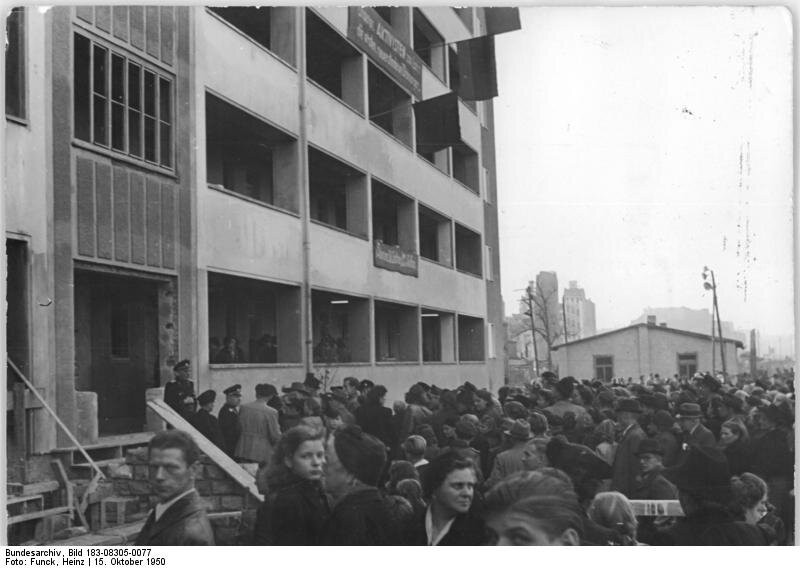
The desire for economic freedom, higher living standards, and access to the kinds of goods and opportunities available elsewhere fueled the push for a radical shift. The goal was to transition from a centrally planned economy to a market-oriented one, where private individuals and companies, not the state, would become the primary drivers of economic activity.
The Challenges of Transition
Moving from a planned to a market economy was a monumental task with no clear blueprint. These countries had to build the institutions of capitalism from the ground up. This involved a series of difficult and often painful reforms.
One of the first steps was price liberalization. For the first time in generations, prices for most goods were allowed to be set by supply and demand. This often led to a rapid surge in inflation as prices adjusted to their true market levels, causing hardship for many citizens whose savings lost value overnight.
Another huge hurdle was creating the legal and financial infrastructure for a market economy. This meant establishing property rights, writing commercial laws, setting up a stock market, and transforming state-run banks into competitive commercial ones. These institutions, which had evolved over centuries in the West, had to be created in just a few years.
The Privatization Puzzle
The biggest challenge of all was privatization: transferring thousands of state-owned enterprises, from small shops to massive industrial plants, into private hands. The question was how to do it quickly and fairly. There was no single answer, and different countries tried different approaches.
| Method | Description | Pros | Cons |
|---|---|---|---|
| Direct Sales | Selling state firms directly to a strategic investor, often a foreign company. | Brings in capital, management expertise, and new technology. | Can be slow; may be seen as selling national assets to foreigners. |
| Management/Employee Buyouts | Allowing the existing managers and workers to buy the company they worked for. | Seen as fair to employees; keeps control in domestic hands. | May lack the capital and skills needed to modernize the firm. |
| Voucher Privatization | Distributing vouchers to citizens, who could then use them to bid for shares in state companies. | Fast, egalitarian, and creates a sense of popular ownership. | New owners are dispersed and may lack knowledge to oversee management effectively. |
Each method had its trade-offs. Some countries, like Hungary, focused on direct sales to foreign investors. Poland favored a mix of methods, including management buyouts. Others, most notably Czechoslovakia, embarked on ambitious voucher privatization schemes to distribute ownership widely among the population.
This period of transition was turbulent and disruptive, but it laid the groundwork for the market-based economies that exist in Central and Eastern Europe today. The specific path each country took, especially in its approach to privatization, would shape its economic future for decades to come.