Cybersecurity TPRM Essentials
Introduction to TPRM
Managing Outside Risks
Almost no business operates in a vacuum. Companies rely on other organizations for software, services, and supplies. These outside partners, often called third parties or vendors, are essential for day-to-day operations. But with every new partnership comes a new potential risk.
Third-Party Risk Management, or TPRM, is the process of identifying and reducing the risks associated with working with these external partners. Think of it like hiring a contractor to work on your house. You'd want to check their references and make sure they have a good reputation before handing over the keys. TPRM is the business equivalent of that, but for data and systems instead of physical keys.
Essentially, TPRM answers a critical question: How can we work with other companies without exposing ourselves to unnecessary danger?
This process is vital for protecting sensitive information, like customer data or company secrets. A breach at one of your vendors could easily become a breach at your own company. A solid TPRM program helps ensure business continuity, maintains customer trust, and helps the organization comply with legal and regulatory requirements.
Core Concepts
To understand TPRM, you need to be familiar with a few key terms. They might sound similar, but they have distinct meanings in cybersecurity.
Threat
noun
A potential event or actor that could cause harm to an organization or its assets. A threat is the 'what' or 'who' that could cause damage.
Threats can be intentional, like a hacker trying to break into a system, or unintentional, like an employee accidentally deleting an important file.
Vulnerability
noun
A weakness or gap in security that can be exploited by a threat. A vulnerability is a 'hole' in the defenses.
In the context of TPRM, a vulnerability could be a vendor that doesn't have strong password policies or fails to encrypt sensitive data they handle on your behalf.
Risk
noun
The potential for loss or damage when a threat exploits a vulnerability. Risk combines the likelihood of an event with its potential impact.
You can think of the relationship between these concepts with a simple formula:
Risk = Threat × Vulnerability
A threat isn't dangerous if there's no vulnerability to exploit. A vulnerability isn't a problem if no threat exists to take advantage of it. Risk emerges when both are present.
The Risk Management Process
Managing third-party risk isn't a one-time check. It's a continuous cycle that helps an organization stay protected as threats and partnerships evolve. While specific methods vary, the process generally follows a standard lifecycle.
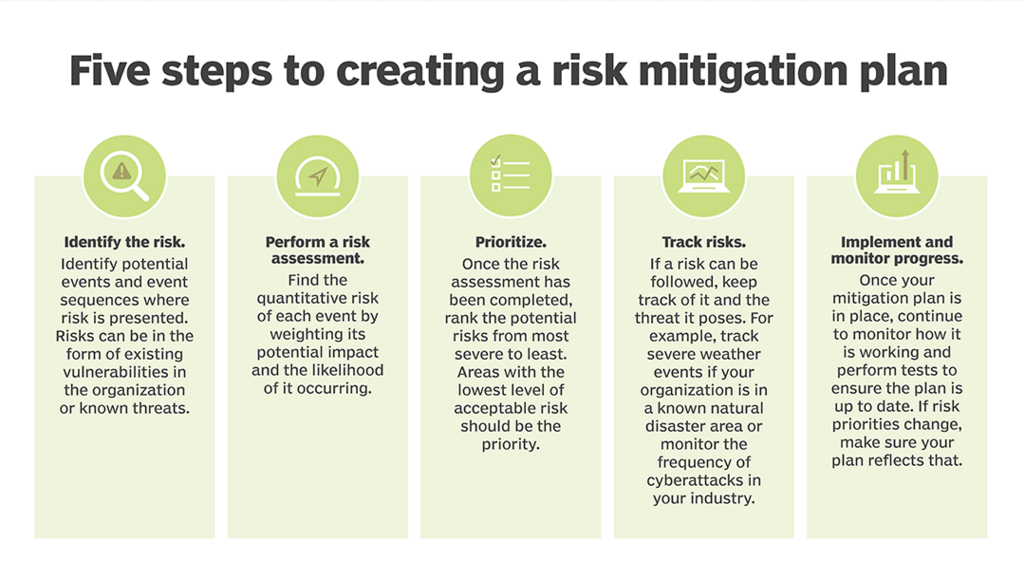
This cycle is often formalized in what's known as a risk management framework. These frameworks provide a structured, repeatable approach to handling risk. They guide an organization through the steps of:
- Identify: Pinpointing potential risks associated with each third party.
- Assess: Analyzing the likelihood and potential impact of each identified risk.
- Mitigate: Taking action to reduce the risk. This could involve asking a vendor to improve their security, implementing technical controls, or even ending the partnership.
- Monitor: Continuously tracking the risks and the effectiveness of the mitigation steps.
By following a framework, companies can manage their third-party relationships systematically, ensuring that security doesn't get overlooked in the pursuit of business goals.
Effective third-party risk management in cloud computing requires more than periodic due diligence; it demands continuous visibility, real-time monitoring, and integrated risk controls that align with evolving threat surfaces across multi-cloud and hybrid ecosystems.
This structured approach makes TPRM a cornerstone of a modern cybersecurity strategy, helping to protect an organization from the inside out.