Cybersecurity Lateral Movement Techniques
Introduction to Lateral Movement
Moving Sideways
Getting into a network is just the first step for a skilled attacker. Once they breach the outer defenses, their real work begins. Instead of immediately grabbing what they can, they often start moving quietly from one system to another inside the network. This process is called lateral movement.
Lateral movement refers to the techniques attackers use to move through a network after gaining initial access. Think of it like a burglar who slips through an unlocked window and then creeps from room to room, searching for valuables.
The initial entry point, like an employee's laptop infected with malware, is rarely the final target. It's usually a low-value system with limited access. The goal is to use this foothold to pivot to more critical parts of the network, such as file servers, databases, or domain controllers where sensitive data is stored. By moving laterally, attackers can map out the network, escalate their privileges, and find their ultimate prize.
A Step in the Kill Chain
Cyberattacks aren't single events; they are campaigns with multiple stages. Security experts often use a model called the Cyber Kill Chain to describe the sequence of an attack. This framework outlines the typical phases an adversary goes through to achieve their objective.
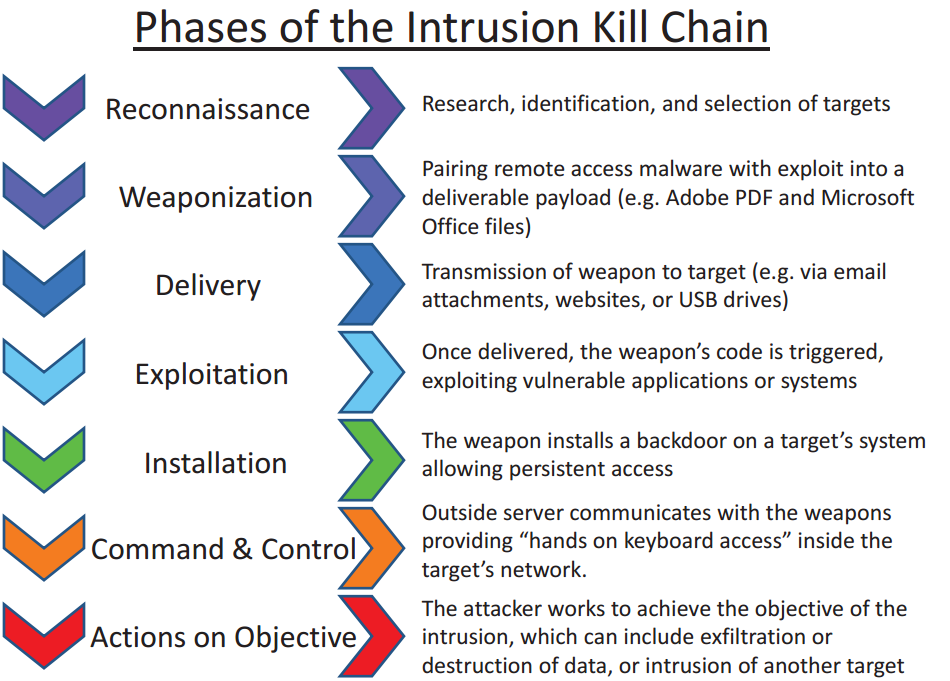
Lateral movement is a critical part of the post-exploitation phase, falling under "Actions on Objective." After an attacker has successfully delivered a malicious payload and established a foothold (exploitation and installation), they don't stop. They begin to explore internally to expand their access and control, which is the essence of lateral movement. This is how a minor breach can escalate into a major incident.
The Signature of an APT
Slow, methodical lateral movement is a hallmark of the most sophisticated cyberattacks, particularly those known as Advanced Persistent Threats (APTs).
Advanced Persistent Threats (APTs) represent a category of cyber attack characterized by their prolonged and targeted nature.
APT groups are patient. They might spend months inside a network, moving carefully to avoid detection. Their goal is not a quick smash-and-grab but long-term espionage or disruption. They use lateral movement to gradually gain a deep understanding of the network architecture and identify the most valuable assets. This stealthy approach allows them to maintain access for extended periods, quietly exfiltrating data over time.
This diagram shows a typical path. An attacker breaches a less-secure entry point and then navigates internally to systems with higher value and greater privileges. Each step is a calculated move toward their final objective.
Now, let's test your understanding of these core concepts.
What is the primary goal of an attacker when using lateral movement?
In the context of the Cyber Kill Chain model, lateral movement is part of the 'Actions on Objective' phase.
Understanding lateral movement is crucial because it highlights that network security isn't just about building a strong perimeter. It's also about seeing what's happening inside the walls.