Cybersecurity Fundamentals Explained
Introduction to Cybersecurity
What Is Cybersecurity?
Cybersecurity is the practice of protecting computers, servers, mobile devices, electronic systems, networks, and data from malicious attacks. Think of it as digital security for your entire online life. From your bank account to your social media profiles, sensitive information is stored online. Cybersecurity aims to keep that information safe.
It’s not just about corporations or governments. If you use the internet, cybersecurity affects you directly.
The goal is to defend against unauthorized access, data breaches, and other digital threats. Without it, our personal information, financial data, and even national security would be at risk. Every time you log into an app, make an online purchase, or send an email, you're relying on cybersecurity measures to protect you.
A Quick History of Cyber Threats
Cyber threats aren't new. They've evolved alongside technology. The first computer virus, called the Creeper, appeared in the early 1970s. It was a simple experimental program that displayed the message, "I'M THE CREEPER: CATCH ME IF YOU CAN." It was harmless, but it showed that programs could move between computers on a network.
By the 1980s, viruses became more malicious. The Morris Worm, released in 1988, was one of the first to spread widely over the internet, slowing down a significant portion of the network and causing millions of dollars in damages. This was a wake-up call, showing just how vulnerable the interconnected world was becoming.
Today, the landscape is far more complex. We face a huge range of threats, from simple email scams to sophisticated attacks sponsored by nation-states.
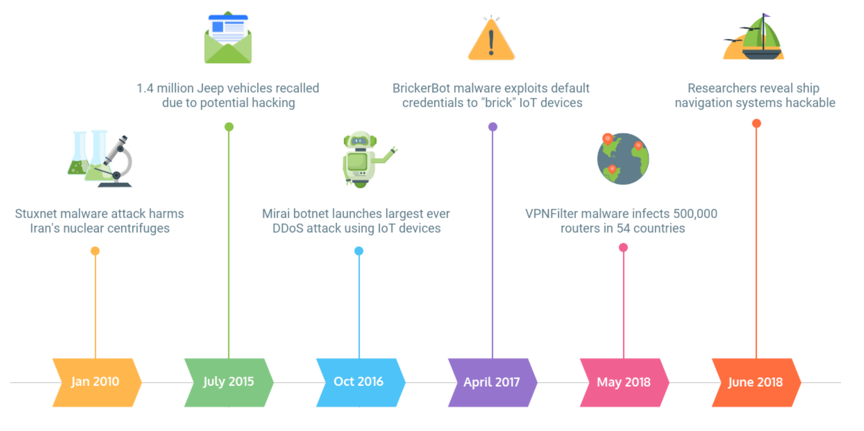
Modern threats are designed to steal money, identities, or confidential information. This constant evolution is why cybersecurity is a field that never stands still.
Key Cybersecurity Terms
To understand cybersecurity, you need to know the language. Here are a few foundational concepts.
Vulnerability
noun
A weakness or flaw in a system, process, or control that can be exploited by a threat.
Imagine a house with an unlocked door. The unlocked door is a vulnerability. It doesn't mean someone will break in, but it creates an opportunity for a break-in.
Threat
noun
Any potential danger that could exploit a vulnerability to breach security and cause harm.
In our house analogy, a burglar scouting the neighborhood is a threat. They have the potential to take advantage of the unlocked door.
Risk
noun
The potential for loss or damage when a threat exploits a vulnerability. It's the intersection of a threat and a vulnerability.
Cybersecurity professionals work to reduce risk by patching vulnerabilities (locking the door) and defending against threats (installing a security system).
The Ethical Side of Hacking
The word "hacker" often brings to mind a criminal hunched over a keyboard in a dark room. But that's only part of the story. In cybersecurity, hacking is a skill that can be used for good or for bad. The intent behind the action is what matters.
Professionals often categorize hackers based on their motivations.
Ethical hackers, or "white hat" hackers, are the good guys. They are security experts hired by companies to find vulnerabilities before malicious attackers do. They play a crucial role in making the digital world safer for everyone. Understanding these ethical boundaries is fundamental to cybersecurity.
Cybersecurity is the practice of protecting systems, networks, and data from cyber threats, unauthorized access, and attacks.
Ready to test your knowledge? Let's see what you've learned.
What is the primary goal of cybersecurity?
The first computer virus, the Creeper, was a malicious program designed to steal data.
You now have a foundational understanding of what cybersecurity is, why it's important, and the ethical lines that define it. This is the first step in learning how to protect yourself and others online.