Cybersecurity Fundamentals
Introduction to Cybersecurity
What is Cybersecurity?
Cybersecurity is the practice of protecting computers, servers, mobile devices, electronic systems, networks, and data from malicious attacks. Think of it as digital security. Just as you lock your front door to protect your home, cybersecurity measures are designed to protect your digital life.
Its importance has grown as we've come to rely on technology for almost everything, from banking and shopping to communicating with friends and family. A breach can expose sensitive personal information, disrupt critical services like power grids and hospitals, and cause significant financial damage. The goal is to keep digital information and systems safe and available for those who need them.

The Core Principles
To understand cybersecurity, we start with three fundamental concepts known as the CIA triad. This model is a cornerstone for creating security policies and evaluating threats. It stands for Confidentiality, Integrity, and Availability.
Let's break down each component.
Confidentiality
noun
Ensuring that information is not disclosed to unauthorized individuals, entities, or processes. It's about keeping secrets.
Example: Your online bank account is protected by a password. This ensures only you can access your financial information, maintaining confidentiality.
Integrity
noun
Maintaining the consistency, accuracy, and trustworthiness of data over its entire lifecycle. Data must not be changed in transit or altered by unauthorized people.
Example: When you send a friend 💲50 through a payment app, data integrity ensures they receive exactly 💲50, not 💲5 or 💲500.
Availability
noun
Ensuring that information and systems are accessible to authorized users when they need them.
Example: When you go to a website to buy concert tickets, you expect the site to be up and running. That's availability.
A strong cybersecurity plan balances these three principles. Depending on the situation, one may be more critical than another, but all are essential for a secure system.
Roles and Domains
Cybersecurity is a vast field with many different roles and specializations, or "domains." Professionals work to protect digital assets in various ways, from writing secure code to responding to active cyberattacks.
Some common roles include:
| Role | Primary Responsibility |
|---|---|
| Security Analyst | Monitors networks for security breaches and investigates violations. |
| Penetration Tester (Ethical Hacker) | Proactively finds and exploits vulnerabilities to help fix them before attackers do. |
| Security Architect | Designs, builds, and maintains a company's security infrastructure. |
| Incident Responder | Manages the aftermath of a security breach or attack. |
| Chief Information Security Officer (CISO) | A high-level executive responsible for an organization's entire security program. |
These roles fall into different domains of cybersecurity. Think of these domains as areas of expertise. A few key ones are:
Network Security: Securing computer networks from intruders. Application Security: Focusing on keeping software and devices free of threats. Information Security: Protecting data from unauthorized access, use, or alteration. Incident Response: Planning for and responding to security breaches.
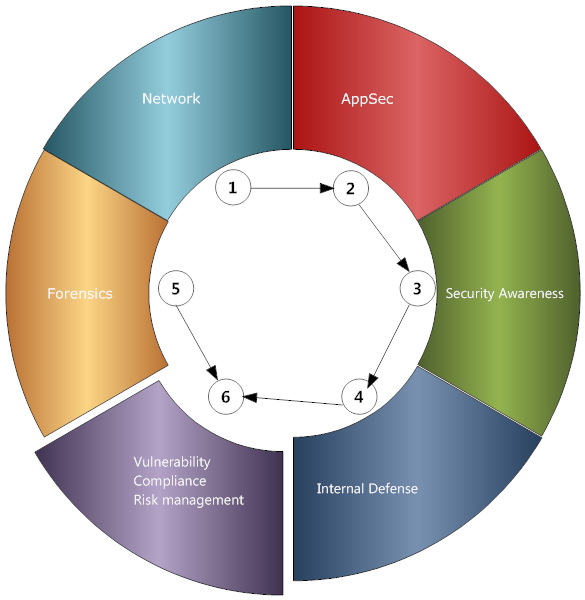
Together, professionals across these domains form a layered defense to protect our digital world.
Now, let's test your knowledge of these fundamental concepts.
What is the primary goal of cybersecurity?
In the CIA triad, which principle ensures that data is accurate and trustworthy, and has not been altered without authorization?
Understanding these basics is the first step in recognizing how digital systems are protected and the challenges involved in keeping them secure.